So you want to day hike/run the Grand Canyon….

*the national park does not recommend day hiking to the river and back and highly suggests camping at the bottom for one night instead. But, if you’ve got a crazy hair like me and enjoy challenging yourself or have been considering this for awhile….continue reading!
ABAE93F4-5C42-4F22-B825-BA45E28A6A1E

The Grand Canyon is one of my favorite places I have ever been. It took me three years of living here in Arizona to get there for the first time, just hiking along the rim at the North Rim. I saw down into its vastness and internally, I felt an urge begin to rise. I wanted to experience the canyon, not from up overhead like this, but from way way down in its depths. After that, there was no stopping me from my first experience hiking down into the canyon and out in a day.

What does it take to be able to go down into the canyon? Not nearly as much as it takes to get back out of the canyon. One of the biggest things to realize first and foremost is that the canyon is at an elevation gain, even the bottom of the Grand Canyon along the Colorado River is at 2400ft. in elevation, while the South Rim sits at 7000 feet and the North Rim at 8000 feet! When you tackle the canyon, you should try to allow yourself time to acclimate to the elevation gain if you can. Even staying at a higher altitude the night before is helpful. Also be prepared for the air in the canyon: humidity usually ranges from 10 to 30%.
E1BD4066-5FBB-421A-BCA9-70AC0A3D4B60

So how do you prepare? Try to hike at higher elevations if at all possible before you go into the canyon. Walk on an incline on a treadmill or stairmaster if you aren’t able to get outside and do hikes with elevation gains and add weights if possible (weight your pack while hiking or carry dumbbells on the treadmill/stairmaster). These practices will help your body strengthen along with adjusting to carrying weight while going uphill. Strength train to prepare as well: training legs will make your base that much stronger while training back and arms will make carrying a pack (if you’re hiking) more doable. Also consider time to prepare: some people will want to train for a few weeks, others a few months, it will truly depend on your starting point of fitness.

Things to consider:

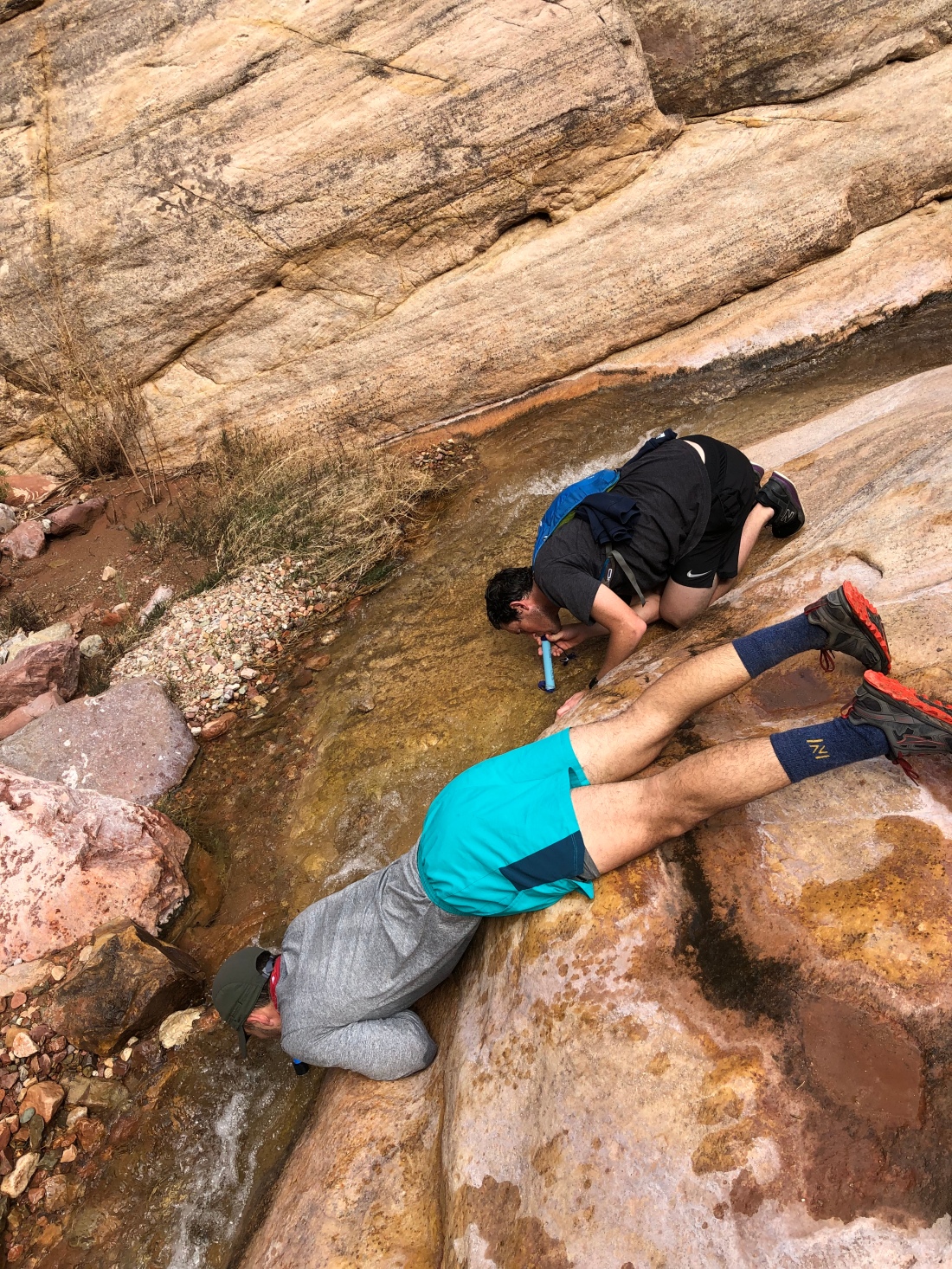
Water — some trails have water access, some don’t. Researching ahead of time is really important and being able to prepare properly is key. Lifestraws are a high recommendation for the trails.
20981578-2011-4E9B-95FB-275016709AF0

Temp — the rim will be cooler than what you’ll meet when you get down to the river. Look up weather at the rim and also at Phantom Ranch to get a good gauge of how it will be — then you can properly pack layers, a hat, sunscreen, a buff, a windbreaker, etc. Heat will make the canyon much harder to handle since many portions of the trails are exposed (especially on the South Rim as the North Rim does get cooler).

Shoes — make sure you are wearing shoes that are broken in and comfortable that you know don’t blister you, give you hotspots or irritate in any way. This will make your experience that much better as losing toenails and climbing out with blisters is not fun (trust me!)

Snacks — you need proper hydration and energy when you are tackling this gorgeous place. Your body works hard and you need to be able to sustain your energy to properly get yourself down and out in one piece! Salty snacks and electrolytes are major go-tos for me.

Your Clothes — it is not a bad idea to wear clothes that you know will not chafe you, rub you in the wrong ways or are not made for the conditions you are going in — try to match your gear up as well as you can to the type of weather you will be facing. Go on hikes or runs in the gear you want to wear so you know you won’t have issues as you go!

Your abilities — be open and honest with yourself about how much you can take on. How are your knees? Ankles? How is your cardio? How is your heart rate? How strong are you mentally and physically? I recommend trekking poles if you do need the extra assistance taking pressure off your knees and any braces you may need for runners knee or IT band, ankle support, etc. The main rule of the canyon is, if you go below the rim you have to be able to get yourself out. Don’t under-prepare or overshoot your own abilities — take on as much as you know you are able to take on and continue to build over time! The canyon has been there for millions of years, it won’t be going anywhere any time soon!

Breaks — allow yourself time to stop and catch your breath when needed. The canyon is steep and rigorous and your heart rate will rise, especially with the thinner air at elevation. Be mindful, not prideful — allowing yourself a few minutes to reset yourself can help you to feel brand new.

Injury — bring a tiny first aid kit at the least. You never know if you’ll take a tumble and having alcohol swabs, bandaids, athletic tape, etc will be a blessing in disguise.
5682DDC4-D3BA-4840-892C-9DCD561DA576

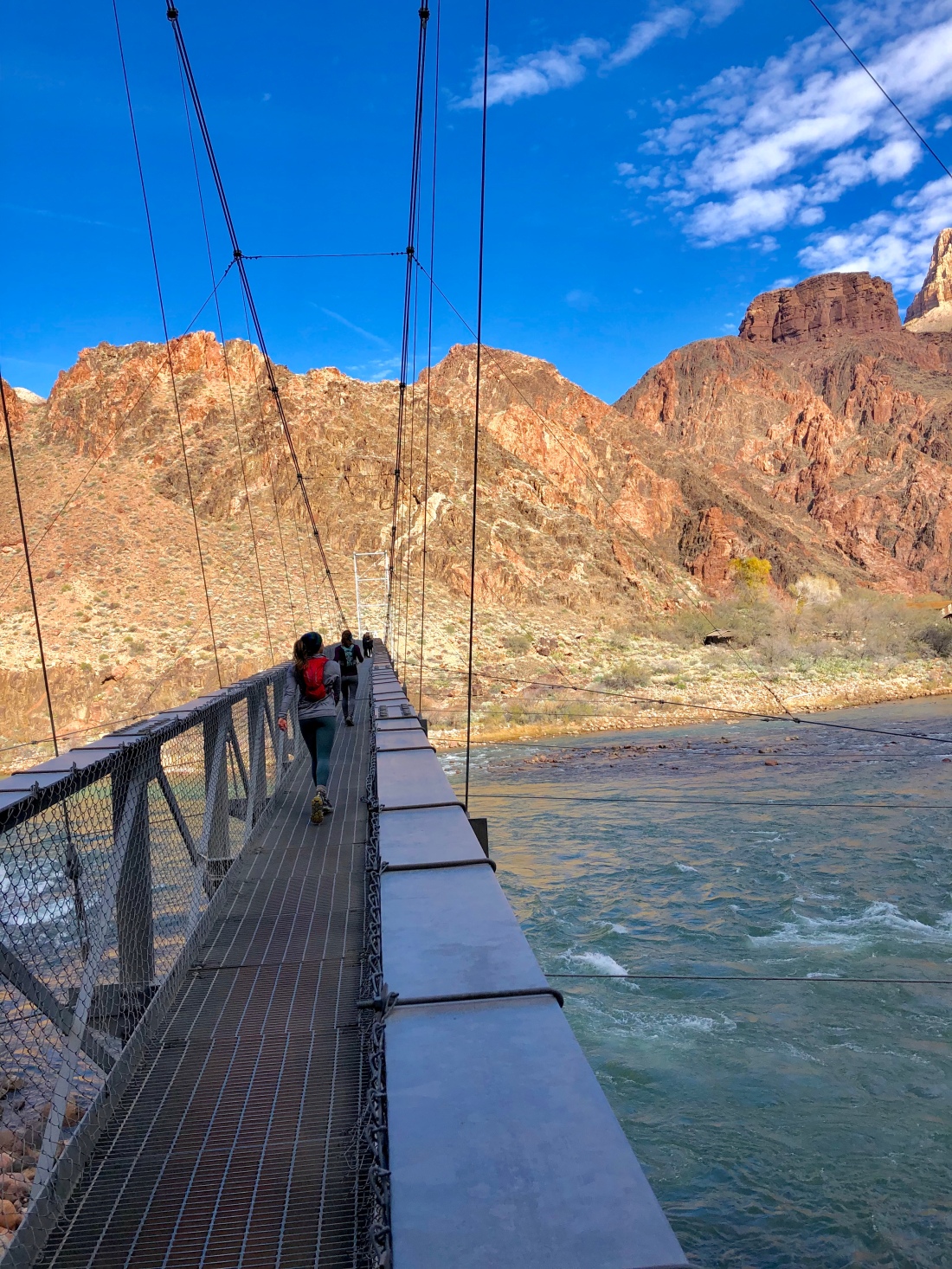
My first hike down into the canyon was a day hike from South Kaibab to Bright Angel. Taylor and I were in decent shape, hiked often and thought — why not! Nothing can prepare you for how mentally challenging the Grand Canyon is. The hike down (about 7 miles) was beautiful. The first view of the river had us both elated and in awe. We were ecstatic crossing the bridges, seeing the river up close and just being down there — we’d MADE it. Well, not quite. Starting the ascent back up to the Bright Angel trailhead was very challenging. With every rest break, lactic acid would make our legs heavy and even more sore. We leaned on our trekking poles for dear life, willing them to pull us up the 2.5 miles of switchbacks to the top. It was 18 grueling miles and we waddled around to the busses in the most pain. Joyous pain. Our feet pulsed, swollen, numb. All of our energy was completely sucked dry from our bones. But we looked at each other and smiled, completely drunk on the fact that we had DONE it.
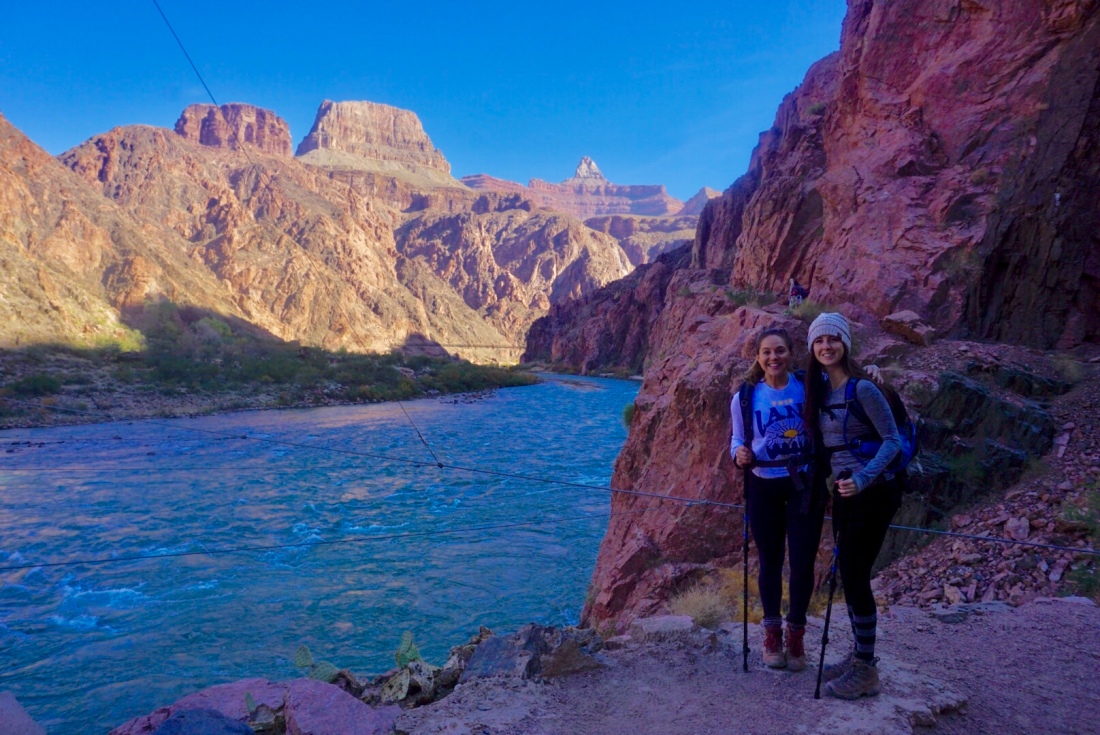
CBC965FF-89D3-4EA4-9F0D-5609D32499E8.jpeg

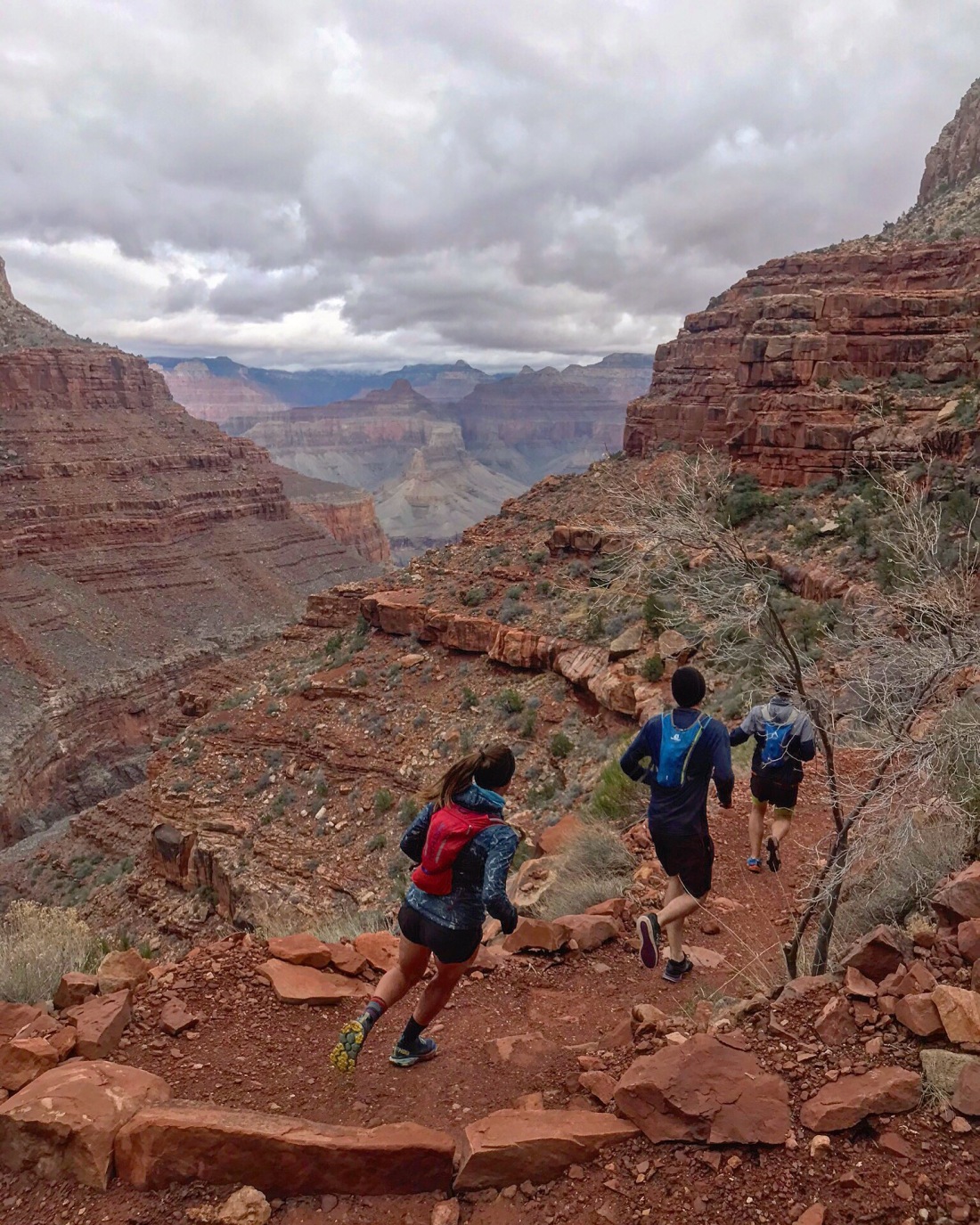
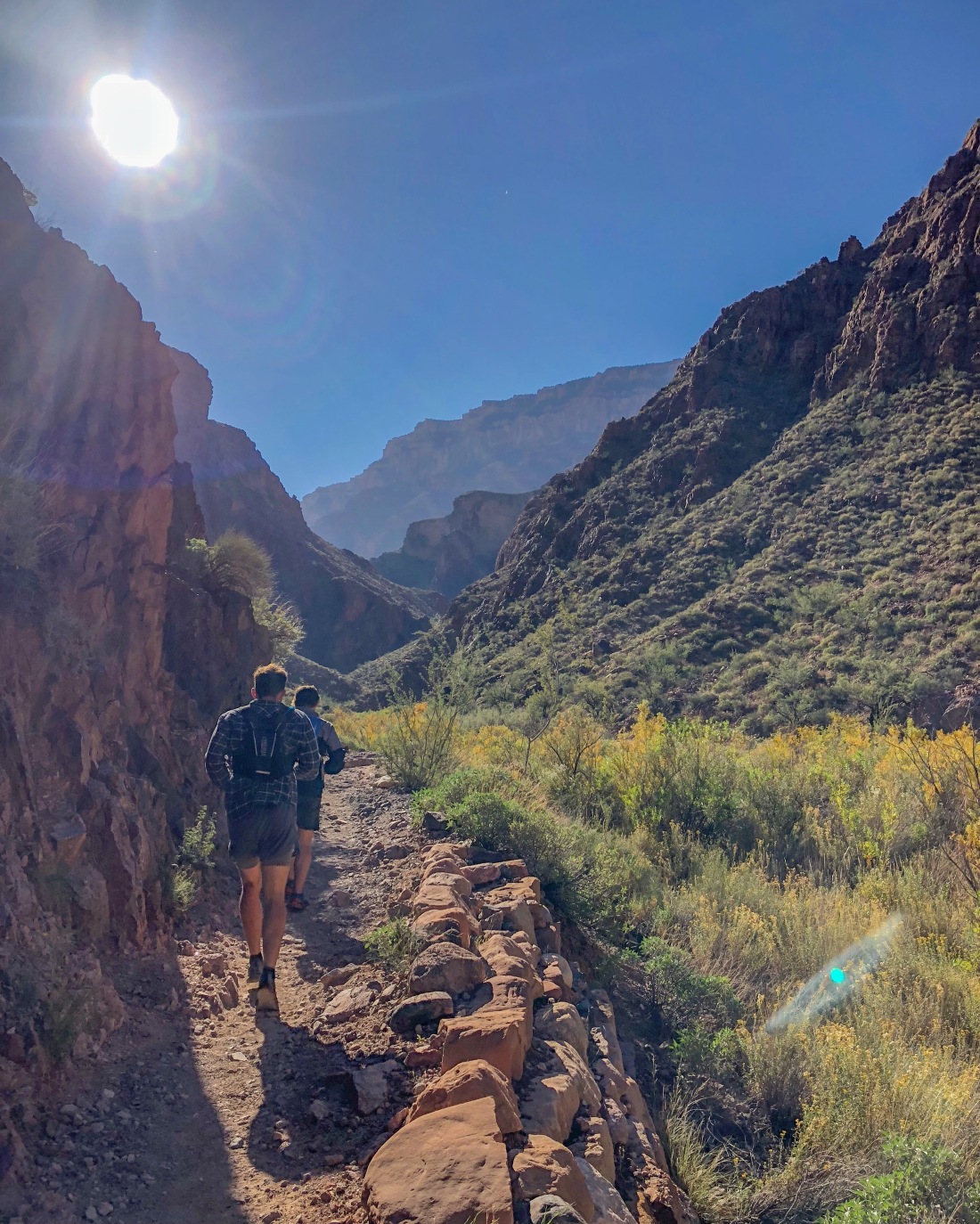
After that, I took up trail running and the canyon became an entirely new playground. Nothing is as exhilarating as running down into the canyon. Some things to keep in mind with running into the canyon are: water sources, energy sources, staying injury free and being very aware of trail conditions and surroundings (we ran into rock slides yesterday), how technical the trail is — some are more primitive than others! Know if you will be around many other people or not (is this really well traveled– like Bright Angel, or less traveled?), always bring a headlamp because you never know how things will go.
E4B8E337-0D91-441B-ABE8-3BB00F36D850.jpeg

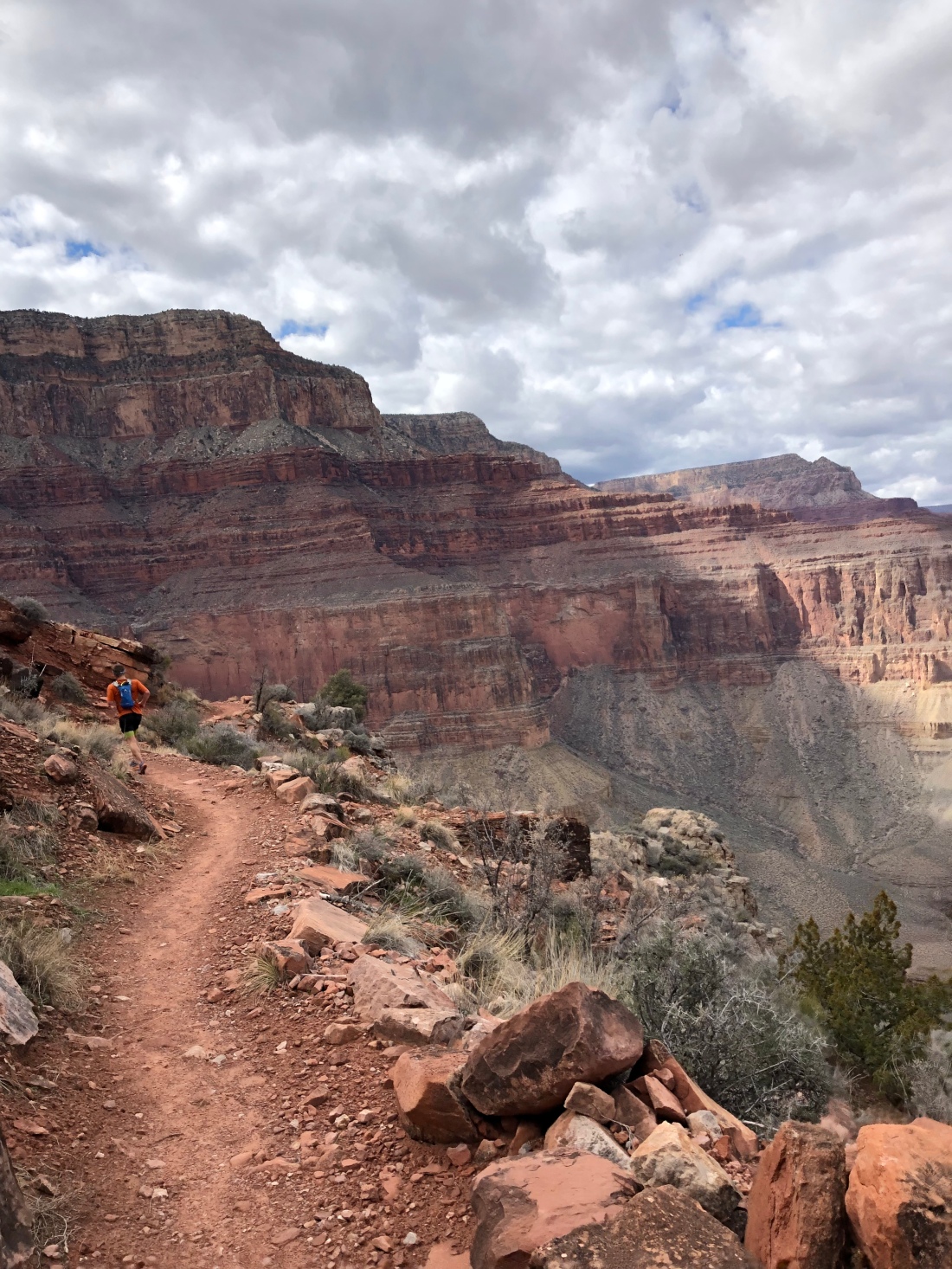
Running the canyon is a very different experience: your pack is smaller, you have to operate more efficiently, you have to be able to handle the mileage and elevation declines and gains in one push, you mentally have to be stronger than the pain your body will face — because it will get uncomfortable, promise. There are many points I would suggest testing out if you want to get a taste (Skeleton Point, Indian Gardens) these points don’t take you all the way down to the river and give you a sampler on how steep the canyon is and if your body is ready/prepared to take a day trip on!

The canyon has many trails to choose from and there will be technical bits to all of them — ranging from easier to very challenging and your trail running shoes should reflect the amount of technicality you are going to face. Set yourself up to feel good, not roll ankles or have pain in your arches, etc.

Make sure you are dressed to not overheat or run too cold or you may be in for a miserable time in the canyon as well. Once you start running, your body will heat up to about 10 degrees warmer than what it is like outside, so preparing for this is key. I always start wearing a pair of gloves and a headband or beanie and can easily shed these as my body warms up — I am sensitive to the cold and this is an easy way for me to regulate my temp in seconds.


What has helped you prepare for challenging hikes/runs with a lot of elevation gain?


Getting Mentally Tough With Every Mile


51237838_10156427312049775_1887072363434999808_n

I get asked “why” I run all the time. The first thing that comes to mind for me is because I love being outside and now, I get to see way more in a shorter amount of time! But even deeper than that is that trail running has made me so, so, so much tougher. Mentally, I am able to accept things, logically face things and come up with solutions when previously, I would crumble, hold things internally and let them effect me very deeply. Mental toughness is a quality that can be molded, like a beautiful piece of pottery, over time. What does it take to start working on your mental toughness? Discomfort.

“Pain, it only hurts”

-ultra-running legend Scott Jurek

Like distanceathletics states, “the majority of DNF’s don’t come from an unbearable source of pain. And the don’t come from injury. They come from the runner, slowly, and skillfully, talking themselves out of the race. The just don’t want to be there anymore, and they tell themselves whatever is necessary to end the experience with honor. Or just to end it.”

The hard, uncomfortable situations are what truly shape us and force us to grow. Those moments when chafing begins to sting, sweat gets into the burns and you want to immediately throw in the towel. The times when your calves, hip flexors, knees and ankles are screaming at you to end the movement, to stop the climbs, to quit bombing down the steep hills. When you’re hiking and it starts to rain and you’re cold, tired and discouraged. When you fall and cut your shins or palms or forearms open and everything hurts. Those hikes where the climbs just keep coming and it will never end. When hot tears hit your face because lets face it… pushing ourselves isn’t easy and it brings up every emotion possible. Things get raw. Distractions aren’t readily available. Going into the “pain cave” is….inevitable.

Distanceathletes again say it perfectly, “Those moments where everything is moving fast and your heart is slamming into your chest and you’re asking yourself whether you can hang on-that is living. In this moment you are in your element. You are a strong and powerful human being, testing and exploring the outer ranges of your physical and mental capabilities. Where else would you rather be?”

When you are facing obstacles, getting gritty and feeling pain…that is living. Grinding through these experiences makes us into a stronger, more courageous, more capable person. Mental toughness translates to most every aspect of your life: your ability to handle hard news, tough situations, impossible seeming setbacks, stress, doubt…the list goes on. Mental toughness gives us the tools to wrap our minds around obstacles to see the other end, that we can endure hard things and come out still fighting.

When I think of practicing mental toughness — yes, practicing — I am in the midst of learning how to be out running for hours at a time. If you are beginning your trail running adventures, you can start by saying, “I’m going to be out here for 45 minutes” then, “I’m going to be out here for an hour”…then two, three, four hours. This practice of just having radical acceptance really shifts things. “I am going to be out here for most of my day, this is what I’m doing, this is what is happening”. This means it may be painfully slow, it may feel nearly impossible, but….mentally I am preparing myself that this is what is in front of me.

52825978_10156471627179775_430669423175532544_n

If the miles feel intimidating what do you do? Break the mileage down into attainable bits. Mile by mile, 5 mile chunks, aid station to aid station, one cactus to the next. Whatever helps you just keep moving forward will continue to help you get stronger. Running truly is a sport of mental strength. Our bodies will keep going as long as our brains tell it to. How amazing is that? It also goes to show how much we influence our own capabilities and perceptions of what we can achieve.

One thing I’ve always loved about my time with Lululemon was that they always always had you write down your dreams and goals and then identify your WHY. The same goes for any sport you take on: why are you doing this? Why are you training? Why are you signing up fo the race? Is it to work towards a milestone of health, is it for the accolades, is it to become elite at the sport, is it because you are passionate about the activity, is it to raise awareness for a cause, is it is for the sole purpose of testing your limits? Maybe a mix of all of them, but truly know your “why”, dig deep and when things get dark….remind yourself of it. Over and over and over again.

I think it can be so easy to lose sight of what got us into something for US, that we focus on everything and everyone else and what they are doing around us. It takes away from our ability to feel joy and pride for what WE are accomplishing. It is really important to be able to say “I am so grateful and happy that I am able to be here, experiencing this, with a healthy body.” Mental toughness also means expressing appreciation for our bodies, those that support and encourage us and for nature in general — because if you’re out there, you’re seeing some of the most beautiful areas in the world, end of story.

I know it may sound sugarcoated but trying to keep your mind in a positive place and expressing gratitude along your way will make your experience that much brighter every single time. When you allow your mind to get down, negative and heavy it will stay there and therefore, your experience will become tougher than it already is. I’ve had runs where I focused so much on something (my body in pain, the heat, the elevation gain, my pace) that I didn’t like that it completely clouded the main reason I’m out there: to enjoy the trails, to be in nature and to disconnect and get in tune with ME.

The more we can train our minds, the better we become. The more real we can get with ourselves and the further we can push ourselves. Mental toughness doesn’t happen over night, but it is something that totally changes the game performance-wise and in life!


*all gear worn in images is from RunJanji

* fuel sources are always Salt Stick + Spring Energy

5 things I take on Every Trail Run


  1. Hoka One Ones1c52b4c3-5c42-46c6-aa93-1e4d33abc49d These are my current trail running shoes and I am obsessed. I have the Hoka Challengers and swear by them. They give my ankles support, I can navigate technical trails and the grip keeps me feeling stable. I’ve put roughly 350 miles on them so far and they haven’t broken down yet. For me this is a huge win since my previous pair – Altra lone peaks with the zero drop, broke down so fast my head spun around. I know this was said to be because they are vegan, but logically, when you’re logging a lot of miles per month and are wanting to be smart with your savings, you don’t want a pair that are going to break down every 2-3 months – those $140-$180 add up fast!


  1. Nathan Sports Pack49856b15-32f6-4647-b94e-dac444734a8d Getting a running pack was the best investment (besides my shoes) that I have made. I used to run with my smallish day pack and got by, but once I upped my game and got a pack designed for trail running, I was MUCH happier. Getting a trail running pack means you’re carrying less weight, your bladder fits perfectly along with additional storage space for layers, gloves, flashlight, book…whatever you think you need when you hit the trails. You have small spots for trekking poles, pockets on pockets for hydration sources and fuel (along with car keys!) Having all of these things at your fingertips right at the front of your packet on your chest is a big plus that I didn’t have with a day pack.


  1. Squirrel’s Nut Butter
    squirrel_s-nut-butter-on-rocks-vegan-from-top-836
    image credit: trailmag.co.za

    do you have thunder thighs like me? Meet your new best friend. SNB will SAVE your body from chafing. I use their vegan product on my inner thighs and the undersides of my *left arm, yes, just the left, because chafing is weird like that. Their vegan blend is candelilla wax based instead of beeswax based, but they offer that as well. This doesn’t get gross after a few miles, has a nice scent and so far, I’ve only had to apply once or twice even during marathon runs! Just remember, this stuff does get melty when it’s super hot out, so try to keep it out of the sun especially if you’re bringing it with you in your pack or it make leak!


  1. Spring Energy Gels55e18646-dd41-4fcd-ae92-e99608860ed5There are so many fueling options for the trail and I’ve honestly tried…most of them. From Gu gels to bloks and baby food packets, trail mix and protein bars – they all have their time and place. Not that long ago I started seeing Spring Energy all over people’s social media. People were raving about the quality; how natural they taste and how great the ingredient lists are…. I caved and made my first order. Well, now I get it. These gels don’t taste chemical-y, they give me great energy boosts without a crash, and I have yet to “bonk” while using them.


  1. Buff867368d9-b01c-4d37-b755-55ceb7420b8fif you haven’t gotten a buff yet let this be the sign that today is the day! Buffs are the best because they are SO versatile. I use mine when it is extremely hot to block sweat or protect my face and during cold weather to block wind chill and cover my ears and nose when it gets chilly. I pretty much always have one on me and don’t know what I did before I invested in one of these guys.


Honorable mentions: headlamp because you never know where adventures will take you and you should always be prepared! Hydration tablets because electrolytes will be your bestie, especially here in the desert. Some kind of GPS tracking (strava’s Beacon feature, watches like Garmin and Suunto, AllTrails Pro, RouteScout, etc) because getting lost once you’ve been hauling your body around is not ideal!

So You Want To Start Trail Running…A Bit of Advice From A Beginner

7f8f27d8-f88b-42e0-878f-f26553937ca4

Before I started running trails it was one major thing: intimidating. All the balancing on rocks, climbing up hills and potentially falling on my face really scared me. But really, deep down, I was scared to fail. I was scared to skin my knees and cry and suck at it (as a side note I have skinned my knees, cried and said…”I suck at this” multiple times).

Growing up, after being a competitive gymnast for ten years, I tried running track for a year. I ran the 400-meter sprint and the 4×4 relay and…detested it. I loathed it. My hips hurt, I couldn’t breathe. I wasn’t cut out for it. I told myself. In college I got really into running on the treadmill. I’d go log 6 miles like clockwork nearly every day, but it was boring, coming from an unhealthy place  and unsustainable for me. Road running was never in the books because gymnastics made my knees ache with the impact and honestly, running near passing vehicles didn’t appeal to me. When I started training for bodybuilding shows in 2014, I had to do interval sprints. These I liked. Pumping my legs powerfully, messing with the elevation on the treadmill. 1-minute sprint, 1-minute slow jog, 1-minute sprint…I didn’t know I was priming myself for FARTLEKS. I got to a point where I could control my breathing, and this felt…powerful.

At the end of 2017 I met Scott, who loves the outdoors just as much as I do. We bonded over nature, getting on the trails and self-propelled experiences. My mode: hiking, his mode: running. As you can see, he persuaded and I will forever say, forced me into running when I would have much rather hiked. But there I was in REI, buying a pair of Altra trail running shoes at the end of December, downloading the Strava app to my phone saying, “here goes nothing”.


Well, let me tell you, from December to March I struggled. I was discouraged. I hated trail running but kept. Showing. Up. What I’ve learned in the months I’ve really taken trail running seriously, and fallen in love with the sport is as follows (and I hope it helps you feel confident to get out here too!)

b54081ea-74c9-459f-863b-819a92cff841

1:  Do not go out on the trails expecting to run as quickly as you do on a treadmill, track or road. If you are able to run an 8- or 9-minute mile on these surfaces, expect to run much slower on trails. When I started, I was sprinting for half a mile, my chest bursting, huffing for air and then, forced to stop and rest, discouraged at my inability to run miles this way. Around March, when Scott really started running with me and teaching me how to pace, I learned what my problem was: I needed to slow down. A lot. Scott taught me to slow down to a pace where I could carry a conversation, I was breathing easily, and it felt almost…boring. This was what he calls an “all day pace”. My all-day pace was around 12:30-12:45 minutes per mile. Imagine going from an 8-minute sprint up the trails to 12:30, it is a huge difference. A necessary difference. I use my Apple Watch on “Outdoor Run” setting to keep myself in line pace-wise, I can look down and check any time to make sure I’m at a good pace and how my heart rate is.

2: Pick flat trails with very little technicality. When you first start running try to find smooth trails that don’t contain tons of rock or technical work that you aren’t prepared for. The Phoenix Mountain Preserve, Dreamy Draw, Browns Ranch and McDowell Mountain Regional Park all contain options that have flat, nicely maintained trails to learn on (these are near me and easy to reference but AllTrails is a great place to scope out easy trails with very little elevation in your area). Taking out the technicality means you can focus on your breathing, your feet, your stride and just being out there. How do you feel? Are you enjoying this? How quick are your footsteps? How is your heart rate?

839c7674-5ad0-4a65-8cc7-8d9528e61a31

3: Don’t try to run the uphills just yet. Your new to this and your body needs time to build up stamina and endurance. If you need to hike, allow yourself to do that! Don’t try to take the uphills at a run – typically, you can hike uphill faster than many can run anyways. The uphills then give you a chance to catch your breath and re-energize for the efforts you need to make coming up! I am not a strong uphill runner, but I am a strong uphill hiker since that was my background and I use that to my advantage. I run with friends that always run the uphills and some that are like me, it is personal preference like anything else – but starting out, save that energy and just hike it!

0B840979-5831-44B9-9621-7EB8178B561F.jpeg

4: Bring enough water and snacks, you need it! What you will quickly find out is that trail running is WORK. It uses your whole body and therefore, you burn a lot of calories doing it! Probably more than you think you would and staying energized and properly fueled and hydrated is really important when you’re out there. When I started, I would suck down my 60oz. of water in 3-4 miles, where now I can maintain at a slower pace with that same amount for closer to 10 miles. I bring lots of snacks: Spring Energy gels, Clif Bloks, Pro Bar Bites, dates, nuts, chia seed packets, baby food vegetable packs, electrolyte tabs for my water, SaltStick chews, almond butter packets. You will learn what your stomach likes and dislikes when you’re on trail (you’ll either feel great or get cramps and feel like you need to use the bathroom….you’ll know). These are things that work for me as I struggle to eat and run at the same time and can’t process things like burritos or pizza or pb&js when I’m running. This is totally trial and error, but it is important!

5e9cc1e0-93f9-466c-bb7d-a00b05a2010c

  1. Don’t compare your efforts to other peoples. This is hard and something I’m still working on. I follow and surround myself with other people who also trail run and perform a LOT faster and better than me. Sometimes that can be discouraging for me when really, it should be inspiring and something for me to strive towards! Everyone is a beginner at first and these people all started somewhere. What I’ve noticed is many amazing runners were long distance athletes growing up, this has been with them for YEARS. So just remember that, when you get out there, you are doing the best for YOU. You are out there for YOU. You are doing something that not many others can say they can/are willing to do. Give yourself the biggest pat on the back because you’re pushing your own limits and getting stronger mentally and physically by being out there on the trails.

DE96CF56-31EA-4E42-B890-D0993EA27B35.jpeg

Some other things I want to note is that running with others is way more fun and there are tons of running groups in the Phoenix area to link up with! Getting out there may feel intimidating but having others around to encourage and hold you accountable can be key. I am grateful to have a built in system with my boyfriend and our circle of friends that all run and the Aravaipa running group I am in (they hold group runs every Wednesday night that you can find in their Facebook group and on Meetup.com)!

Most importantly: get out there and have fun, challenge yourself and watch yourself grow! Don’t be afraid to fall, skin your knees or cry — running brings out so many emotions and it is amazing what you will learn about yourself along the way.