


If you didn’t know already, I am based in Phoenix, Arizona meaning….July is hitting 113 degrees. Asphalt, seat belts, steering wheels all scald you and you have to pray for your plants to survive. So…how do you run in 90+ temps? If it was easy, everyone would be out doing this and exposing yourself to the hot temperatures can be good for your training and endurance! We, as humans, adapt to our surroundings extremely well — heat is no different. This article by iRunFar goes into thermoregulation and how our bodies adjust to temps, it’s a really informative and helpful read!
From personal experience and reading extensively, these are the tips that are extremely beneficial to keep in mind:
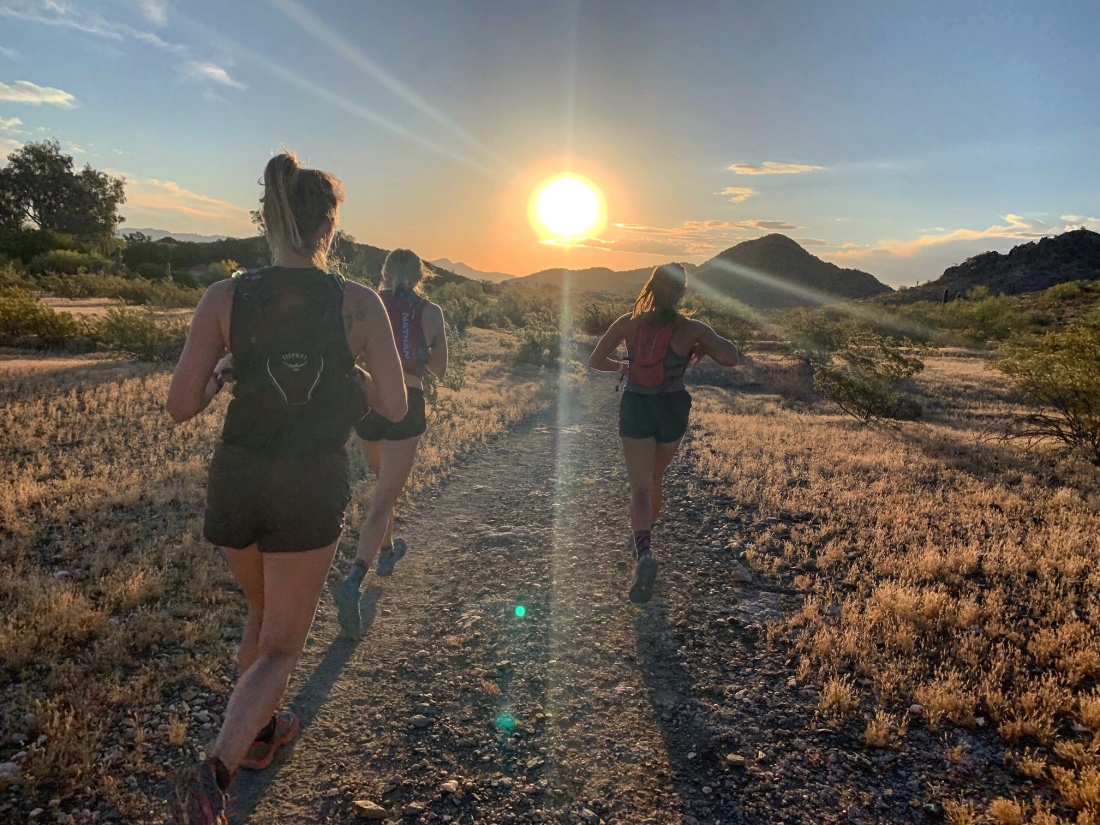
- Do the majority of your key workouts during the most friendly conditions: usually the early morning or, if you’re lucky, cooler days. Here in Arizona, that means early mornings before the sun comes up, when the temps are as cool as they’ll be all day. Bonus: you can run with your headlamp and running in the dark is a completely different experience on the trails!
- If you truly want to acclimate, running in the heat of the day is probably best for seeing adjustments towards feeling comfortable. However, you have to adjust your speed as your heart rate will spike rapidly with the effort and stress of running in such high temps. Trail Runner Mag suggests, “Different protocols abound, but the general rule is 60 to 100 minutes of moderate exercise in hot conditions every other day for a couple weeks will get you most of the heat adaptations you need.”
- Hydration, Hydration, Hydration! Everyone has different sweat rates—you can calculate yours in a lab to get exact results, or use a simple few-step process to get a helpful but inexact guideline (see on online calculator here) If you truly dislike drinking water, keep a water bottle nearby and force yourself to drink your medicine. On the flip side, be sure to steer clear of overhydrating, which can cause hyponatremia, or low sodium levels.
- Have you heard of “precooling“? MapMyRun shares, “This is another strategy you may want to try, especially when running LSDs, a marathon or ultra in the heat. While elite runners use elaborate gear such as cooling vests, try something as simple as eating a frozen Gatorade slushy before your race. This helps cool your internal body temperature and delay the inevitable rise as long as possible.”
- Make sure to dress appropriately for the weather you are training in: light colors and technical fabrics that will help wick sweat more effectively are key. Protect your eyes and face from the sun with a hat or visor and sunglasses. Continuous access to cold fluids is ideal. If you’re running long, try to plan a route that either loops by your home or a convenience store with access to ice. Wet towels frozen the night before your run can be useful before and during a run. Dumping water on your head throughout your run can also be an effective cooling mechanism since it increases evaporation from your skin.
- How is your mental talk? “Adjusting your expectations at the outset will undoubtedly contribute to a more successful race or workout. Nonetheless, don’t always expect the worst. Pace yourself appropriately and you may be surprised by your performance, especially after you have given yourself adequate time to adapt to the conditions.” MapMyRun Not too long ago I was listening to a podcast that talked about positive mental talk, even when you don’t necessarily believe what you’re saying. If you’re struggling or hurting or mentally in a bad headspace, acknowledging that will only lead to more of the same negative thoughts. Instead, saying, “I love the heat! Training in the sun is the best!” may actually assist you to start believing that. Just as much as saying, “I feel better than when I started!” when you’re struggling may actually help you push through walls and the pain cave when needed.
- GearJunkie interviewed one of the best hot weather ultra-runners, Jax Mariash, who said, ” Heat train by exercising in a hot room (hot yoga, step-ups, treadmill if possible). To acclimatize, try hot-weather training in the middle of the day. (Bonus: No crowds on the trails.) Also, spend regular time in the sauna. Seriously.”
- Electrolytes and Salt Tabs are your new best friends: while sweating more, we also lose a lot of important vitamins, minerals and nutrients. Be sure your water has electrolytes to replenish these vitamins and minerals and keep up your sodium levels with tabs! My favorites are: Nuun electrolyte tablets for my water and SaltStick Fastchews for sodium replenishment. I don’t go anywhere without them, especially in the summer.

MapMyRun shared some great things to be on the look out for while running that may mean you’re being dangerously affected:
- Heat cramps: These are simply muscle spasms caused by fluid and electrolyte losses. They can be readily addressed by proper hydration and reducing your effort level if you encounter them on your run.
- Dehydration: For most runners, up to 4% dehydration is safe, but anything beyond that can cause problems. Start your run hydrated, drink to thirst on your run and rehydrate well afterward.
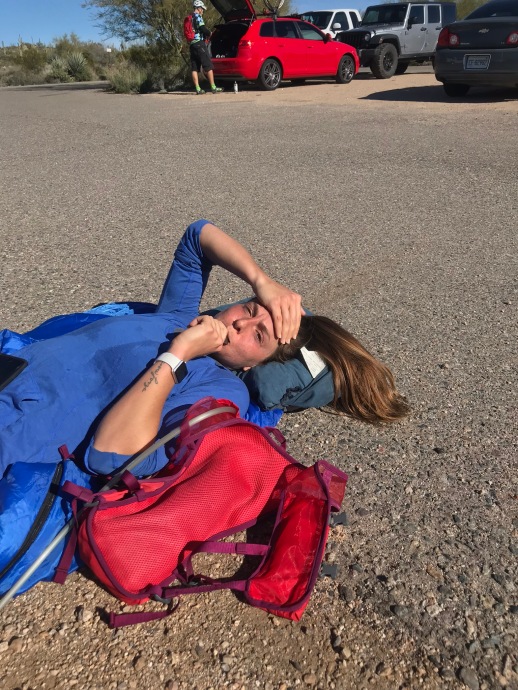
- Heat exhaustion: Symptoms include dehydration, nausea, headache and a body temperature up to 104° F. Stop your workout immediately, and get to cooler temperatures before it becomes heat stroke.
- Heat stroke: This is extremely serious and can quickly become life-threatening. Symptoms include a body temperature of 105° F or higher, disorientation with clumsiness, confusion, poor balance and a lack of sweating. Get medical attention immediately!










 Bri With A View