Experiencing A Flash Flood

If you’re anything like me, the term “flash flood” means rapid amounts of water in a very small amount of time occurring right around you, right? Not always. This past weekend I experienced my first flash flood and a flood that didn’t come from immediate rain happening right around me.
E35DB7DC-2852-45E8-8247-0E1E4EFB58B0

National Geographic explains it by saying, “Most floods take hours or even days to develop, giving residents ample time to prepare or evacuate. Others generate quickly and with little warning. These flash floods can be extremely dangerous, instantly turning a babbling brook into a thundering wall of water and sweeping everything in its path downstream.”

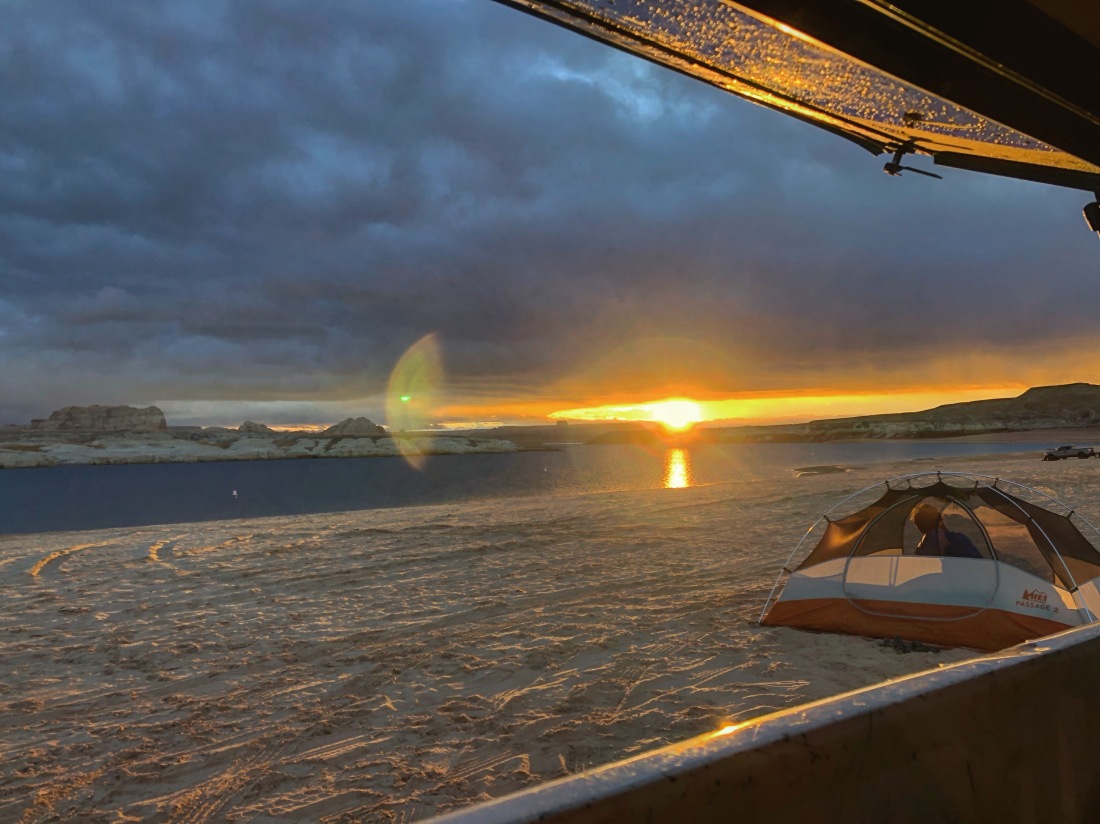
Our group decided to go explore Southern Utah this weekend, as the rest of the state of Arizona was getting rain all weekend. After some scouring, the Page area had a little sun emoji for Sunday and we wanted to get in some miles…Page was our saving grace, or so we thought at the time. We camped at Lake Powell, being woken up in the middle of the night to wind so strong it shook the truck-bed we camped in. I sat up, hoping my friends in their tents were still outside as the wind howled around the shell I was safely under. When the sun began to rise, big black looming clouds still hung over the air like sludge.

Slowly, the clouds began to break and shades of orange and pink tinted the sky….soon everything was calm and shining and beautiful. We all smiled, relieved, today was going to be a good day. We hung around the beach, making breakfast and playing with the pups before heading to the trailhead we were going to start from. With one 4×4, a small car and a two-wheel drive truck, we navigated the dirt road that wound down and over a dry wash to the trail. Parking, we all began getting our packs ready and complaining about the strong wind that was still present making us shiver before the adventure.
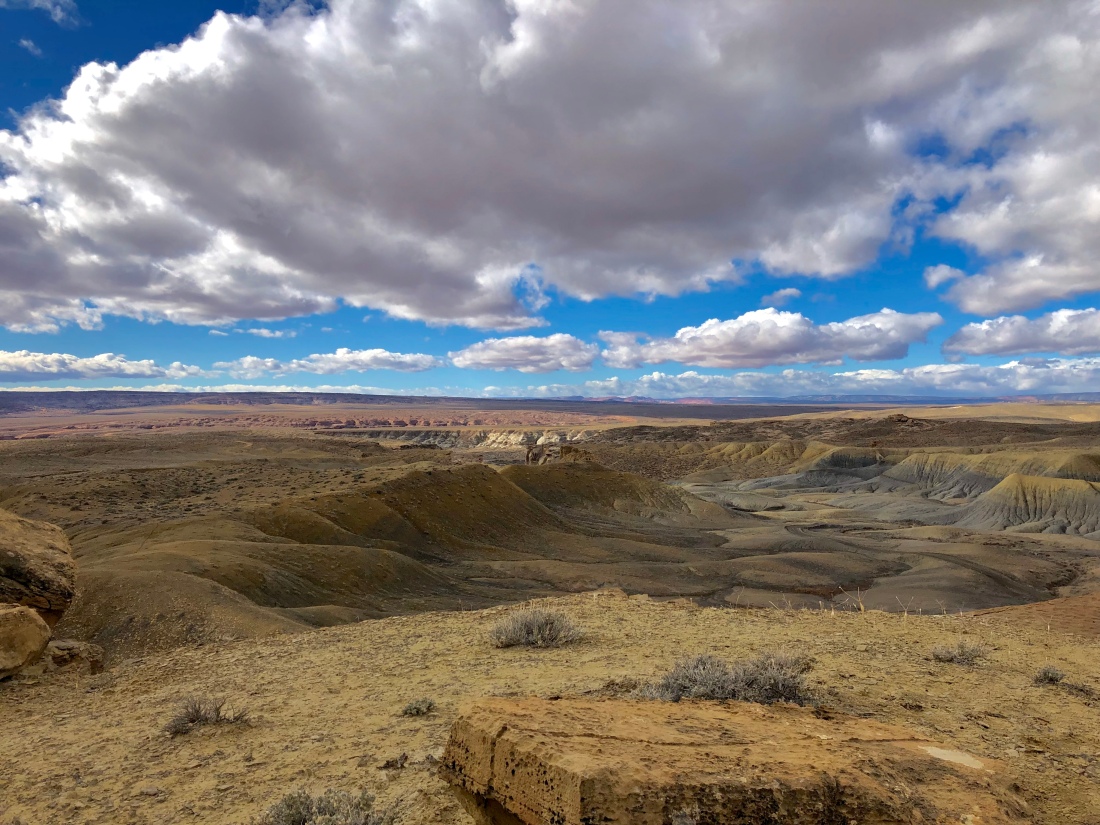
63BC1A05-F307-47F7-89B9-C74DD76F4133We got 15 miles in the backcountry, seeing beautiful formations and also a lot of dark, ominous clouds rolling around to the north of us. When we reached the cars, beers were cracked and everyone put their feet up to enjoy the efforts we’d just put in on hills we hadn’t expected to be so steep. The rushing water we had seen to our left when we had gotten to the trailhead was still going strong, beginning to web off into small slews to the right and left of the main force. We began talking about food..burgers…fries…and packed up our things to venture back to town for our reward.
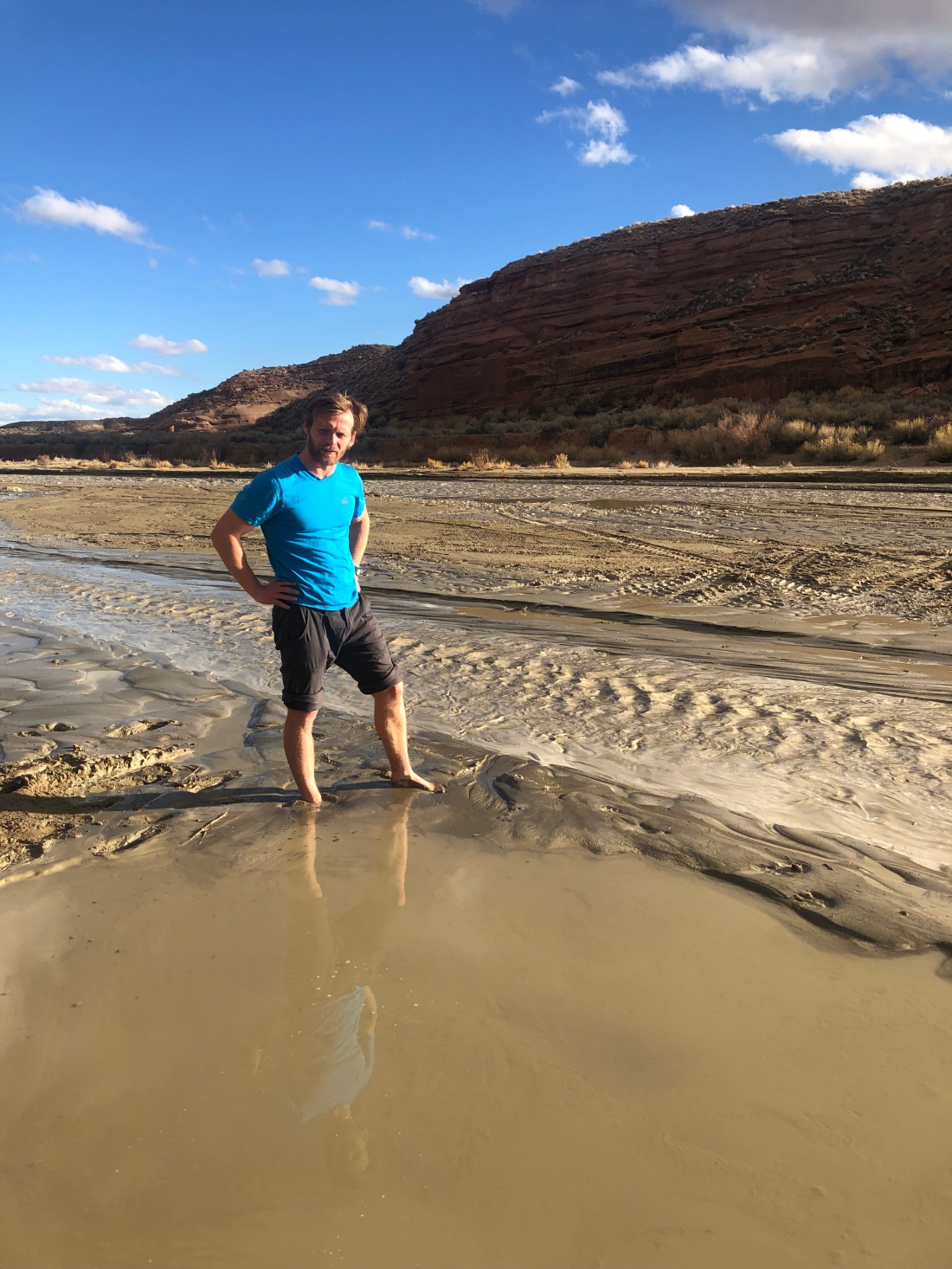
CBFDF776-E2EE-4B95-866F-2CC22F7FE598We reached the wash and…no road crossing. Where there had been nothing but dry rock and sand before, there was now rushing water with small rapids and mud so thick it was like a porridge. We all tried to make light of the situation as we began to accept we were stranded with no way across. The water was reaching chests, high thighs, with zero visibility to the bottom. Calls began to be made, what can we do? What are our options? We are stuck, can we get out ourselves? 

The firefighters wouldn’t come because it wasn’t their jurisdiction, the national forest service didn’t have the resources to assist, the deputy gave us the weather forecast and told us that we had two options: wait it out for the water to dry out or helicopter out. How did we get here?

Well, flash floods don’t mean immediate rainfall happening right in front of your eyes all the time. Rain had fallen hours north of us the day and night before our adventure, so, while the wash was empty when we began our run, those rains had been filling and flowing down the wash for miles over hours and hours to reach where we were. In an instant it had gone from empty to flowing strongly. We hadn’t known we needed to check the weather forecast for nearly 100 miles around us, we hadn’t known that no rain for our location didn’t mean no risk. Now we do….oh we learned very quickly. National Geographic even states that, “In the United States, where flood mitigation and prediction is advanced, floods do about $6 billion worth of damage and kill about 140 people every year.” 
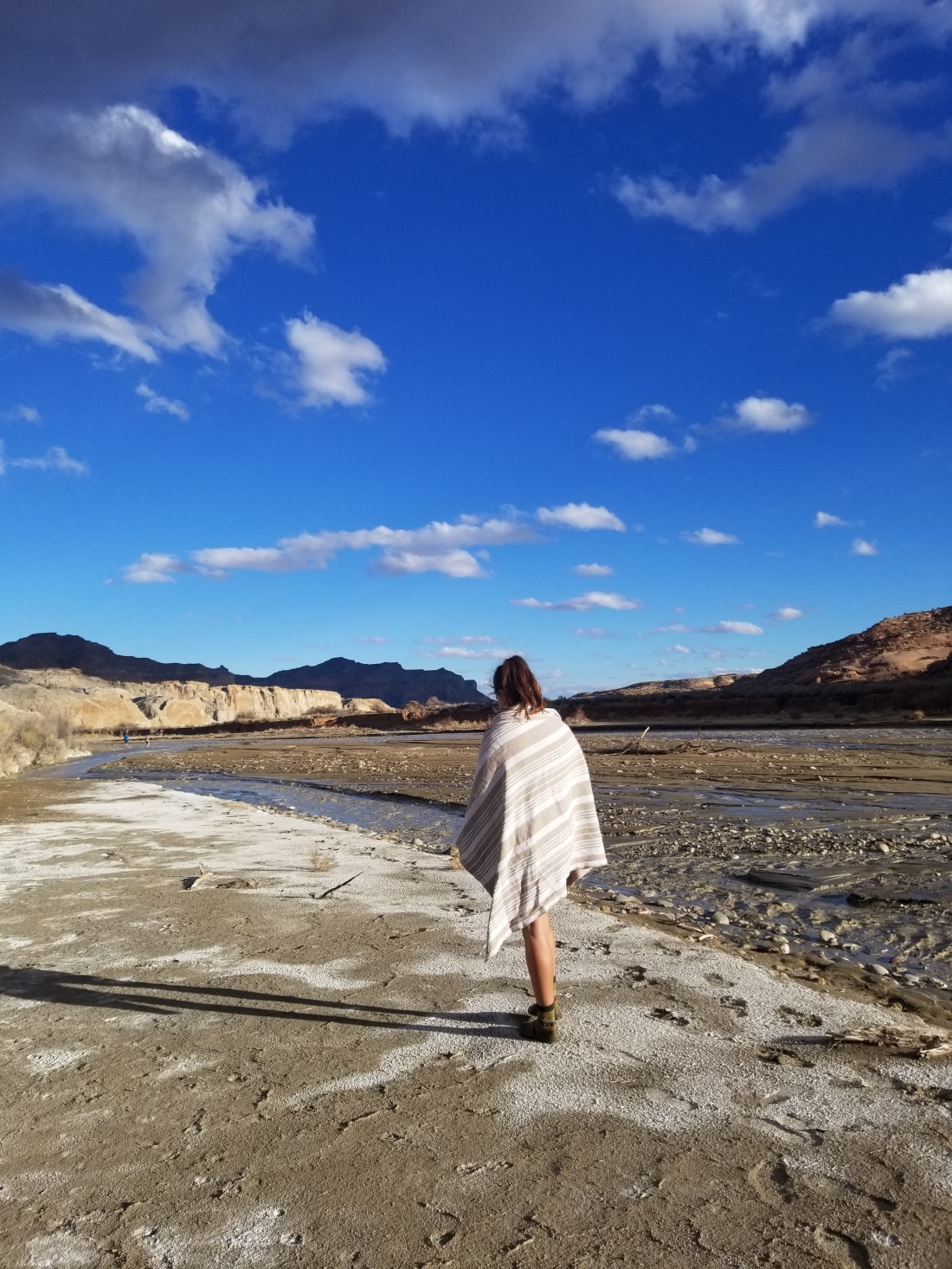
4382C41E-0D2E-4D60-95AF-82521E1C9A47While we weren’t in danger we were still stuck. We had some water, not a ton of food but some…for now. We were more worried for more rainfall overnight or the next day to continue filling this flow. Sticks were placed into the bank to monitor water height which was steadily decreasing as the night went on. By 7, we knew we could get the 4×4 across but were really uncertain about the other two vehicles. We called a tow, driving an hour down to assist us in the night. Once he arrived he pulled the 4×4 across with ease. Next was the two-wheel drive truck, gunning the truck across the first bank which had us flying up to the ceiling as we hooped and hollered by the unexpected strength the little truck had. Everyone was slathered in mud as they got underneath the truck trying to figure out where to hook the chains before the tow began lugging us across to safety. We left the car overnight, desperately needing good sleep a shower. We tried our best to relax and recover and the next morning, returned to find…the water still shin high and flowing. The lip of the bank was broken away and the mud consumed the dry sand and rock we tried to lay down to catch tires. I couldn’t watch as our friend said she was going for it as the water was 3 inches above the body of her car. She was confident, I was bargaining with the Universe to let us successfully get out of there with all of our vehicles in tact. She powered over the first bank and gunned it across the flowing water like nothing was even there — a pro. We were so impressed, relieved and…exhausted.

What I want to say is, flash floods are not uncommon and come in many forms. From slot canyon risks to washes and roads being wiped out…Nature never waits for anyone and it was a beautiful, tough reminder that we don’t control the outdoors, the outdoors controls us. Always do research (even outside of where YOU are for what may effect you).  Some signs to look for for a potential flash flood provided by Backpacker.com are:

Check the Weather

Get the forecast for the entire watershed: Storms can trigger floods miles downstream. Recent rains? Be extra alert–saturated soil makes flooding more likely.

Scout for Signs 

Water stains on canyon walls and debris lines indicate likely flood sites. Take care in areas with rocky ground that won’t absorb excess runoff.

Watch the River

If water suddenly gets deeper, faster, muddier, or begins carrying twigs, needles, or leaves, get to high ground ASAP. Likewise, head up immediately if you hear the roar of an approaching flood.

I’ve also read that strong winds can indicate flash flooding (another thing to keep an eye on).

We were lucky we had cell service, a shovel, blankets, fire and many basics for being stuck — it is not a bad idea to always have an emergency kit in your vehicle for the just in case situations.

Soon, this can be looked back on as a party story to share and a big learning experience that humbled us all!

5 things I take on Every Trail Run


  1. Hoka One Ones1c52b4c3-5c42-46c6-aa93-1e4d33abc49d These are my current trail running shoes and I am obsessed. I have the Hoka Challengers and swear by them. They give my ankles support, I can navigate technical trails and the grip keeps me feeling stable. I’ve put roughly 350 miles on them so far and they haven’t broken down yet. For me this is a huge win since my previous pair – Altra lone peaks with the zero drop, broke down so fast my head spun around. I know this was said to be because they are vegan, but logically, when you’re logging a lot of miles per month and are wanting to be smart with your savings, you don’t want a pair that are going to break down every 2-3 months – those $140-$180 add up fast!


  1. Nathan Sports Pack49856b15-32f6-4647-b94e-dac444734a8d Getting a running pack was the best investment (besides my shoes) that I have made. I used to run with my smallish day pack and got by, but once I upped my game and got a pack designed for trail running, I was MUCH happier. Getting a trail running pack means you’re carrying less weight, your bladder fits perfectly along with additional storage space for layers, gloves, flashlight, book…whatever you think you need when you hit the trails. You have small spots for trekking poles, pockets on pockets for hydration sources and fuel (along with car keys!) Having all of these things at your fingertips right at the front of your packet on your chest is a big plus that I didn’t have with a day pack.


  1. Squirrel’s Nut Butter
    squirrel_s-nut-butter-on-rocks-vegan-from-top-836
    image credit: trailmag.co.za

    do you have thunder thighs like me? Meet your new best friend. SNB will SAVE your body from chafing. I use their vegan product on my inner thighs and the undersides of my *left arm, yes, just the left, because chafing is weird like that. Their vegan blend is candelilla wax based instead of beeswax based, but they offer that as well. This doesn’t get gross after a few miles, has a nice scent and so far, I’ve only had to apply once or twice even during marathon runs! Just remember, this stuff does get melty when it’s super hot out, so try to keep it out of the sun especially if you’re bringing it with you in your pack or it make leak!


  1. Spring Energy Gels55e18646-dd41-4fcd-ae92-e99608860ed5There are so many fueling options for the trail and I’ve honestly tried…most of them. From Gu gels to bloks and baby food packets, trail mix and protein bars – they all have their time and place. Not that long ago I started seeing Spring Energy all over people’s social media. People were raving about the quality; how natural they taste and how great the ingredient lists are…. I caved and made my first order. Well, now I get it. These gels don’t taste chemical-y, they give me great energy boosts without a crash, and I have yet to “bonk” while using them.


  1. Buff867368d9-b01c-4d37-b755-55ceb7420b8fif you haven’t gotten a buff yet let this be the sign that today is the day! Buffs are the best because they are SO versatile. I use mine when it is extremely hot to block sweat or protect my face and during cold weather to block wind chill and cover my ears and nose when it gets chilly. I pretty much always have one on me and don’t know what I did before I invested in one of these guys.


Honorable mentions: headlamp because you never know where adventures will take you and you should always be prepared! Hydration tablets because electrolytes will be your bestie, especially here in the desert. Some kind of GPS tracking (strava’s Beacon feature, watches like Garmin and Suunto, AllTrails Pro, RouteScout, etc) because getting lost once you’ve been hauling your body around is not ideal!

So You Want To Start Trail Running…A Bit of Advice From A Beginner

7f8f27d8-f88b-42e0-878f-f26553937ca4

Before I started running trails it was one major thing: intimidating. All the balancing on rocks, climbing up hills and potentially falling on my face really scared me. But really, deep down, I was scared to fail. I was scared to skin my knees and cry and suck at it (as a side note I have skinned my knees, cried and said…”I suck at this” multiple times).

Growing up, after being a competitive gymnast for ten years, I tried running track for a year. I ran the 400-meter sprint and the 4×4 relay and…detested it. I loathed it. My hips hurt, I couldn’t breathe. I wasn’t cut out for it. I told myself. In college I got really into running on the treadmill. I’d go log 6 miles like clockwork nearly every day, but it was boring, coming from an unhealthy place  and unsustainable for me. Road running was never in the books because gymnastics made my knees ache with the impact and honestly, running near passing vehicles didn’t appeal to me. When I started training for bodybuilding shows in 2014, I had to do interval sprints. These I liked. Pumping my legs powerfully, messing with the elevation on the treadmill. 1-minute sprint, 1-minute slow jog, 1-minute sprint…I didn’t know I was priming myself for FARTLEKS. I got to a point where I could control my breathing, and this felt…powerful.

At the end of 2017 I met Scott, who loves the outdoors just as much as I do. We bonded over nature, getting on the trails and self-propelled experiences. My mode: hiking, his mode: running. As you can see, he persuaded and I will forever say, forced me into running when I would have much rather hiked. But there I was in REI, buying a pair of Altra trail running shoes at the end of December, downloading the Strava app to my phone saying, “here goes nothing”.


Well, let me tell you, from December to March I struggled. I was discouraged. I hated trail running but kept. Showing. Up. What I’ve learned in the months I’ve really taken trail running seriously, and fallen in love with the sport is as follows (and I hope it helps you feel confident to get out here too!)

b54081ea-74c9-459f-863b-819a92cff841

1:  Do not go out on the trails expecting to run as quickly as you do on a treadmill, track or road. If you are able to run an 8- or 9-minute mile on these surfaces, expect to run much slower on trails. When I started, I was sprinting for half a mile, my chest bursting, huffing for air and then, forced to stop and rest, discouraged at my inability to run miles this way. Around March, when Scott really started running with me and teaching me how to pace, I learned what my problem was: I needed to slow down. A lot. Scott taught me to slow down to a pace where I could carry a conversation, I was breathing easily, and it felt almost…boring. This was what he calls an “all day pace”. My all-day pace was around 12:30-12:45 minutes per mile. Imagine going from an 8-minute sprint up the trails to 12:30, it is a huge difference. A necessary difference. I use my Apple Watch on “Outdoor Run” setting to keep myself in line pace-wise, I can look down and check any time to make sure I’m at a good pace and how my heart rate is.

2: Pick flat trails with very little technicality. When you first start running try to find smooth trails that don’t contain tons of rock or technical work that you aren’t prepared for. The Phoenix Mountain Preserve, Dreamy Draw, Browns Ranch and McDowell Mountain Regional Park all contain options that have flat, nicely maintained trails to learn on (these are near me and easy to reference but AllTrails is a great place to scope out easy trails with very little elevation in your area). Taking out the technicality means you can focus on your breathing, your feet, your stride and just being out there. How do you feel? Are you enjoying this? How quick are your footsteps? How is your heart rate?

839c7674-5ad0-4a65-8cc7-8d9528e61a31

3: Don’t try to run the uphills just yet. Your new to this and your body needs time to build up stamina and endurance. If you need to hike, allow yourself to do that! Don’t try to take the uphills at a run – typically, you can hike uphill faster than many can run anyways. The uphills then give you a chance to catch your breath and re-energize for the efforts you need to make coming up! I am not a strong uphill runner, but I am a strong uphill hiker since that was my background and I use that to my advantage. I run with friends that always run the uphills and some that are like me, it is personal preference like anything else – but starting out, save that energy and just hike it!

0B840979-5831-44B9-9621-7EB8178B561F.jpeg

4: Bring enough water and snacks, you need it! What you will quickly find out is that trail running is WORK. It uses your whole body and therefore, you burn a lot of calories doing it! Probably more than you think you would and staying energized and properly fueled and hydrated is really important when you’re out there. When I started, I would suck down my 60oz. of water in 3-4 miles, where now I can maintain at a slower pace with that same amount for closer to 10 miles. I bring lots of snacks: Spring Energy gels, Clif Bloks, Pro Bar Bites, dates, nuts, chia seed packets, baby food vegetable packs, electrolyte tabs for my water, SaltStick chews, almond butter packets. You will learn what your stomach likes and dislikes when you’re on trail (you’ll either feel great or get cramps and feel like you need to use the bathroom….you’ll know). These are things that work for me as I struggle to eat and run at the same time and can’t process things like burritos or pizza or pb&js when I’m running. This is totally trial and error, but it is important!

5e9cc1e0-93f9-466c-bb7d-a00b05a2010c

  1. Don’t compare your efforts to other peoples. This is hard and something I’m still working on. I follow and surround myself with other people who also trail run and perform a LOT faster and better than me. Sometimes that can be discouraging for me when really, it should be inspiring and something for me to strive towards! Everyone is a beginner at first and these people all started somewhere. What I’ve noticed is many amazing runners were long distance athletes growing up, this has been with them for YEARS. So just remember that, when you get out there, you are doing the best for YOU. You are out there for YOU. You are doing something that not many others can say they can/are willing to do. Give yourself the biggest pat on the back because you’re pushing your own limits and getting stronger mentally and physically by being out there on the trails.

DE96CF56-31EA-4E42-B890-D0993EA27B35.jpeg

Some other things I want to note is that running with others is way more fun and there are tons of running groups in the Phoenix area to link up with! Getting out there may feel intimidating but having others around to encourage and hold you accountable can be key. I am grateful to have a built in system with my boyfriend and our circle of friends that all run and the Aravaipa running group I am in (they hold group runs every Wednesday night that you can find in their Facebook group and on Meetup.com)!

Most importantly: get out there and have fun, challenge yourself and watch yourself grow! Don’t be afraid to fall, skin your knees or cry — running brings out so many emotions and it is amazing what you will learn about yourself along the way.

Top Trails in Regional Parks Near Phoenix You Don’t Want to Overlook!

  1. Lake Pleasant Regional Park
lakepleasant
image credit: azcentral.com

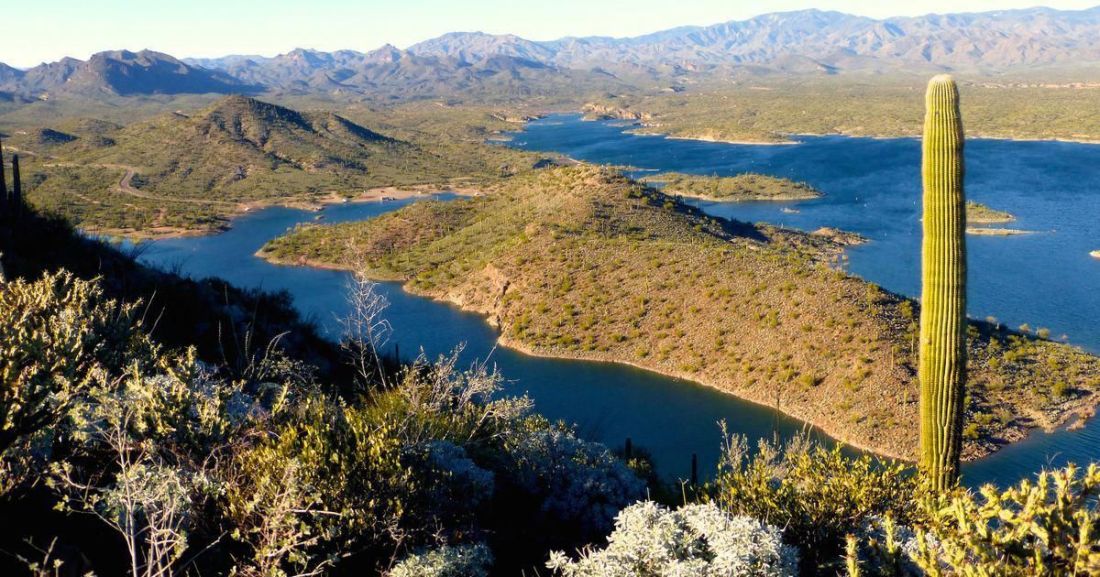
Lake Pleasant is just that….so pleasant! With camping sites branching off the main road like a web before you hit the marina, you have plenty of options to set up camp and enjoy the starlight and calming sounds of the water from your tent. Even better? The trails that surround and overlook the lake itself. For a short hike (3.1 miles) with amazing views and under 500 feet of elevation gain, Yavapai Point is one that can’t be beat! It climbs to a lookout point where you can see lake, boats and all the rolling mountains in the back. You can even connect trails to add on if you’re feeling good and have more time.

2. Skyline Regional Park

skyline
image credit: azcentral.com

If you’re anything like me, a loop trail is the preferred kind of trail to explore. You always see something new and that makes being outside even more enjoyable. Skyline Regional Park offers beautiful 360 views of rolling mountains and traditional desert-scape. The trail here you should give a go is Skyline and Quartz Mine Loop!  With just under 1k in elevation gain in 4.5 miles, this hike is still leisurely although exposed, so make sure to bring plenty of water, a hat and sunscreen.

3.  Spur Cross Ranch Conservation Area

elephant
image credit: azutopia.com

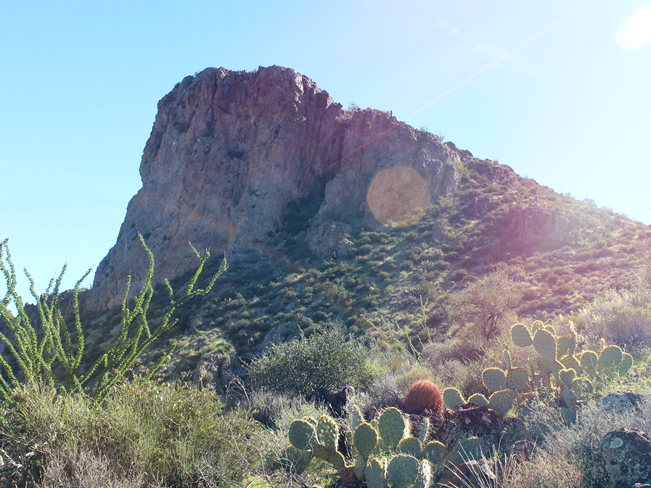
I am a big fan of this conservation area. It is more remote, quaint and the views of the mountains here are stunning. You need to pay cash, so please remember to bring it with when you go explore! For a more challenging hike I highly recommend Elephant Mountain Trail — a 7 mile loop with roughly 1300 feet of elevation gain. When you reach the top of Elephant mountain you can see for miles, the wind a welcomed visitor after the climb. This trail is exposed and you will need water and fuel for the effort!

4.    White Tanks Regional Park

whitetanks
image credit: tripstodiscover.com

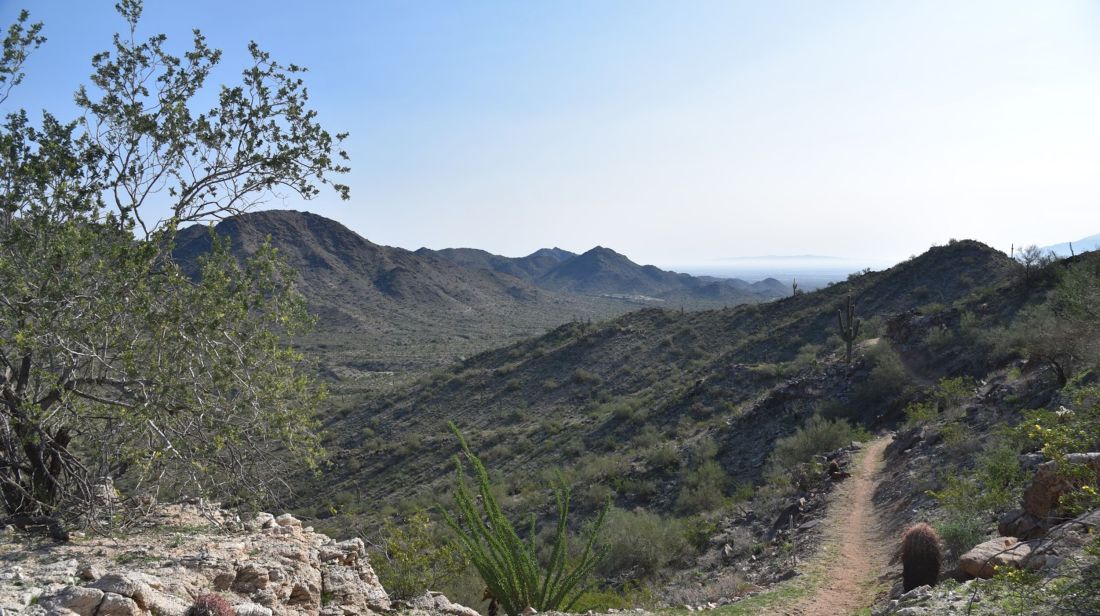
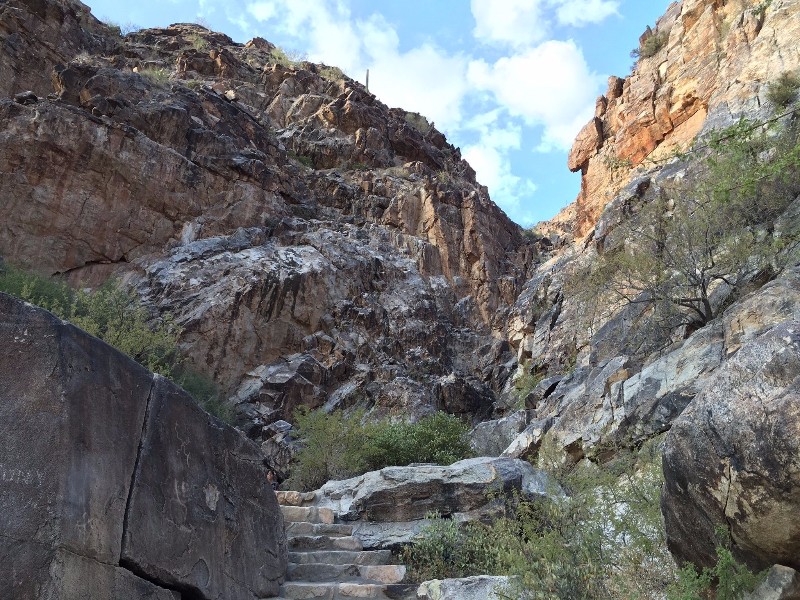
This regional park is rugged, exposed and oh so beautiful. The White Tanks hold seasonal waterfalls and plenty of trails to choose from whether you want something easy or something that will really push you. A quick, beautiful trail to explore for a seasonal fall is aptly named: The Waterfall Trail. Not only may you find flowing water but also many petroglyphs with very minimal elevation gain. I consider that a win! Want to really challenge yourself? I recommend the 16.4 mile haul on the Goat Camp Trail. This trail rises nearly 3116 feet in elevation and some steep climbs — my favorite kind of trail! If you enjoy light scrambling and climbs, this is the long route for you.

5.  Usery Mountain Regional Park

usery.jpg
image credit: eastvalleytribune.com

Usery, within the Goldfield mountains is a beautiful, jagged, raw-looking area which makes it very unique to what we see surrounding Phoenix. If you haven’t been out to this area yet, what are you waiting for?! For a lightly trafficked, gorgeous adventure, Meridian Trail offers jaw-dropping views and only 260 feet of elevation gain in 5.3 miles. This trail would be great for beginner hikes or trail runners while more advanced hikers/runners may want to tack on some other trails to this one.

Why I Don’t Geotag

lnt

There used to be a time that I would tag trails all the time, which I will admittedly say was from complete ignorance. With the large sharing of places and spaces via social media, it is beyond important to realize what impact we have on the places we go. There are Leave No Trace guidelines that most people are aware of: don’t litter, pack in pack out, hiking/running on trails and protecting living soil, don’t take or mess with artifacts or anything you find from the past — preservation. It is preservation in every way we can possibly preserve while still enjoying the outdoors to its fullest extent. You can read more on these principles here: https://lnt.org/learn/7-principles 

Beyond the guidelines we are more aware of there is now one for social media specifically. Be mindful of what your images portray and what you tag. What have I been taking to heart? How many people do I reach or influence? While I may not have a HUGE following, I know I share things and reach several hundred people via stories and over a thousand when I post.

Now imagine if every single person I reached decided they also wanted to go to the exact same trail and experience it. Is there such a thing as loving a place too much? I honestly think there can be, we’ve seen what happened with Horseshoe Bend and the swarms of people now going which has lead to fences going up and potential permitting. Can the trail I share handle an influx of people going and experiencing it? How well known is this trail/area? Are there natural spaces that could get damaged? I try to keep in mind ruins, arches, caves, sacred grounds from Native tribes, etc. An influx of people visiting these spaces can run down the space and recently we have seen the aftermath of people who don’t respect or appreciate nature the same as you might impacting a place you love: http://www.fox10phoenix.com/news/arizona-news/robbers-roost-in-sedona-defaced-with-graffiti

This legitimately enrages me. But we can do our part to protect and speak up for the spaces and areas we love: be mindful. This is why I don’t share specific trails unless it is potentially inside a National/State park or monument. Instead, I share a region or general area. Half of the fun in my opinion is researching areas and finding trails and amazing features for yourself. When you do the work of researching, you feel rewarded! I utilize many online resources: the AllTrails app (downloadable via the apple store) which allows you to look up trails based on area, length, elevation, rating, etc. I utilize blogs and websites like hikearizona.com, I look at maps, I look at google earth even though I’m not very good at it. I will sit online and type in features I want to see “in ____ area” and see what comes up. I don’t stop on the first or second or third page of the internet. I search. I dig. If I want to see and experience something, I will put in my due diligence. To this date I’ve only asked for information on one trail and I respectfully asked someone and expressed I wouldn’t be upset if they chose not to share information. It is up to us if we want to give out information, it is not snobby or rude…it is being mindful.

The new social media guidelines for NLT can be found here: https://lnt.org/blog/new-social-media-guidance

also here: https://www.outsideonline.com/2276176/21st-century-update-leave-no-trace-principles

Everyone is talking about this. Everyone is trying to shift to protect spaces they can wind up being loved to death. We want to be able to keep things wild, we want to go on trails and not see other people’s trash and graffiti. We want to have these places to share with our children and their children, right? Right.

I know the ultimate means of LNT is to not post about a place at all, not share at all but for me, sharing beautiful moments is something I enjoy. I enjoy sharing photos because I use Instagram as a personal visual diary, but I know that in and of itself still may play a part. So I attempt to minimize my footprint in this way. I am not ever trying to be rude or snobby or better than by not responding to a “where is this?!” comment, I am simply choosing to be mindful.

If you do a little digging, I promise you will find AMAZING places and trails and feel beyond fulfilled and excited when you track things down on your own.

There’s also nothing wrong with sharing information — but again, consider the impact of sharing information and with whom you share it with. Are they respectful of LNT principles? Do they abide by these guidelines? What is their influence and impact? 

Munds > Hangover > Cowpies

On the westside of Sedona you’ll find Munds Mountain Wilderness looming overhead with Pink Jeep Tours navigating the dirt roads, telling fun facts and jokes along the way. You’ll also find slightly less trafficked trails with beautiful views overlooking many different red rock structures in the surrounding areas.

One of my newer-found favorites is Hangover trail. I do it as a loop and get all of my favorite things: shaded, beautiful trees, elevation, and amazing rock structures with views for days! You’ll park at the red rock station off of Schnebly Hill Road that also leads to Huckaby trailhead. It’s $5 to park there and has a little bathroom as well as a few picnic tables. At nearly 9 miles long and about 1100 feet of elevation gain, this loop is ideal for a solid day of hiking in the area but once you turn to take Hangover trail, you don’t have nearly as much shade so please come prepared with water, electrolytes, a hat and sunscreen!

Take the Munds Wagon trail to get started and head down and around a little sinkhole of sorts. This beginning area navigates you around the jeep road as you take a turn and rise up to the road – walking across and onto another trail before crossing it again and soon, descending downwards with a beautiful view of Sedona red rock sprawling out in front of you. I’ve taken this initial start-off trail in the winter and in warmer weather and never stop loving the sights you get to take in. Truly, Sedona is one of my favorites. From the red rock to the unique formations and mix of dense trees, cacti and shrubbery — I never get bored.

You have about 1.7 miles enjoying Munds Wagon trail with shade, a dry creek (which may have nice flow once there is rain) and slight elevation gain before you turn left and connect to Hangover Trail. Hangover gives you all of your elevation gain, switchbacks winding up and around as the Mitten Ridge views breakaway the higher you climb. Truly, these vistas are stunning and it’s one of my top 4 favorite views in the area. You’ll find cactus blossoms in the Spring in multi-color along the way and, if you’re lucky, you may catch sight of a deer, coyote or fox! Mountain bikers and trail runners also love this trail so keep an eye out — I’d say there are more mountain bikers than hikers on this route!

You’ll overlook trails to the South with the dusty red rock and hunter green melding together below you as you hike across layers of red rocks. You’ll climb up between two towering sections of rock and over onto a jaw-dropping saddle that gives you views of Mt. Wilson, Oak Creek Canyon and further beyond to the west. The saddle has layers that you follow white markers to climb up, toeing edges and soon, facing Oak Creek Canyon fully. Seeing the lush green close to the water in contrast to the forest green and red is lovely. You’ll see lots of unique rock, spires and overlooks as you follow the trail. This trail is very well kept and easy to follow – so no worries here!

You’ll see a cairn that has you climb up and over a large ledge on the lefthand side that invites you back to a view of Munds Mountain Wilderness, the Merry-Go-Round rock and Cowpies. All of the diverse structures are amazing to take in in one panoramic view.

Follow the trail on down as you pick your way towards the Cowpies area with the canyon cutting open in front and below you. Take a moment to stop and hang out with your feet dangling off the edge, looking out into the distance – I promise you won’t be disappointed. All of this is exposed hiking, which is when you’ll probably start feeling the heat (especially if you’re doing this in Spring/Summer!)

Head back down the Cowpies connect for a little dense tree area that will loop you back around to Munds, which you’ll follow right back to your car. The lot is usually bustling by the afternoon but this trail isn’t heavily trafficked with others on foot, which I really enjoy.

If you’re looking for an escape in the Sedona rocks, I highly recommend giving this route a shot. I absolutely love this trail, PLEASE if you use it, take great care of it, pick up trash if you see it and leave this one (any one) better than you found it!

Exploring the Dells

Prescott, Arizona is about an hour and a half from Scottsdale. A nice, easy drive Northwest will lead you to this bustling little area with some of the neatest rock formations I’ve seen.

34368438_10155864700419775_162429650180505600_n.jpg

I started my day trip with a stop at the Constellation Trail System. The trail is free and is a total of 2.74 miles with plenty of off shoots to choose between! Going through the Dells is a really unique experience with very well marked pathways. The granite juts out of the ground, is growing inside other rocks and all-in-all makes it a really pretty trail (if you like rocks and things!)

There’s a nice monument with several benches at the beginning along with a shaded grouping of trees for when the exposure gets a little too toasty. Once you head out on the trails, there are plenty of rocks to scramble up, between and over. I thoroughly enjoyed all the water markings, rock coloring, formations and looking out into the distance where it looks like an ocean of flowing rocks.

I meandered around taking photos and enjoying the formations for about an hour before heading towards Watson Lake. Since I had never visited Prescott before, I tried to not set expectations of experiencing something “really cool”. I pulled up to one of the parking lots above the lake, looking out at paddle boarders and kayaks leisurely venturing across the lake. It was serene and beautiful with the multicolored rocks jutting out and cropping up to the left. I noticed a frisbee golf course in the same direction and thought it was a gorgeous backdrop for a day of fun.

With another free trail on my hands I headed down the ravine to what is listed as the Watson Lake Circle Loop, meets Flume trail, meets Mile High Trail. I started walking on the graveled path nearing a big canopy of shaded marsh area with pretty budding flowers, vines, cattails and trees. There was a social trail that branched off that included plaques that shared information about the different flora along the way that I really enjoyed reading about. It looped me up and above to another wide, dirt trail headed back towards the lake, passing a police shooting range on my right. Once I got to the lake, Granite Dells and fun shaped rock formations appeared. I began to climb and veer off the trail, exploring in between these rock groupings and towards the water. The ground was super soft, although it looked hard and cracked. I watched herons and ducks wading and bobbing in the water before following the trail marked the “Mile High Route” and advised as “more tactical and harder” than the previous one I’d been on –perfect.

I followed the white markings along the rocks and wove up and down, between and below all different kinds of rock mounds. The views as you scramble around are lovely and the rocks themselves make for a diverse viewing. At one point you begin to descend and reach an area that is lush with high green fronds. It immediately reminded me of Havasupai and soon, I heard that same bellowing roar, knowing very well I was about to see a waterfall. I walked up the trail between the high grass and saw the creek dump from a large stagnant pool. Above it shoots out a large, prominent waterfall that is coming from the lake dam. It has smaller waterfalls trickling from its sides and, although it’s in a dam reservoir, it is really pretty to see! There are metal ladders and a chain to use if you want to shimmy over for a closer look (but there is a bit of a potent smell!)

Once you’re done oogling over the waterfall, you cross a small grated ladder over the creek and begin your ascent out of the small canyon area. You reach a higher point where the trail taunts you with a “steep or steeper” sign, pointing in two directions. I chose to use the steeper section and felt a little out of breath once I reached the top! It is definitely a fun, good workout doing this loop around the lake and is just enough to get the blood pumping. I climbed up and over, down and around the lake, admiring the rocks with their blue and purple rings along the bottom. Soon, I saw the kayak rental area appear in the distance and my car above it. The total hike was about 7.5 miles for me after adding in the nature trail at the beginning. I spent a lot of time meandering through the rocks, climbing off trail and enjoying the area and the views it had to offer. You could spend so much time here but remember, it is almost all exposed with no shading and a lot of rock, so it gets toasty — bring plenty of water, a hat and sunscreen!

The Floor is Lava!

When you think of the desert, you may not correlate that with volcanoes, lava rock, craters and pine trees. But that is exactly what you find when you visit Sunset Crater National Monument in Flagstaff, Arizona.

When you turn onto the forest road you are surrounded by some of the 3,040 acres the monument claims in Coconino National Forest. Open from 9am to 5pm you can pay $20 per (passenger) vehicle to enjoy the 34 mile scenic loop that winds back from Highway 89 through Sunset Crater Volcano and leads you to Wupatki National Monuments. While you enjoy the drive, you will go from high Ponderosa Pine forests of Sunset Crater, down nearly 2,000 feet in elevation to the red rocks and painted desert vistas of Wupatki. Experiencing the climate change between these two areas in such a short amount of time is a thrill in and of itself! Roll your windows down and enjoy the breeze while you pass mounds of volcanic rock, Ponderosas and see mountain after mountain rolling in the distance. 


If you want to explore this area more in-depth there are five hiking trails in the monument! Ranging from .2 scenic overlooks to 3 mile routes, there is something for everyone.  


Sunset Crater is actually the youngest volcano in the San Francisco volcanic field. The Sunset Crater cone is 1,120 feet high after its eruption around A.D. 1085 (which is debated). The eruption itself created the Bonita and Kana-a lava flows that reached 1.6 miles and 6 miles, respectively. When you visit this monument, you’ll see that the volcano has somewhat revegetated with pine trees and beautiful wildflowers.

Driving further back beyond the crater and hiking trails, you will wind down onto flat plain lands with higher climate temps. You’ll curve back and forth watching the pine trees disperse into scattered wildflowers and cacti with the painted desert as your backdrop in the distance. Soon, you’ll see a turn off for Wukoki and Wupatki pueblos.


There are many settlement sites within the monument that were built by Ancient Pueblan People like the the Cohonina, Kayenta, Anasazi, and Singua. Wupatki, which means “The Tall House” was inhabited around 500 A.D. and has several stories and over 100 rooms, a community room, a ball court and a natural blowhole (from the lava tubes!). This stature makes it the largest building in nearly 50 miles and truly, when you’re taking it in from up close it is truly grand.

There was a population boom after Sunset Crater erupted thanks in major part to the volcanic ash that blanketed the ground, making agricultural endeavors more fruitful and productive with the soils newfound ability to retain moisture.


For me, walking around these expansive ruin sites was breathtaking. Looking up at the height and detail of these structures still amazes me. Native American craftsmanship was genius. From natural ventilation made from perfectly placed holes in their structures to mortar and beam placement that withstood nature for thousands of years, you can truly feel the history in these places. I sat looking at these pueblos for long periods of time, imaging their lives in these large estates with Humphrey’s Peak still snow capped in the distance. It is a beautiful sight.

These monuments are well worth your time while passing through, not only for the trails and beauty but for the history!

Nothing Beats Your First

February of 2017 I walked into the local Dick’s Sporting Goods thinking “I’m just looking”. I had been getting more into hiking the year before but had beat my Nikes to pieces. It was time for me to invest in real hiking gear. To me, that started with boots. I’d been researching online, ridiculously nervous about getting just the right pair. I didn’t know what the big deal about hiking boots was, but it sounded like there were all different styles and features. It was a little intimidating.

From researching and seeing Instagram hikers, I knew I wanted mid-height boots and not just shoes. I wanted the ankle support and besides, they looked cooler to me. I walked up to the minimal selection they carried and saw all the bigger names I’d been browsing: Keen, Ahnu and then…Columbia. Most of the boots were between $90-120 but I was still hesitant to drop a bunch of money without really knowing their value. Then I laid eyes on a camel-colored pair ofColumbia hiking boots, mid-height with red laces. I fell in love, even more so when I saw the sale sticker that they were now only $69.99. I couldn’t resist. The box was under my arm without even thinking it through and soon, I had my first pair.


They were pristine. The laces still tight, taught and the boot was unmoving as I forcibly made them fit to my foot for the first time. The tongue was crisp, the treads grippy and full of traction. I immediately felt more legitimate in some way. I always knew once I invested in the gear I was 100% more likely to commit to whatever the endeavor may be. With the purchase of my boots, I vowed to get out hiking at least once a week. Once a week turned to two and my beginning hikes that topped out around 4 miles got longer and longer.

When I began, Echo Trail on Camelback was challenging, the McDowell’s overwhelmed me but soon, my favorite trail became Sunrise Trail. I’d find different routes to trek to the saddle for the summit. The more comfortable I became, the more I wanted to push myself….all in my newly trusted boots. I became more and more confident, bounding down boulders, digging them into the earth as I climbed more mountains with much steeper elevation gains.

The first time I got them wet, I cringed visually. I knew they were marketed as waterproof but still, they officially were worn in now, they were getting the adventure I had promised them and for that, I was proud. In May, I completed 18 miles in the Grand Canyon and looked down at these shoes. Something so minuscule in the grand scheme of things, that had been with me through so many first time experiences, amazing feats and blood-pumping situations. My feet were screaming but my soul was on fire down there. The boots that had been so shiny and impeccable were now more dull in color, no longer smooth but textured from rain and wear. The laces were frayed from snagging on bushes and trees and the tongues ebbed and flowed with the movements of my ankles. My foot slipped effortlessly into the boots now, knowing the exact shape of my arches and toes. These boots were more a part of me than my own limbs at this point. They’d put in hundreds of miles at this point and I had logged serious mileage, come to know myself better and shown myself what I was truly made of wearing these discounted digs.

My boots have seen desert, mountains, rain and snow. They’ve been plunged knee-deep in drifts and submerged in standing canyon water I didn’t see scaling a wall. I flipped them over the other day and the grips were not so grippy anymore, actually, missing from my right big toe and the meat of my left foot. Downhill was a little more cautious-filled now as the slipping and sliding was becoming more and more common. Over a year of self-confidence building and exploring had been done on the soles of these shoes. I just started looking up my next pair and have been having a hard time thinking about parting with my big time “firsts”.

When I think about the smallest purchases that end up being the most meaningful, these are at the top of that list. How can I replace the things that gave me the stability and encouragement to be self propelled and limitless when it comes to what I am capable of? What else have I bought that has brought me this kind of independence and joy? Not many things. I hate to place my joy in material things, but this is one purchase I will be forever grateful that I made.

Now, my best friend Racheal is getting into hiking. She had been hiking in her tennis shoes for awhile before biting the bullet and purchasing her first pair of boots. When she sent me a picture, her boots were nestled in their box. Gleaming and untouched, that camel-colored boot with red laces looked back at me. My heart skipped a beat as I got nostalgic and so excited that this boot was going to change her life and help her find new depths of herself, just like they had for me. We hiked this weekend, taking on the longest hike she’d done to date. Two men hiking down past us stated, “hey! nice boots!” We both said “thanks!” before giggling to ourselves.  My worn, tattered Columbia’s trekking beside her still-new, untarnished pair. Both caked in mud, rocks in between the treads and wet from the previous rains, making memories as we went.

Trails Aren’t Just For Fitness

Your fingertip scrolls over your social media feed, you see smiling faces on mountain tops, exotic destinations and perfectly curated squares glide by. We see an overload of seemingly perfect moments in time, the happiness and euphoria the outdoors can bring. The glory of reaching a summit, the beauty on a trail….it’s all wonderful and positive, these glimpses into other people’s experiences.

What we don’t see or hear about nearly as often is the flip side. Beyond the exercise, hiking is extremely beneficial for our mental health. We don’t hear about those who seek out the wilderness when they are lost, scared, confused or transitioning in life nearly as much as we should. I see it many times, women who seek out the outdoors in times of need, banding together with other women for support, encouragement and inspiration. I see women delve into hard things, new things, challenging things and things they would never have done before they were trying to break out of their own shells. I recently joined Women On Adventures, a group created for women who want to explore and experience new things with like-minded females, on a trip to Colorado. I was in a car with my best friend, Megan, and two power-house women I had never met before, Jenny and Jennifer.

During our road trip I heard why Jenny decided to create Women On Adventures, why Jennifer joined and I knew very well why Megan and I were seeking out female adventure groups to join. No matter what stage of life we were in, what we were facing or what our goals were, we all wanted to feel stronger, more courageous and to bond with other badass females. I realized that no matter if women were coming out of rock bottoms, facing heartbreak, illnesses, relocating, getting out of their comfort zones, overcoming fears or just needing connection…we all found our ways to each other through the outdoors, for the outdoors. I am a true believer that the outdoors shows us who we really are, it expands our views on our own self-worth and capabilities and equips us with the tools and obstacles we need to face to be fearless. 

I have been on my fair share of hikes where they are not perfectly cheerful with birds chirping and smiles all around. I’ve done hikes I couldn’t finish, couldn’t start, met situations that scared me and elated me. I’ve gone on many hikes with tears in my eyes and my chest heavy, needing a release from whatever I was facing. I’ll be the first to admit that nature is my therapy in many ways, on many days. When a song and a view hit me at just the right time and I feel warm, salty tears slide down my face without any shame or fear of being judged. I think we should be sharing and supporting these moments far more than we ever see, because it’s still hard to share that we aren’t always overjoyed and perfectly pleasant every day. It’s still not fully accepted to talk about depression, anxiety or feeling down. Instead of walking towards discomfort many times we still feel awkward when met with other peoples suffering and sadness, when really we should be meeting within these moments. The perfect place to do that is in the outdoors.

The National Institute of Mental Health states that out of adults living in America, 1 in 100 (2.4 million) of them live with schizophrenia, 2.6% (61 million) live with bipolar disorder, 6.9% (16 million) live with major depression, and 18.15% (42 million) live with anxiety disorders. I am one of those 18.15% that struggle with severe anxiety, with a mind that never turns off and constantly worrying about worrying. What I’ve found is that nature is the only things that mutes those thoughts. When I get out on a trail, there is nothing I can do to distract myself, there’s nothing I can buy or entertain or focus on outside of my surroundings and my thoughts. When I get on the trails or out in the wilderness, I am forced to face whatever I am feeling and then let. it. go.

I know that we have a Leave No Trace policy in the outdoors and I truly think we should also have a Leave No Tension rule as well. Don’t walk away from your sessions outdoors with the burdens you had on your shoulders when you walked in. We were never meant to carry all of those stresses all the time and getting outside is the prime opportunity to unpack it with your tent and firewood and let it all smolder in the ashes.

Take it from the study Standford Researchers recently did on the benefits of being out in nature for just 90 minutes. They discovered that people who walk out in nature had a decrease in rumination (or the negative thought patterns often relating to guilt and embarrassment), than those who walk in an urban setting. They also noticed less neural activity in areas of the brain relating to mental illness risks with those walking in a natural environment vs. those in an urban one.

What does this mean? Go outside. Join a women’s adventuring group like Women On Adventures. Get silent out there. Let your shoulders relax. Let your breathing get deeper. Release the stress and negativity occurring in your life. Maybe there will be some tears out there… I cheer that on. Let Mother Nature work her magic on you. Sound cheesy? Maybe, but that’s what it is. Magic. And it works.