
*the national park does not recommend day hiking to the river and back and highly suggests camping at the bottom for one night instead. But, if you’ve got a crazy hair like me and enjoy challenging yourself or have been considering this for awhile….continue reading!
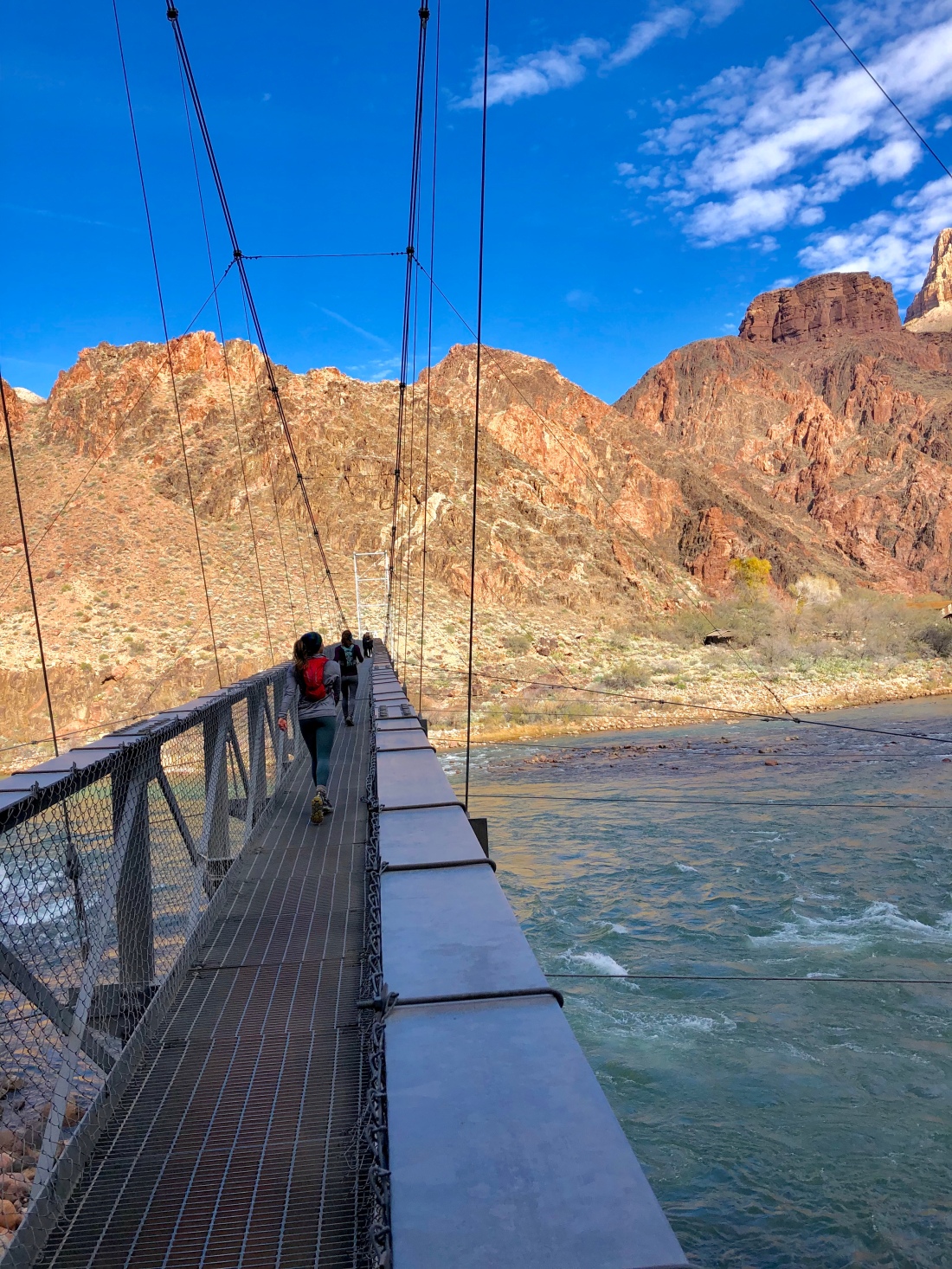
The Grand Canyon is one of my favorite places I have ever been. It took me three years of living here in Arizona to get there for the first time, just hiking along the rim at the North Rim. I saw down into its vastness and internally, I felt an urge begin to rise. I wanted to experience the canyon, not from up overhead like this, but from way way down in its depths. After that, there was no stopping me from my first experience hiking down into the canyon and out in a day.
What does it take to be able to go down into the canyon? Not nearly as much as it takes to get back out of the canyon. One of the biggest things to realize first and foremost is that the canyon is at an elevation gain, even the bottom of the Grand Canyon along the Colorado River is at 2400ft. in elevation, while the South Rim sits at 7000 feet and the North Rim at 8000 feet! When you tackle the canyon, you should try to allow yourself time to acclimate to the elevation gain if you can. Even staying at a higher altitude the night before is helpful. Also be prepared for the air in the canyon: humidity usually ranges from 10 to 30%.
So how do you prepare? Try to hike at higher elevations if at all possible before you go into the canyon. Walk on an incline on a treadmill or stairmaster if you aren’t able to get outside and do hikes with elevation gains and add weights if possible (weight your pack while hiking or carry dumbbells on the treadmill/stairmaster). These practices will help your body strengthen along with adjusting to carrying weight while going uphill. Strength train to prepare as well: training legs will make your base that much stronger while training back and arms will make carrying a pack (if you’re hiking) more doable. Also consider time to prepare: some people will want to train for a few weeks, others a few months, it will truly depend on your starting point of fitness.
Things to consider:
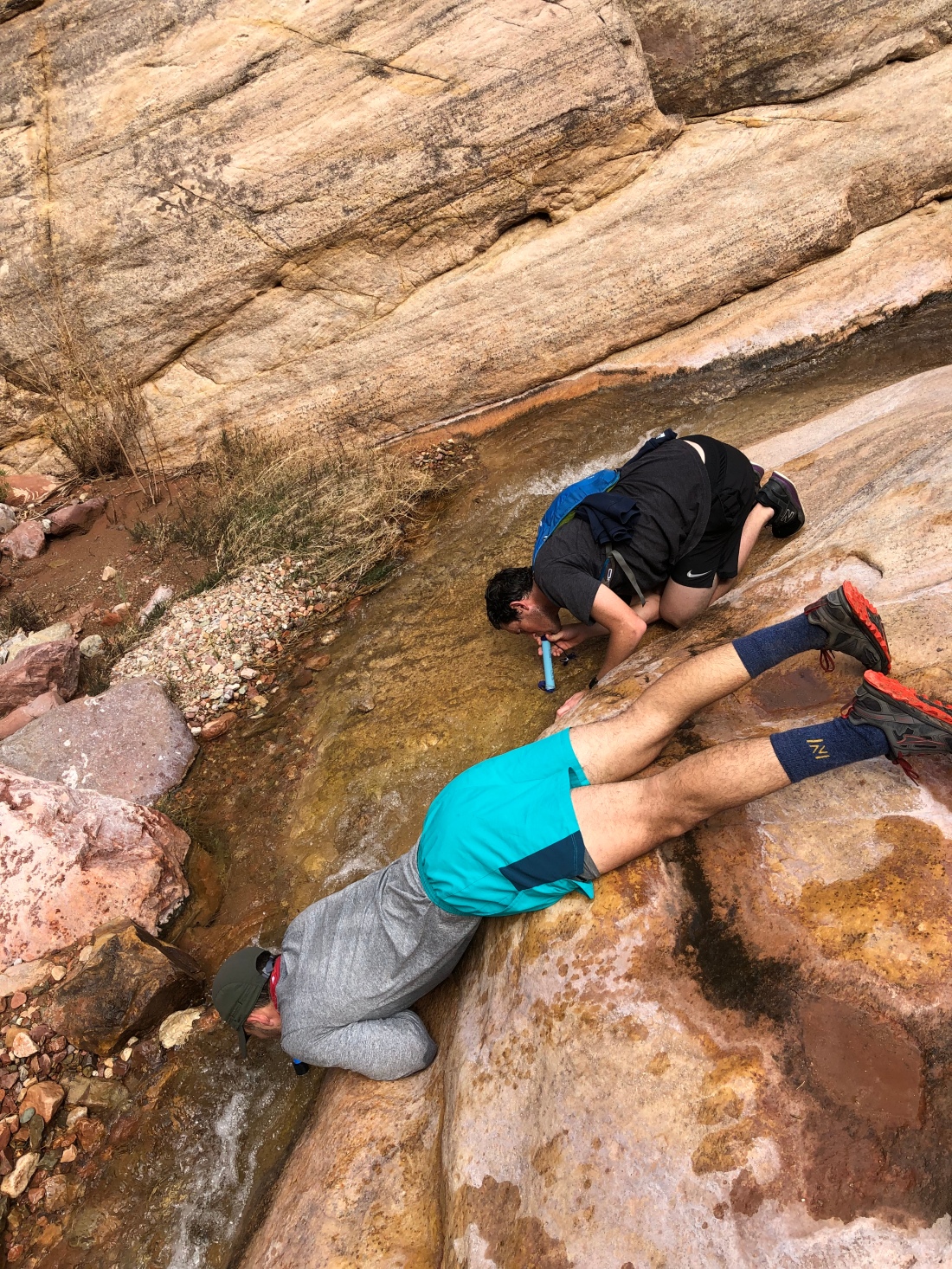
Water — some trails have water access, some don’t. Researching ahead of time is really important and being able to prepare properly is key. Lifestraws are a high recommendation for the trails.
Temp — the rim will be cooler than what you’ll meet when you get down to the river. Look up weather at the rim and also at Phantom Ranch to get a good gauge of how it will be — then you can properly pack layers, a hat, sunscreen, a buff, a windbreaker, etc. Heat will make the canyon much harder to handle since many portions of the trails are exposed (especially on the South Rim as the North Rim does get cooler).
Shoes — make sure you are wearing shoes that are broken in and comfortable that you know don’t blister you, give you hotspots or irritate in any way. This will make your experience that much better as losing toenails and climbing out with blisters is not fun (trust me!)
Snacks — you need proper hydration and energy when you are tackling this gorgeous place. Your body works hard and you need to be able to sustain your energy to properly get yourself down and out in one piece! Salty snacks and electrolytes are major go-tos for me.
Your Clothes — it is not a bad idea to wear clothes that you know will not chafe you, rub you in the wrong ways or are not made for the conditions you are going in — try to match your gear up as well as you can to the type of weather you will be facing. Go on hikes or runs in the gear you want to wear so you know you won’t have issues as you go!
Your abilities — be open and honest with yourself about how much you can take on. How are your knees? Ankles? How is your cardio? How is your heart rate? How strong are you mentally and physically? I recommend trekking poles if you do need the extra assistance taking pressure off your knees and any braces you may need for runners knee or IT band, ankle support, etc. The main rule of the canyon is, if you go below the rim you have to be able to get yourself out. Don’t under-prepare or overshoot your own abilities — take on as much as you know you are able to take on and continue to build over time! The canyon has been there for millions of years, it won’t be going anywhere any time soon!
Breaks — allow yourself time to stop and catch your breath when needed. The canyon is steep and rigorous and your heart rate will rise, especially with the thinner air at elevation. Be mindful, not prideful — allowing yourself a few minutes to reset yourself can help you to feel brand new.
Injury — bring a tiny first aid kit at the least. You never know if you’ll take a tumble and having alcohol swabs, bandaids, athletic tape, etc will be a blessing in disguise.
My first hike down into the canyon was a day hike from South Kaibab to Bright Angel. Taylor and I were in decent shape, hiked often and thought — why not! Nothing can prepare you for how mentally challenging the Grand Canyon is. The hike down (about 7 miles) was beautiful. The first view of the river had us both elated and in awe. We were ecstatic crossing the bridges, seeing the river up close and just being down there — we’d MADE it. Well, not quite. Starting the ascent back up to the Bright Angel trailhead was very challenging. With every rest break, lactic acid would make our legs heavy and even more sore. We leaned on our trekking poles for dear life, willing them to pull us up the 2.5 miles of switchbacks to the top. It was 18 grueling miles and we waddled around to the busses in the most pain. Joyous pain. Our feet pulsed, swollen, numb. All of our energy was completely sucked dry from our bones. But we looked at each other and smiled, completely drunk on the fact that we had DONE it.
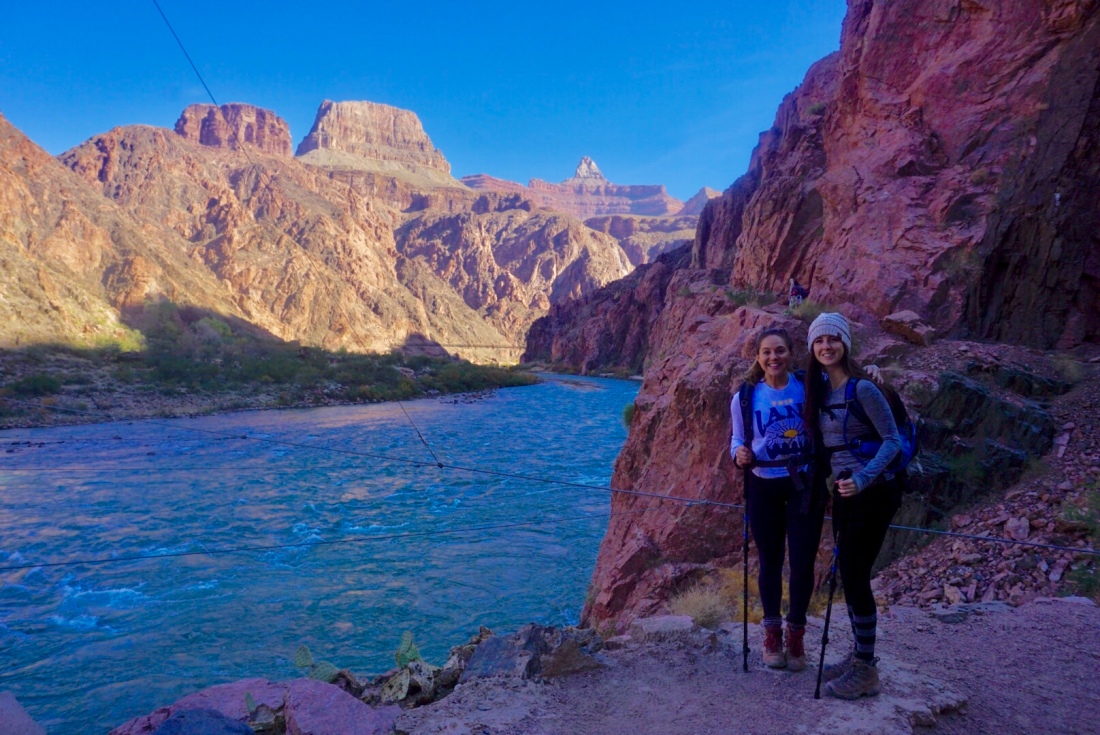
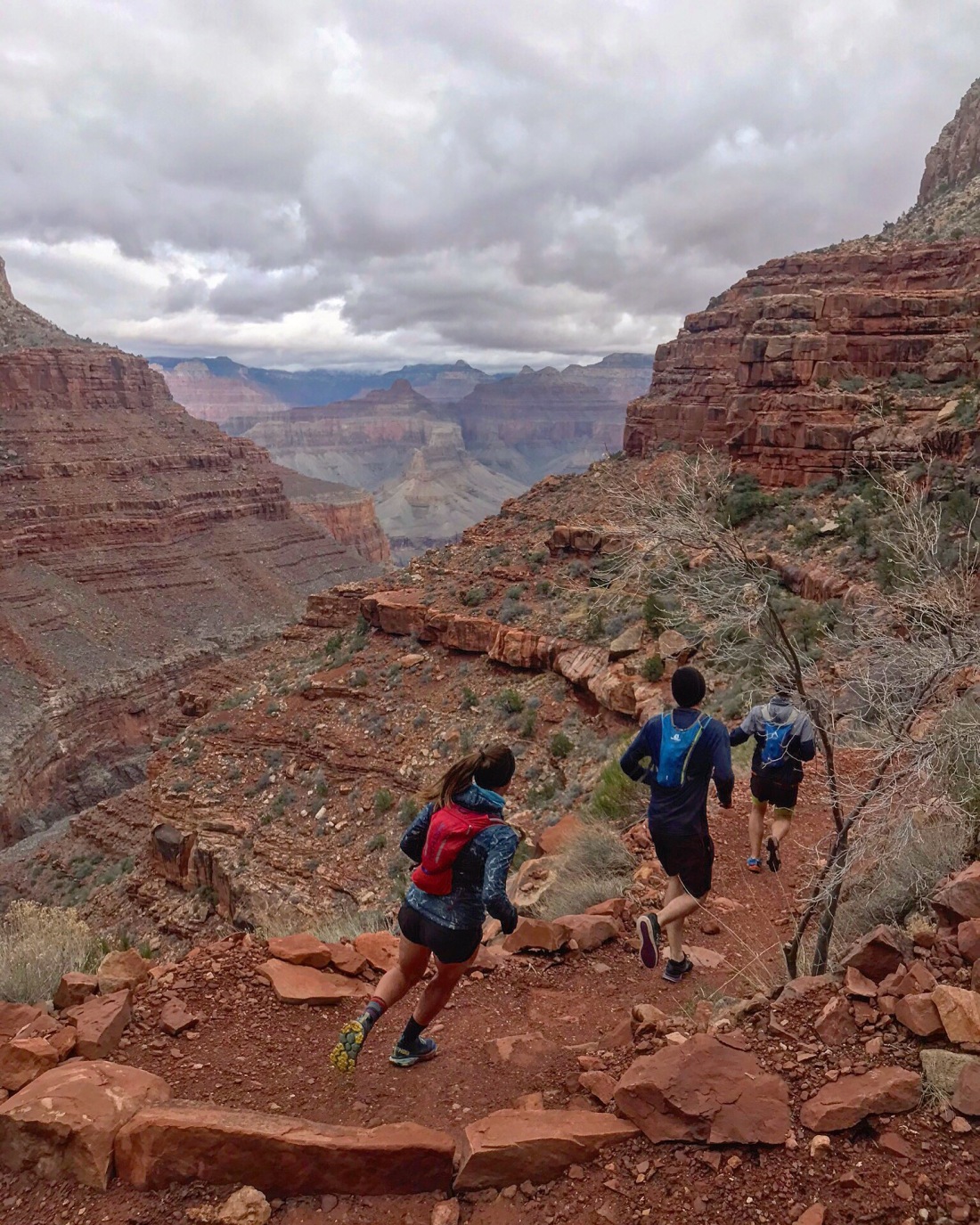
After that, I took up trail running and the canyon became an entirely new playground. Nothing is as exhilarating as running down into the canyon. Some things to keep in mind with running into the canyon are: water sources, energy sources, staying injury free and being very aware of trail conditions and surroundings (we ran into rock slides yesterday), how technical the trail is — some are more primitive than others! Know if you will be around many other people or not (is this really well traveled– like Bright Angel, or less traveled?), always bring a headlamp because you never know how things will go.
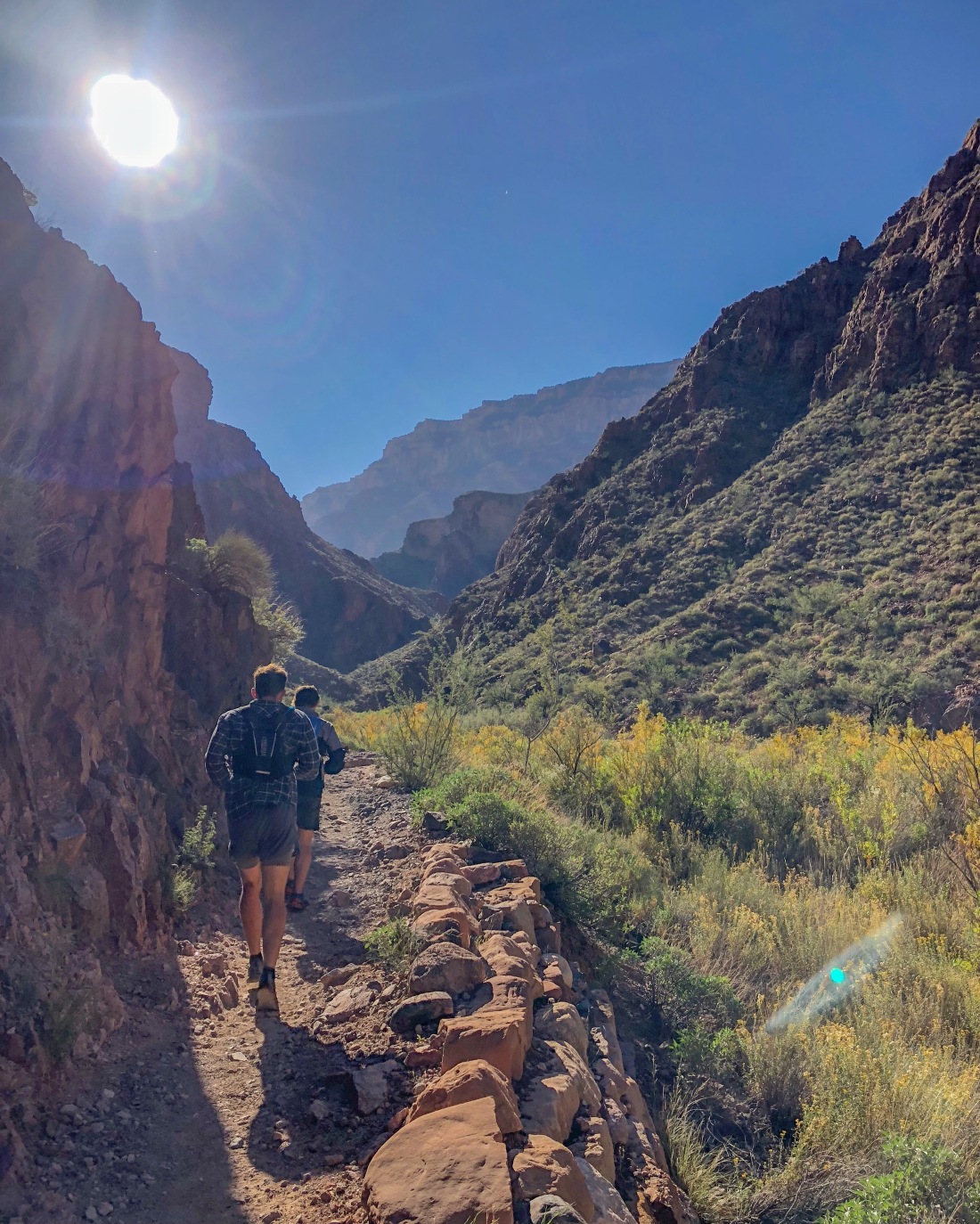
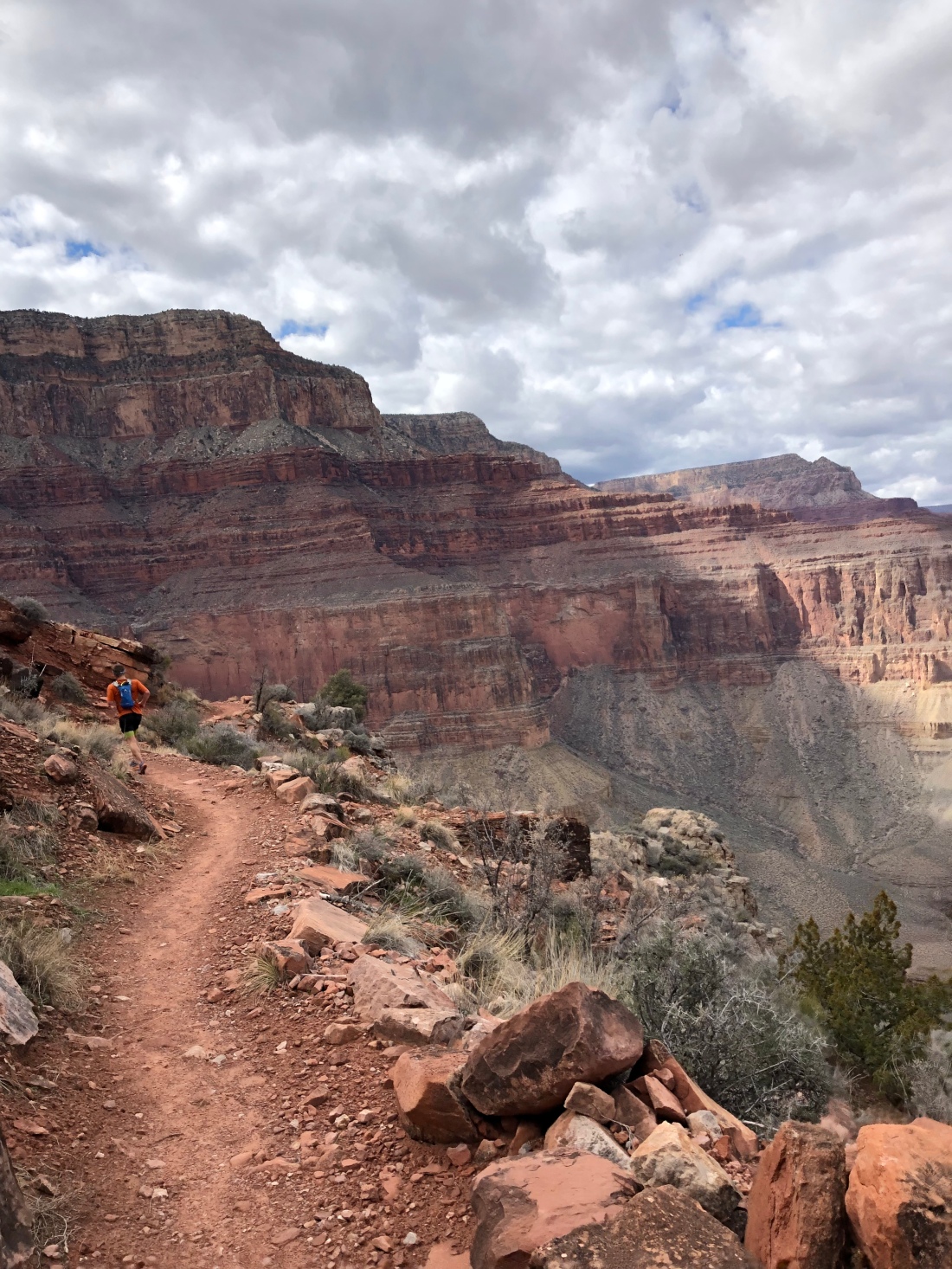
Running the canyon is a very different experience: your pack is smaller, you have to operate more efficiently, you have to be able to handle the mileage and elevation declines and gains in one push, you mentally have to be stronger than the pain your body will face — because it will get uncomfortable, promise. There are many points I would suggest testing out if you want to get a taste (Skeleton Point, Indian Gardens) these points don’t take you all the way down to the river and give you a sampler on how steep the canyon is and if your body is ready/prepared to take a day trip on!
The canyon has many trails to choose from and there will be technical bits to all of them — ranging from easier to very challenging and your trail running shoes should reflect the amount of technicality you are going to face. Set yourself up to feel good, not roll ankles or have pain in your arches, etc.
Make sure you are dressed to not overheat or run too cold or you may be in for a miserable time in the canyon as well. Once you start running, your body will heat up to about 10 degrees warmer than what it is like outside, so preparing for this is key. I always start wearing a pair of gloves and a headband or beanie and can easily shed these as my body warms up — I am sensitive to the cold and this is an easy way for me to regulate my temp in seconds.
What has helped you prepare for challenging hikes/runs with a lot of elevation gain?


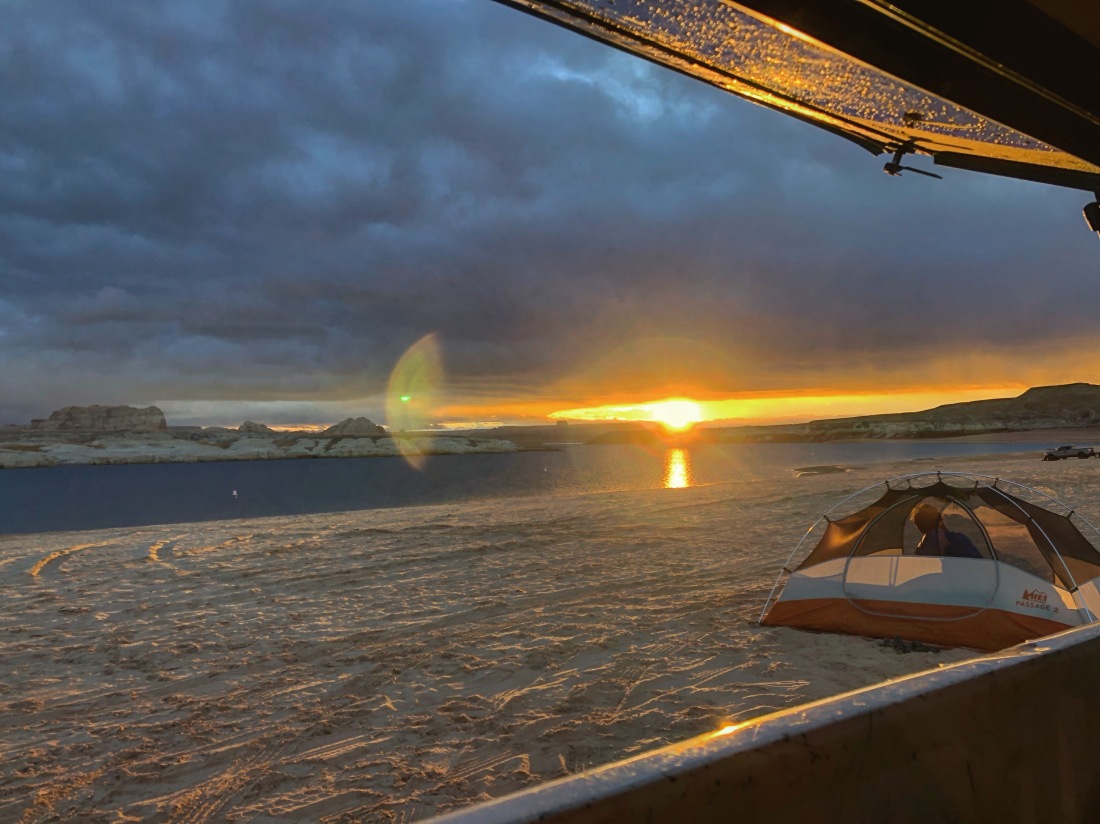
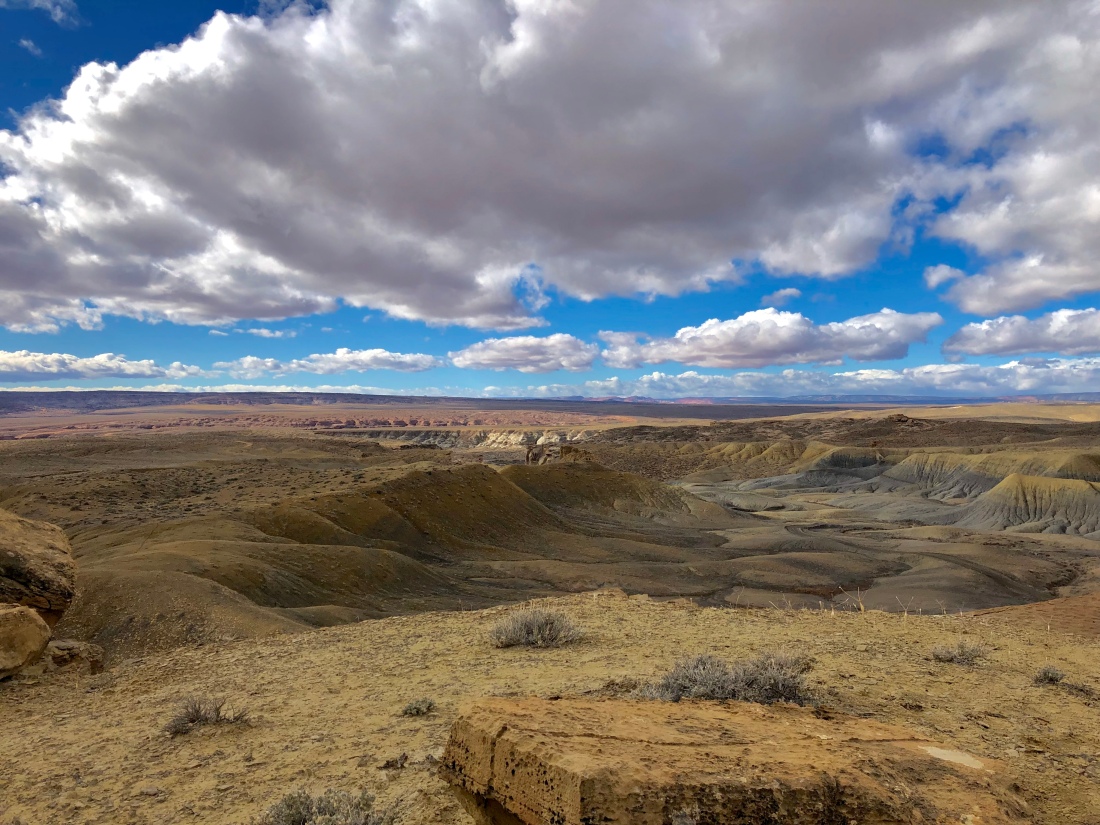 We got 15 miles in the backcountry, seeing beautiful formations and also a lot of dark, ominous clouds rolling around to the north of us. When we reached the cars, beers were cracked and everyone put their feet up to enjoy the efforts we’d just put in on hills we hadn’t expected to be so steep. The rushing water we had seen to our left when we had gotten to the trailhead was still going strong, beginning to web off into small slews to the right and left of the main force. We began talking about food..burgers…fries…and packed up our things to venture back to town for our reward.
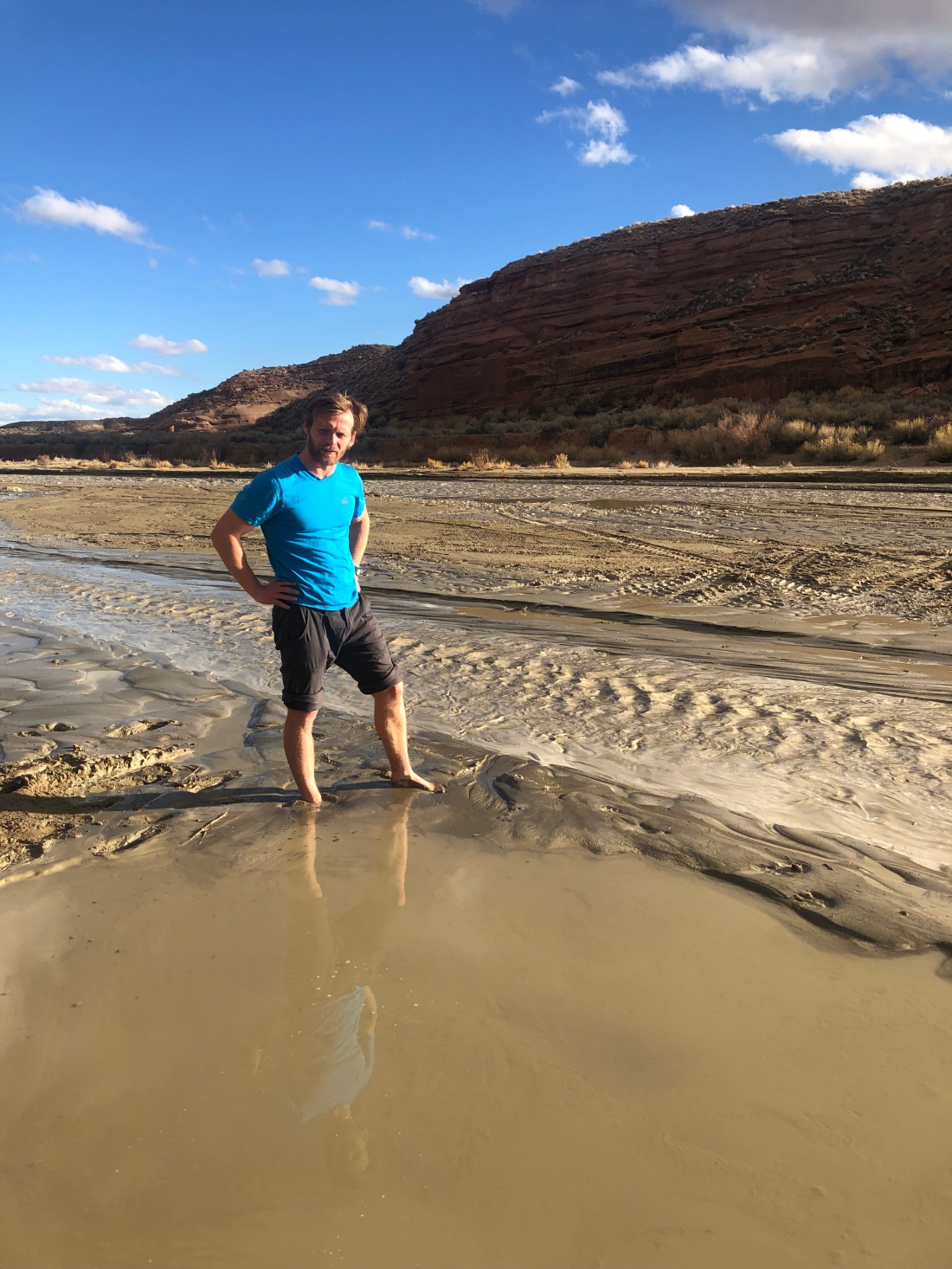 We reached the wash and…no road crossing. Where there had been nothing but dry rock and sand before, there was now rushing water with small rapids and mud so thick it was like a porridge. We all tried to make light of the situation as we began to accept we were stranded with no way across. The water was reaching chests, high thighs, with zero visibility to the bottom. Calls began to be made, what can we do? What are our options? We are stuck, can we get out ourselves?
 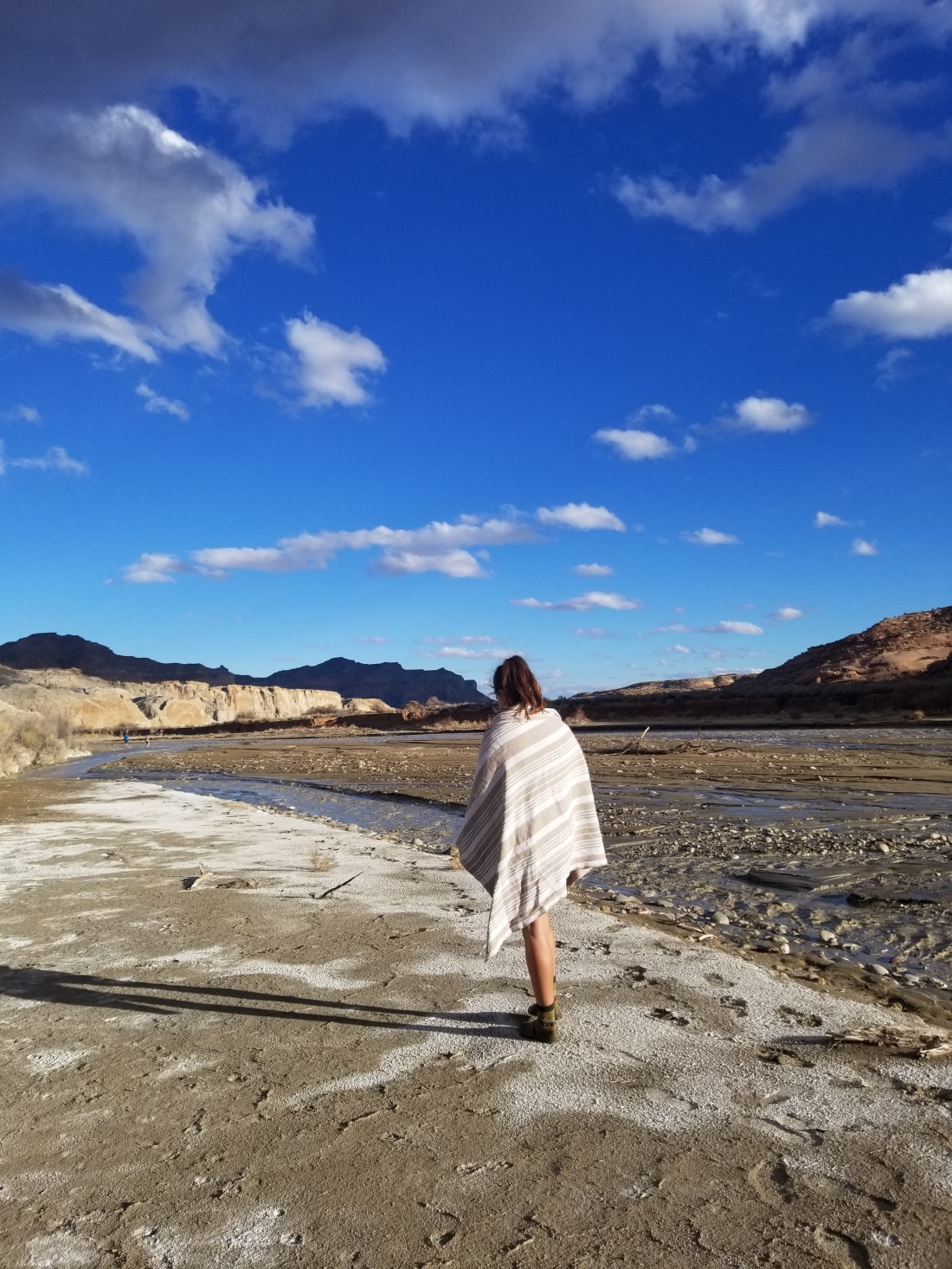 While we weren’t in danger we were still stuck. We had some water, not a ton of food but some…for now. We were more worried for more rainfall overnight or the next day to continue filling this flow. Sticks were placed into the bank to monitor water height which was steadily decreasing as the night went on. By 7, we knew we could get the 4×4 across but were really uncertain about the other two vehicles. We called a tow, driving an hour down to assist us in the night. Once he arrived he pulled the 4×4 across with ease. Next was the two-wheel drive truck, gunning the truck across the first bank which had us flying up to the ceiling as we hooped and hollered by the unexpected strength the little truck had. Everyone was slathered in mud as they got underneath the truck trying to figure out where to hook the chains before the tow began lugging us across to safety. We left the car overnight, desperately needing good sleep a shower. We tried our best to relax and recover and the next morning, returned to find…the water still shin high and flowing. The lip of the bank was broken away and the mud consumed the dry sand and rock we tried to lay down to catch tires. I couldn’t watch as our friend said she was going for it as the water was 3 inches above the body of her car. She was confident, I was bargaining with the Universe to let us successfully get out of there with all of our vehicles in tact. She powered over the first bank and gunned it across the flowing water like nothing was even there — a pro. We were so impressed, relieved and…exhausted.
 Getting a running pack was the best investment (besides my shoes) that I have made. I used to run with my smallish day pack and got by, but once I upped my game and got a pack designed for trail running, I was MUCH happier. Getting a trail running pack means you’re carrying less weight, your bladder fits perfectly along with additional storage space for layers, gloves, flashlight, book…whatever you think you need when you hit the trails. You have small spots for trekking poles, pockets on pockets for hydration sources and fuel (along with car keys!) Having all of these things at your fingertips right at the front of your packet on your chest is a big plus that I didn’t have with a day pack.
 There are so many fueling options for the trail and I’ve honestly tried…most of them. From Gu gels to bloks and baby food packets, trail mix and protein bars – they all have their time and place. Not that long ago I started seeing Spring Energy all over people’s social media. People were raving about the quality; how natural they taste and how great the ingredient lists are…. I caved and made my first order. Well, now I get it. These gels don’t taste chemical-y, they give me great energy boosts without a crash, and I have yet to “bonk” while using them.
 if you haven’t gotten a buff yet let this be the sign that today is the day! Buffs are the best because they are SO versatile. I use mine when it is extremely hot to block sweat or protect my face and during cold weather to block wind chill and cover my ears and nose when it gets chilly. I pretty much always have one on me and don’t know what I did before I invested in one of these guys.




 Bri With A View