Building up my trail running endurance…how do I get there?

So you’ve started running. You’re enjoying the trails, the way getting outside feels and the fitness it is giving you. But what about when you want to start going from 2 to 4 to 10 to 20 miles? How do you build up your endurance?

wwrblackcan
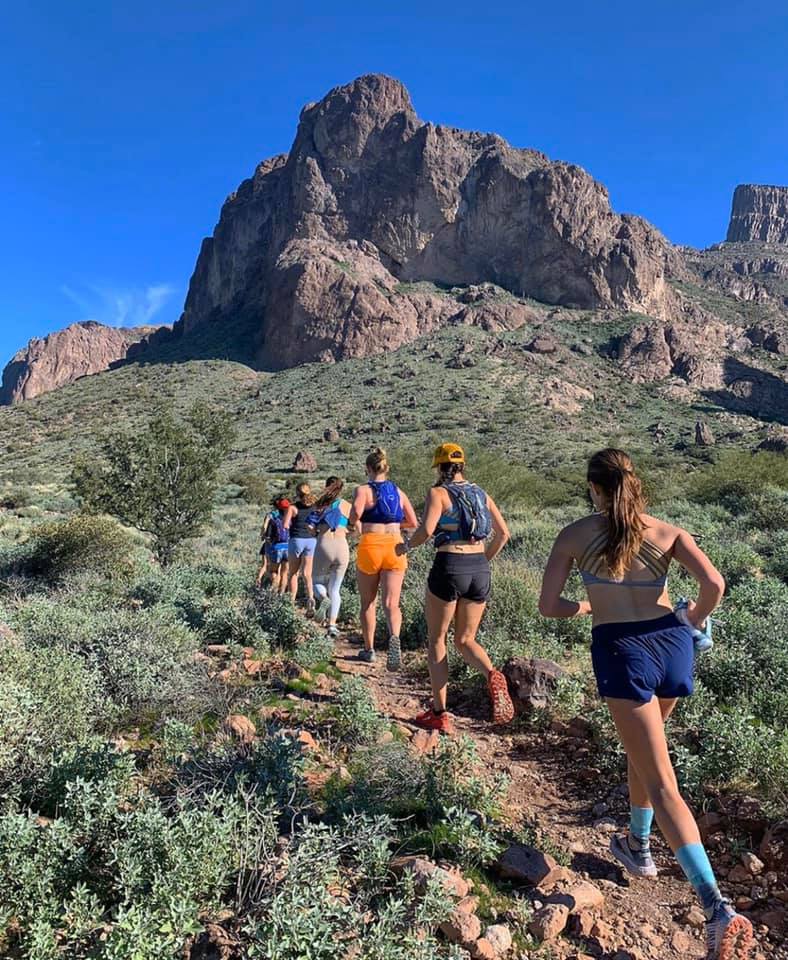
Image by Paul Nelson from Black Canyon Ultras

Maybe you’re looking for a magic bullet to get you there but the biggest key to strengthening your stamina is….

  1. Consistency. If you are consistent, you will see results. When you are training on a schedule, it teaches your body to adapt to the amount of work you’re putting in. If you’re only running once or twice a week, your body may not adapt as quickly as if you are running 4-5 times a week, even easy runs that aren’t demanding or stressing your body. The Run Experience gives a great example of building up your stamina: “if you’re running three times a week for 20 minutes, increase the amount of time you run and the number of times you run every week incrementally.For the first week, add one run (for a total of four runs) and add five minutes to each run. On week #2, add another five minutes to each run. You’ll be running for 40 minutes four times a week. For the third week, add five more minutes to each run, for 45 minutes of running four times per week. On week #5, add another run so you’re running 45 minutes five times per week. For the sixth week, bump up one of your runs to 60 minutes, and keep the others at 45.”In very little time, you’ve been able to go from 30 minutes to an hour of running without having to stop or needing frequent breaks.
  2. Slow Down. Yes. Slow your pace…slower….even slower. One of the hardest things to do, in my opinion, is strip the ego and get humble with yourself and the idea of needing to be “really fast” right off the bat. To endure for long periods of time and to be able to run for hours…you have to slow your pace to get faster. Does that sound silly? Maybe, but it works. Time on your feet is incredibly important for endurance and the only way that will happen is by lowering your fatigue in earlier miles to allow you the fitness to go further. The ability to run farther is based on the foundation of “easy running”. A great way to start practicing this is focusing on your heart rate. You want to build up your aerobic fitness, meaning you can run farther without raising your heart rate. When your heart rate rises, it taxes the body and slows down recovery when it is done repeatedly for long distances. If you’re running and breathing heavily, you need to slow down your pace. You should be able to hold a conversation as you’re running and maintain that — that is an easy effort pace and a great place to start as you build up your stamina.
  3. Build up slowly. Don’t try to jump from 3 miles to 16 in a few days span, allow your body to patiently adapt to the stress and changes you are putting on it while upping your distance slowly. Upping your distance gradually also lessens the likelihood of getting injured, as your muscles, joints and ligaments tackle entirely new territory. RunnersWorld expresses, “We like a program that adds 1 mile a week to your weekend long run, for example: 5 miles, 6 miles, 7 miles. Every 4th week, reduce mileage by skipping the long run. Rest and recover. The next week, start building again, 1 mile at a time: 8 miles, 9 miles, etc.”

    wwrsupes
    Image by Melissa Pozniak
  4. Say Hello to Tempo. What is a tempo run? The Run Experience shares, “it is a sustained effort run that builds up your body’s ability to run faster for longer periods of time. Typically you would find a pace that you can maintain for at least 20 minutes, but ideally for a 45-60 minute period of time. So, you want to be fast, but not all-out sprinting. If you think about it in terms of effort, on a scale or 1-10 with 1 being walking slowly, you’d look for a pace that feels like a 6-8 effort.” Runs like this, logically, will lead to your endurance pace feeling easier and much more manageable for longer periods of time.
  5. Cross-training. HIIT, Plyos, Elliptical training, swimming laps, biking or spinning  are all great additions to your endurance-building plan. There is a chance that, outside of these being great cardiovascular workouts, these bursts of high intensity moves can help running at a slower pace feel easier mentally, simply because it does not require the same intensity.
  6. Weights are your friends. I will say it and say it again, being strong and lifting weights is important for trail and ultra-running. For your body to hold up over long periods of time you need to have a strong core, back, glutes, hamstrings, quads….everything. If you’re pushing uphill and your lower back starts to ache over time…it may be a sign you need to incorporate more core work. To start upping your stamina, you should prepare your body for the toll it will be taking as well. Start focusing on training your body for the mountains and hit the gym, I promise it will pay off.
  7. Pay attention to your nutrition.  How much you’re eating (and what) is very very important as you begin upping your distances and endurance. You have to make sure you’re eating enough. Running torches a lot of calories, but if you’re not replacing those calories while you’re running you will hit bonk-ville. And if you don’t nourish and replenish your body properly after your runs, you will feel fatigued and experience diminished efforts during your runs. Need somewhere to start? Check out this article by MapMyRun and this one by REI.
  8. Get a running buddy or two or five. Find some pals that are committed to the long distances with you. Strip yourself of the excuses and start to voice, write down and share your goals. Tell your buddies, “I’m going to run for 1.5 hours on Saturday and I want to be able to talk to you the whole time with ease, do you want to come?”, then 2 hours, etc. — be specific about your goals and have others come to share in the miles so that the time passes with more ease!

    WWRsomo
    Image by Melissa Pozniak

Race Report: Black Canyon 60K

In August of 2019 I clicked “confirm” and signed up for the Black Canyon 60K. My first 60K and second ultra so far in my trail racing career. As someone with no running history or training (didn’t run in high school or collegiately) this race is intimidating, to say the least. The Black Canyon Ultra is a net downhill race as well as a Western States 100 qualifier (in the 100K distance). This means the BCT attracts many elite runners and the speedy runners who can fly on this style of course. I’d never call myself fast and I’m most certainly the kind of trail runner who loves big climbs and descents over anything else which meant I had just signed up for something that wasn’t in my wheel house. Gulp.

Screen Shot 2020-02-16 at 2.14.49 PM

From August to mid October I battled a strained hip flexor, going to PT and doing more yoga and stretching than I could imagine while being dry needled, electrode-d and scraped. It didn’t feel 100% but I decided to run Rim to Rim in the Grand Canyon in October where miraculously, I had no pain. My hip wasn’t tight, nothing hurt and I had this glimmer of hope that my training for Black Canyon may work after all. If I could do 7k of climbing out of the canyon, surely things were headed in the right direction. I began to up my mileage in December, achieving my first back to back weeks over 50 miles before hitting 50 miles at Across the Years at the beginning of January in 9 hours (leading to a 62 mile week). I used that volume to flow into my last three 50 mile weeks heading into a slight taper. I didn’t cut back intensely and just maintained into race week leading into yesterday morning.

The night before, I laid out all my nutrition and gear to have ready for the morning so I didn’t have to think twice. I have leaned heavily on bringing my own nutrition after a flipped stomach at Adrenaline in May where I couldn’t get myself to eat for over 15 miles. I brought Probar BOLT chews, fruit leather, date bites, SaltStick fastchews (orange) as well as filled my 60oz. bladder with SaltStick electrolytes, Elixalyte and carried Spring Energy Canaberry packets with me as well.

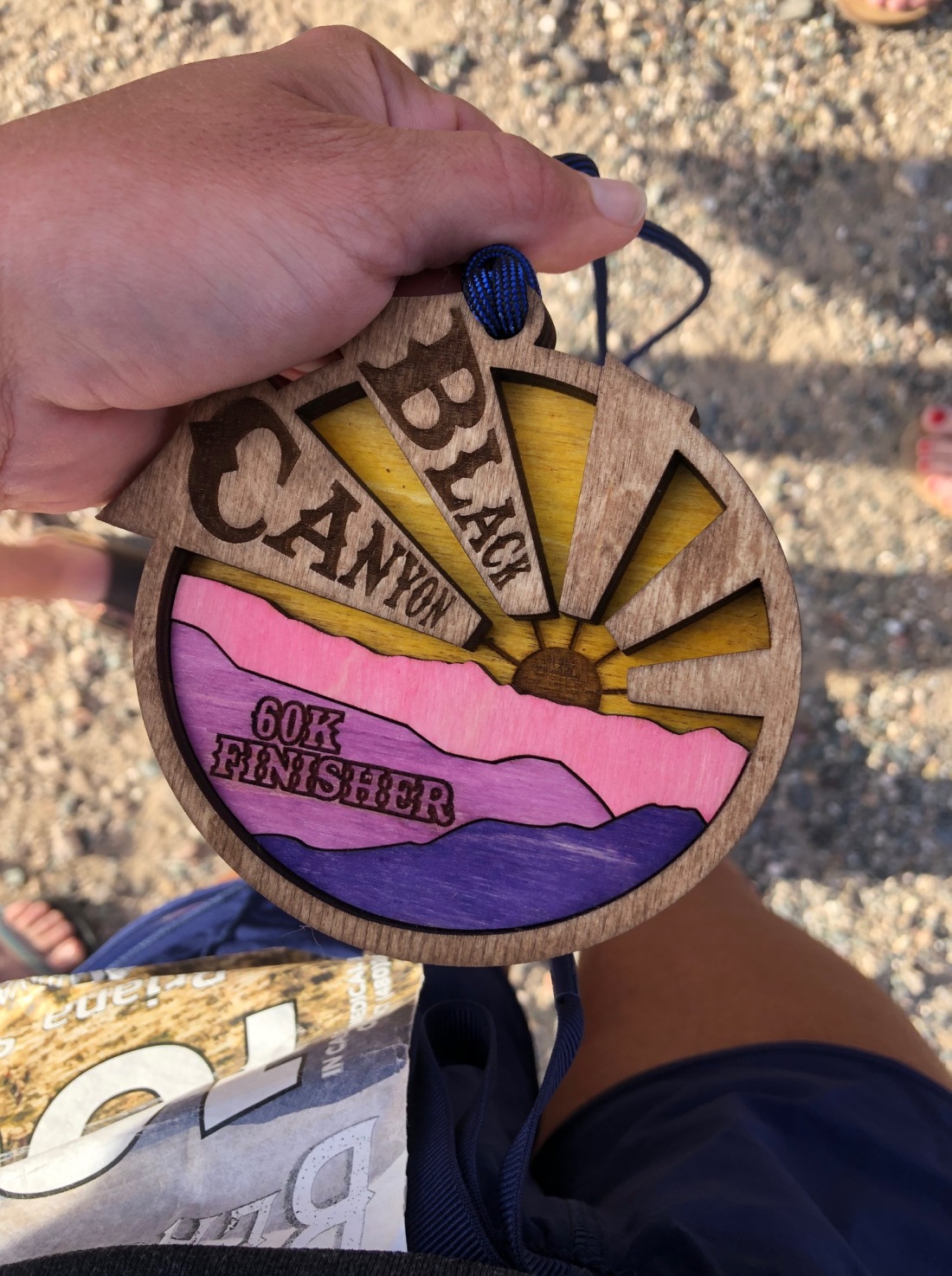
bctmedal

The day began by heading to Rock Springs, parking cars and hopping on shuttles that would drive us to the top of our point-to-point race. Starting in Mayer, AZ at the high school, we started at 9am with a lap around the track before heading out, running through the Spring Valley township and out onto dirt roads for roughly 4 miles. My goal for the day was to race a very consistent and strong pace throughout, leading to the finish where I hoped I’d feel good enough to say I could’ve kept going. I started those road miles off very conservatively and it can be challenging to allow many runners to pass you without trying to speed up your pace to match. After heading onto the single track I got into a groove, recognizing the section from preview running it two months prior. The day was crystal clear and the weather was perfect. At our start Mayer was in the high 30’s, but as you run you drop down towards the Phoenix valley, towards the warmer weather. The single track weaves across open pastures and farmland with the Bradshaw mountains to the right, capped with snow from our cold front that moved in last week. Seeing the rolling hills backdropped with the expansive mountains always gives it such a “wow” factor, which wasn’t lost on the three men I paced with for the first 13 miles. The first two men I met, Eric and Dave were from New Mexico and Wisconsin respectively. They had never been to Arizona before and both had these amazed reactions to our scenery, making it that much more enjoyable for me to take in alongside them, through the eyes of first timers. We talked about races and where we were from, our jobs and this trail we were running. Heading onto a forest road, you take a sharp turn dropping into this incredible canyon as the trail winds along the center of the mountain you are enclosed in. Looking out to the left,  you see the vast hills open up showing you rolling hills down towards Black Canyon City. It’s like a painting the way the hills fold and roll alongside each other, like the earth making waves and this incredible trail cutting down into them.

Many gates are present on the BCT to keep cattle in their respective areas and as many opened and closed them, I was small enough to bend and fold in between the gate bars, continuing to move with relative ease. I passed through the first two aid stations without stopping after I’d made the decision to carry quite a bit of water, electrolyte water in a flexy bottle and foods I knew my body responded well to with me from the start. I was able to maintain pretty consistent miles as we hit our half marathon point and headed out through a section that winds you through your first taste of desert-scape with cacti and granite rock on the trail. You can’t hear or see the interstate alongside you to the left, making it mind-blowing to know traffic and the world is zooming by not so far away while this breathtaking trail and epic race are happening just on the other side. Making the way to Bumble Bee Ranch aid station you find yourself experiencing a beautiful downhill with grated rocky footing that has you bobbing and weaving down towards an open view of cacti and a small town below. Much of this section felt like a blur to me as I found myself in deep thoughts often, I’d dropped my pacing pals at the previous aid station and it was just me and my body, moving, passing others and getting into the zone. I was starting to feel the heat of the day pick up and knew at Bumble Bee I needed to start utilizing liquid calories (GU Roctane) and ice. I hit the road crossing and started heading into the ranch with two men when suddenly a loud burst of cheering and yelling could be heard. There were all of my friends, shouting and clapping and making a tunnel, waiting for me to come through. The two men next to me turned, “Why are you so popular?! Who are you?!” as I giggled, overjoyed seeing their smiling faces. Words can’t describe how powerful it can be to see loved ones when you’re out there exerting yourself and being in your own head for hours on end. I ran into the barn getting Roctane and stuffing ice down my bra and all over my face before Melissa offered me a chug of Lime white claw. Conventional at 20 miles during your race? No. Fun? Yes!

I headed out with two bean rolls in my hands and a smile on my face as I went on to cover the 5 miles of “unknown” trail to me on the course. These 5 miles were the only ones I hadn’t explored before the race and also held the climb leading to Gloriana Mine aid station. I knew I needed to be mindful not to bomb my legs out, which is very easy to do on this course. With all the beautiful downhills you can get easily swept up and start to fly, faster than you should before having to climb and handle rolling hills throughout the duration of the race. I power hiked the climb out of Bumble Bee and modestly ran the flats, tuning into my breathing and heart rate, checking my pace on my watch and staying confident that this method was the best for me. This section had gorgeous trail that skirted the side of a mountain with a road below, as many drivers slowly passed down beneath you are looking to the right and seeing the rugged-ness of the Bradshaws and the winding trail before you with runners moving alongside and up the trail in conga lines or lone runners pacing it out. This trail isn’t butter smooth, with rocky footing and terrain that can wear on your feet and ankles over time — it truly is a deceivingly challenging and demanding course. I had to play hop scotch with four bike-packers for nearly 6 miles, back and forth starting and stopping for one another as they moved towards Gloriana and through it around the same time as me.

When you hit mile 24, you pop up and see Gloriana come into view. I willed myself not to speed up just to reach the next aid station, wanting more ice and craving oranges. I also knew at this point, I had 13.4 miles to go and to me, 13 was something I could wrap my brain around. That was nothing in the grand scheme of things. It was happening, I was completing this ultra feeling beyond good. No stomach issues, no negative head spaces, just hours of taking in the scenery and practicing gratitude miles. Every 5 miles or so I would just start listing off all of the things in my life I was grateful for: my healthy body, the fact that I’d overcome injury, the fact that my stomach hadn’t turned on me, how I had amazing friends that spent nearly their entire day out on the course to see us and cheer for us, that my boyfriend had taken time away from chasing/filming all of the 100K leaders to come see me on course, and on and on it went. Every time it lifted my spirits so high and just kept me floating on the course. I hit the aid station, sucking down orange slices and refilling ice in my bra as everyone clapped and laughed. I doused my buff in water, wrapping it around my wrist to continue drenching my face, neck and quads. I started out of the aid station, leap frogging the bike-packers one more time before they were able to speed down the trail with less rocky and technical navigation areas. I was glad to continue moving with ease and to take on the last portion of the course that had brought me so much joy as I ran it a few weeks ago with friends. I kept replaying that day in my head, checking off the miles and memories as I went.

jamilandi

Staying consistent had played in my favor as I’d moved up in the field and noticing that every single female runner I encountered was the same: we were all constantly cheering for one another, supporting one another and giving each other words of encouragement. This is one of the big reasons I adore this sport: out here, we want to see each other succeed and we want to uplift one another so that more women take chances on racing ultra distances. Supporting women to feel empowered and capable means we all go out and shine that light and hopefully inspire other women to think “maybe I can do that too”…..you CAN. I left every interaction with the ladies on this course feeling so proud to share the trails with them and inspired that we were all out here having our own experiences, facing whatever may come and still showing up for each other even in the smallest ways to say “keep going”. And keep going we did. From Gloriana you weave through cacti and shrub, running further down towards the Agua Fria river. You lace up and down, into and out of washes, leading to your first river crossing that is about ankle deep. The water felt amazing and I grabbed handfuls to splash over my face before climbing out and up switchbacks with my sweet friend Allie. Yesterday was her first ultra and she fought incredibly hard for her finish, seeing someone I admire and respect so much totally push with everything she had inspired me more than I can say. These days aren’t for the faint of heart and her grit was unstoppable. Rising up over the switchbacked ridge, you again weave through desert terrain with shrubs, cacti and nothing but green rolling hillscape before you. Being past the 30 mile mark brought new elation, I was only 7 miles from the finish and could feel my excitement building. My legs were feeling a bit fatigued and my body was tired, but a good tired, not ripped apart but knowing we were doing something big and taxing.

Again, I leaned on my gratitude miles and decided to put in one of my headphones, turning on my “Hype Mountain” playlist and letting the excitement fuel me. There’s a hill around mile 33-34 that looks so daunting and painful and as I came up on it, I reminded myself to use my strong power hiking background to make it as painless as possible, I got to the top and continued to trot on heading down to the big river crossing that was going to mark nearly the end of my day on the race course. The first river crossing was low enough to rock hop over while the second, shin deep, cooled me down as I quickly moved through it and back out onto the trail. From the climb out of the river bed you begin to quickly switchback up to the top and as I began my ascent I looked up seeing a train of 100K runners making their way up as well. The 100K runners go into the 60K finish and then proceed to turn around and go back out continuing south on the BCT. I could see that many of them had been working hard, pushing deep for their 100K efforts and it humbled me to know, soon I would be done and they were going on for 20 more miles. Once I reached the top and got past the gate, I knew I had 2 miles left. My music was pulsing and I was feeling good, weaving around the runners heading back out and knowing every step was taking me to the finish line. I reached the trailhead parking lot, ran onto the road and took a left, seeing my friend Annie cheering for me. I couldn’t believe I was there, finishing strong like I’d hoped and soon, crossing the finish line with all of my friends waiting there.

I was able to come in 38th OA (out of 287), 17th female and 8th in my age group!

If you want a challenging, gorgeous 60 or 100K race, I highly recommend Black Canyon, it’s a beast in and of itself but the views will keep you coming back for more!


I want to grow as a trail runner… how do I do it?

When I first started trail running so much was unknown: proper form, proper fueling, gear, navigating terrain and how different trails connected. Even coming from an avid hiking background, I’d still find myself getting nervous that if I took a trail I hadn’t taken before, maybe I wouldn’t know how to get myself back. Or even worse, what if I get injured and I’d have to hobble my way out somehow. Beginner Bri was a different girl. I didn’t have a base to jump off of, I just started going out, trying to run trails like I was on a track. I’d try to sprint up mountains having to stop not even half a mile in because my heart rate was so high. I didn’t have a blueprint on running trails and I had no background in the sport.IMG_6703

Over the course of six months I’d find myself without a headlamp in the dark, not eating enough and bonking hard during training runs, pushing my pace too hard and not being able to run a consistent pace for an entire run, not bringing the proper layering to stay warm/cool enough, changing out so many pairs of socks I can’t even count trying to prevent blisters. I went out on trails I wasn’t prepared for, with lots of climbing and lots of technical terrain that I hobbled down awkwardly, not knowing how to navigate. I’d trip. I’d roll ankles. I’d get lost and have to backtrack miles here and there, exhausted. I’d cuss out loud. But I kept showing up. Why share this? I needed to learn. I needed to gain experience on these trails. I needed to get beat up and spit back out, learning what worked and what didn’t for me.

After a near death experience, I found my “why”. I found my true spark for this sport and started doing bigger and bigger adventures, sometimes with others, but also many times alone. I wanted to get out there and meet the scared, anxious, worried parts of myself that told me “you can’t do this”. I wanted to prove that voice wrong at every turn. I wanted to go out there and become someone that I was proud of, someone I felt was brave. Confident. Resilient. I needed to feel unstoppable and strong again. So, Beginner Bri would go out for 3, 4, 5 hour adventures. Sometimes I knew where I was going, sometimes I didn’t. I always overpacked with extra water and extra snacks, never knowing what I was getting myself into. I’d come back covered in scratches and cuts, my hat and clothes lined with salt from sweating and feeling…. exhilarated. That is when I knew I wasn’t so beginner anymore.

IMG_0621

Where five miles felt nearly impossible to grasp, it began to become my staple distance. Right before my first race, a 25k with 4500 ft of gain, I ran my first twelve mile run flat out. I’d never done that before, I felt alive. Accomplished. I wanted more. When I completed Sky Peaks that following weekend, I cried. Overcome with the feeling of doing something hard. Doing something I thought was out of my league. That is when I realized so many things I thought were out of my reach…were totally within grasp if I worked for them. I knew they wouldn’t be handed to me, but if I was consistent. Patient. Dedicated. I could do them all.

I started looking at routes and experiences that terrified me and told myself to throw myself into them and see what happened anyways. I ran the Grand Canyon: solo and with others, so many times. The first time I felt like I was going to break apart from the pride and awe I felt that I was Doing this thing. Something I could have never wrapped my brain around previously, and here I was, huffing and puffing and dragging my lead legs up the switchbacks, back to the rim. Over and over and over again. I started going to different national parks, run-venturing. I signed up for my first ultra: scared out of my mind. I tried talking myself out of it multiple times and yet, I showed up at the starting line and my body moved the way it had become accustomed to. Moving through happiness, moving through discomfort, moving through joy and pain and boredom and elation.

IMG_0039

What do I think made all the difference in being able to go from a beginner that couldn’t complete a mile, to someone who strives to someday run over 100 miles? To run epic distances in epic places? I had people that always said “yes” to the long runs. I had people that were always just a little bit better than me: faster, stronger, more comfortable on different terrain, with more experience that I could chase through deserts and mountains and everywhere in between. I wasn’t afraid to reach out to others for advice, support and to run with those that would humble the f*ck out of me. I wanted to put myself into situations where I struggled and felt uncomfortable, repeatedly, so that I would grow and become a tougher version of myself. I wanted to meet the raw parts of me that pushed me to incredible heights.

IMG_0049

You may be thinking: how do I do this for myself? Where do I start? How do I know where I’m at or how close I am to “leveling up”? After thinking on this subject a lot, asking for insight from an all women’s trail running group and talking with my good friend Allie: we came up with an outline.

Since the beginning of Wild Women Running, we have nurtured the beginner trail runner first and foremost. Wanting to inspire the love for the trails in others while also building ladies’ confidence to get out there and do something new, hard and challenging has been at the front of the mission. With almost a year under our belt as a community, the question of how we bring beginner runners to intermediate levels (if they want it) begins to pop up. How do we let WWR grow with these gals, instead of being a bouncing off point?

*All of these opinions are focused on the general drive, not constant effort as every level needs recovery and easy runs as well as what is reflected here

IMG_0305

The first thing I found to be important was defining what a trail run starting out, for a beginner, looks like. What do these runs look like? What does this runner embody? Where can they expand?

  • What do these runs look like? Beginner runs first start off with nearly flat terrain. These runs are anywhere from 2-5 miles long depending on the endurance and comfort of these runners. Within WWR, these runs have many breaks so that all runners can congregate and no one is left behind. These runs do not have a large amount of elevation gain and are truly to plant the seed of trail running being an amazing activity to take on.
  • What does this runner embody? This runner is fresh to the trails, which could mean their very first time or they are a few months in but still getting comfortable on the trails while not feeling fully comfortable running alone yet. This runner may still be worried about following trail signs or cairns, the weather, water crossings, tripping, and all the what-ifs. This runner isn’t fully comfortable with technical terrain yet but may be getting curious about starting to incorporate more of it into their runs. This runner may be running 2-8+ miles but it may not feel easy yet and striving towards double digit runs may seem far off or intimidating. This runner may feel out of their league and get nervous to join in with fears of being too slow, that they can’t keep up and struggle with doubting their own abilities. This runner is looking for a lot of content on starting out and how to get better in the sport, what gear to use, what trails to try out…they are openly consuming information. This runner may just be dipping their toes into trail running and hasn’t tapped into what is out there (races, cool routes, traveling to run in different states and countries, etc.) While setting goals for a race or big route may not be their priority, it may just be a seed getting planted at all!  
  • Where can they expand? Starting to lengthen their running distances little by little, while also trying to go further without pausing or stopping to break. This runner can begin to work in more challenging terrain and elevation gain so that they are getting more comfortable running downhill and pushing themselves on the uphills. They can begin to test out different kinds of workouts: hills, intervals, endurance long runs, low heart rate runs, etc. They can start considering working out to strengthen their muscles for running specifically while also finding their “why” of wanting to trail run. This runner can transition into longer, stronger runs in a short amount of time if that is their true goal and they put the effort in! 

What is an example of a beginner trail run? Trail 100 from the Phoenix Mountain Preserve or the Browns Ranch trail system as they are both relatively flat with no technical terrain to navigate.

IMG_1541

The next phase, the Adventure Runner, appears when you want to start feeling out a longer distance. This runner may want to start hitting double digits without pushing other efforts. This runner has gained  more self confidence on the trails to face new challenges. These runs will be gaining comfortability on the feet for longer than 1 to 1.5 hours and will introduce these runners to learning about proper fueling during longer efforts and how to pace in a way that allows you to keep going. Maybe a race or cool trail has caught your interest and you want to get yourself to a space where you can get to the finish line or complete the route with a smile on your face. This runner wants adventure runs that wouldn’t necessarily be appropriate for a first trail run (due to distance, remoteness, endurance or difficulty) but there aren’t specific physical goals around effort level. This runner will welcome breaks and isn’t focused solely on pushing a tough pace or more intense effort. This level is more about the adventure and/or camaraderie than training or pushing physical limits. This runner is focused on building a base while having fun and may not have a piqued interest in goal-oriented workouts (like hill repeats, strides, etc).  Within WWR, these runs are typically offered on the weekends although we do try to offer an intro to intermediate trail run for any that may want more climbing and practice running downhill.

IMG_5392

So, what’s next? This is where we say hello to the limit testers. What do they look like? What does this runner embody? Where can they expand? 

  • What do these runs look like?  As you grow from the adventure runner to possibly wanting to test your limits your runs will include more variety with climbing steep grades and rolling terrain. These runs will also include diverse terrains that are more technical to navigate. This runner is comfortable wanting to go out and sweat all over the place, pushing your pace or climbing or distance — this runner has a gauge for personal bests and wants to start emptying the tank during runs. In this space, it may feel strange to ask others to accompany on these kinds of efforts, especially when you don’t know them. These runs are built on Type 2 fun where you are pushing hard and getting uncomfortable, often. Maybe you can’t keep up with those you are with but you are there to figure that out. This runner is focused less on solely adventure and camaraderie and more about finding personal limits and pushing each other while sharing the experience leads to camaraderie and “bonding through suffering”. These runs are typically being taken on by those that have been running for several months to years and are passionate about the trails and sport of running. These people want to advance their techniques, skills and challenge themselves in new ways.
  • What does this runner embody? A spirit of wanting to push beyond their current capabilities and discover what they are truly capable of. This runner wants to begin tackling double digit runs (into marathon and ultra distance as well) and may be considering trail races or ultra races. This runner loves the trails and is beginning to get comfortable on varying terrain and types of trail, wanting to see even more with their own two feet. These runners want to graze the edges of possibility and see if they can push past their own limits whether that is including more intense pace, more hills, more mountain running, etc. This runner is creating goals and may feel nervous to speak them out loud. This runner will start considering 15-26+ miles in a day, possibly unsupported and what it will feel like to complete this kind of mileage mentally and physically. This runner is wanting to meet the uncomfortable and difficult challenges and push through them. This runner welcomes the “pain cave” because they know it will make them a stronger, braver, inspired person. This runner may even begin considering a coach and training plans for structure and even further guidance on how to perform and grow.
  • Where can they expand? Starting to push their distance while also decreasing the amounts of breaks throughout the duration of their efforts. They will begin considering back to back efforts or two efforts in a day to experience running on fatigued legs. This runner will start including even more climbing in their long days and shorter days to push their efforts. This runner will constantly refer back to their “why” when they are exerting a lot of effort so that they can keep going, drawing from within. They will want to connect with other runners that are at their level or beyond, that will inspire them to push even harder and do more than what they may feel capable of doing themselves. Distances and certain events that used to seem impossible will start to be the kinds of things this runner will entertain and they will seem doable with the right focus and training. 

What is an example of an intermediate trail run? Two Bit Loop, North Mountain + Shaw Butte Loop or running 6+ miles out and back on trail 100 (making it a 12+ mile route with climbing). These routes can all be considered intermediate to advanced depending on how hard you push yourself and what your intentions are on these days! 

IMG_1084

Whether you consider yourself a beginner that is wanting to move towards intermediate, or an intermediate runner wanting to continue pushing your personal bests, there are key things that support achieving those goals:

  1. Accountability and supportive community. It may sound cliche but it really does take a village. No matter if this is a daily text asking if you’ve hit your goal, running buddies that help you log the miles or a set day every week that you meet to run with others, a community that encourages you is very important. 
  2. Prioritizing. When your goals are strong and you want something enough (whether that is a race, to hit a set distance, etc) you will start prioritizing the training and efforts needed to complete that goal. I write my goals on my bathroom mirror so that I see them every. single. day. Multiple times. I use the Strava feature where I put in my weekly goals so that I visually see what I am aiming for and can watch that distance widdle down as I go. I am a very visual person and these little extras help me stay focused, reminding me WHY I’m prioritizing what I am. 
  3. Consistency. No matter if that is running a set amount every week as a base minimum or putting in similar effort every week, the more consistent you are, the easier it will be to see your growth come to life. If you want to run further, consistently build up your mileage in increments. If you want to get faster, consistently mix in hill and interval runs in your weekly schedule. The more you stick to the kinds of workouts that will help you advance, the quicker you will see the results coming to light. 
  4. Asking for partnership. This may be the toughest one. We see others we are inspired by, that we aspire to be more like and that are levels up from us. We want to reach out and ask to connect but it is scary to do so. Do. It. Foster a connection between the person that is inspiring you so that they can mentor you into your potential! The best way to get better is to go out with those that are stronger, more experienced, faster (whatever!) than ourselves. Having a rabbit to chase isn’t a bad thing, it winds up leading to you leveling up and getting better in the process. Not only do you gain a strong training partner, but you also may find a new friendship. Don’t be afraid to directly state your goals, telling others exactly what your goal is during a run and that you want to push hard and aim for an exact pace, distance, outdoing a previous PR or goal. Get comfortable asking for others to join you in these specific goal-oriented runs so that you can gain support and partnership within these efforts. These longer, tougher runs are hard to do alone, make the bold move of asking for what you need and want! 

Doing the tough stuff. It’s easy for us to look at others and want to get to that level…without trying to actually get to that level. Getting to our goals means…doing the work, there is no easy way to success or growth. You’ve got to go out and run the extra mile that feels like you want to lie down in the middle of the trail and cry. You’ve got to go climb the extra 50 feet that feel like you are going straight up and not even moving anymore. You’ve got to do the really early morning or late afternoon run that nearly doesn’t fit into your schedule or cuts your sleep a little bit short when your bed feels cozier than lacing up the runners. You’ve got to practice the time on feet when your muscles are yelling that they want to quit right this moment. You’ve got to try to do that last 200 meters just a little bit faster than the time before. No one else can hand us our dreams but ourselves and they are ours for the taking!

Do you want to grow? Do you want to go from 3 to 5 to 10 to 15 to 30+ miles? Whatever it looks like to you….that goal…..go into it bravely. Try things. Fail. Learn. Bite off a bit more than you can chew (in a way that feels safe to you) and then strive to move your benchmark every single time. Find supportive, strong community that will move the needle with you and hold you to your goals. Don’t be afraid to reach out to the people that inspire you and ask for a run, some pointers, etc. Make sure your circle reflects your effort and amazingness back to you: surround yourself with those that shine encouragement and acknowledgement down on you…and watch your goals get closer. So close you can touch them. And then reach them.


*Special thanks to Allie for helping me concept these outlines, edit and reorganize this post to something cohesive and tangible!


Find WWR on IG here: Wild Women Running

Find ME here: Bri S.

First 24-Hour Race Report

81341896_10157263816599775_346221303755177984_o

A few months ago, Nicole Ostrom asked me to join her on a 2 person 24-hour relay team for Across The Years: Decade Edition where we would switch off running every hour from 9am Saturday to 9am on Sunday. This isn’t the kind of race I think I’d of ever signed up for on my own as it includes everything I like to avoid: flat, short looped course and pavement. Growing up, I was a gymnast. Ten years of repetitive pounding on my ankles, wrists and knees led me to avoid road running, or anything similar, like the plague. But, when Nicole asked me to join her I decided to say yes. Because I was scared to try something like this. I was scared to get uncomfortable. And isn’t that the most important thing? Getting comfortable with being uncomfortable? We signed up. I told myself I’d learn so much about my body and my mental strength out there, to have zero expectations, have fun and that it would be perfect training for other races I have my eye on in the next several months.

I didn’t train on road, packed gravel or any terrain similar to Camelback Ranch, I truly had no clue what I was getting myself in to. Asking Nicole every week to give me a list of what I needed, what to expect and what to bring with me. Even the idea of a looped course was new to me. This was my first attempt at anything over six hours, a timed format, a looped format and flat racing. Talk about being out of my own league.

After work on Friday I met Nicole at the race (a 10-day event where others were already over 400+ miles!) where both of our boyfriends were competing in the Last Person Standing race. An insane show of athleticism that should have its OWN blog post to showcase it. It was nice getting the lay of the land, seeing “Main Street ATY” where the main aid station, medical tent, warming tents, cots and everyone’s tents for sleeping were set up — aka home base. It made the race a little easier to grasp even with only seeing a tiny portion of the course.

The next morning, I arrived with my suitcase full of every kind of clothing: tank tops for warm daytime miles, multiple sports bras to trade out so I wasn’t wet, lots of socks, two pairs of shoes, long tights for the night, puffy jackets, a vest, hats and gloves for when the temps hit the thirties. There was a chance for any kind of weather and your body responding in different ways and being overly prepared is better than not having enough at this kind of race, where you can easily go off course and access whatever you need. At 9am I lined up along with other members of relay teams to be sent off on our first lap. We were cheered off and there I was, seconds into my first timed race and I was going to be running for 11 more hours if everything panned out.

82580964_10157263897934775_3514409251114057728_o

Tracing the course around the 1.04 mile loop I got to experience pavement and packed gravel with sections that were exposed and hot and others that were very shaded, wrapping around a pond. I was able to run alongside George, a November Project participant I had run with a few weeks prior, sharing stories and allowing the first hour to pass very quickly. Nicole and I soon traded off for her first hour and I immediately dove into stretching and using the theragun to keep my muscles loose. I was trying to be preventative, praying it would keep me from locking up early on. My second hour I pushed my pace, feeling fast and strong with my music playing. But my third hour showed me that I had made a mistake, at roughly 15+ miles my right IT band began to tug and yell with every step. My knee was irritated and so, I began a run / power walk combo. My first challenge. Accepting I wasn’t running the entire thing and to say walking was okay. I was able to maintain that strategy for 8 more hours.

Running has taught me to never feel like I’m in control, that I can’t be. That preparedness means being flexible and adaptable. Previously, something like pain in my knees and having to walk would have crushed my perfectionist spirit. It wouldn’t launched me into a negative headspace that spiraled for hours, especially on a looped course. I would’ve ruminated on my inability to live up to expectations in my head. Instead, I re-worked my plan, told myself it was unrealistic I could’ve run the whole thing and had my first timed race go smoothly! I kept my music high and my spirits stayed lifted through every hour exchange.

I changed my shoes on my fourth hour, ran one sun-filled sports bra mile that actually felt hot and enjoyed the warmth on my skin, knowing the sunset was coming early and soon I would hit the miles that worried me the most — cold miles where I could still get sweaty and then freeze. I struggle to warm up after I start shivering and it was the thing that scared me the most about this kind of race. Not late night miles or chafing or my muscles and joints aching — but getting so cold I couldn’t overcome it. I had also hoped when we switched directions (going counter-clockwise instead of clockwise or vice versa) would have helped my knee pain, but it continued to tug and express discomfort even after having one of Nicole’s friend elbow my IT band as well as trying to switch up my gait and even run sideways: basketball shuffle style.

Last night around 8:30pm, I PR’d by reaching my longest distance to date (33 miles). I came into the main ATY checkpoint, getting to ring the green bell signaling I’d achieved a new feat. It was perfect timing as a group of my friends had arrived to cheer Nicole and I on. I can’t express how much life it gives you to see smiling faces that love you and bring brand new energy into your day. After running for 5 hours already, they completely refreshed me, celebrating my PR achievement with me by drinking white claws and laughing around a mini heater.

81666292_10157263816619775_5130141910253436928_n

Simone went out for guest laps with me, helping me through my sixth hour and getting me to 39 miles. It was at this point, still feeling mentally strong, happy and fit enough to keep going that I knew I really wanted to hit the goal that scared me: 50 miles. I knew it was achievable and within reach if I’d continue to get myself out there in the cold each time. It also scared me to realize I could hit this goal that felt so far away from me. When I had started running and raced my first 25k in October of 2018 I couldn’t wrap my brain around 30 miles, definitely not 50. When I achieved 30 miles in May of 2019, I still looked at 50 as this unattainable, crazy distance. And here I was, so close to it.

81586348_10157263816854775_740474777264717824_n

As I said goodbye to my sweet friends, I went out for another round of miles, now completely dark and my breath visible in the lights. I put in my headphones and turned on a murder podcast (this IS how I roll). I let my mind focus on the story line as I kept rotating: run, power walk, run, power walk. Over and over until I was at 46 miles. I got back to the tent, shoved my toes close to the heater and decided to get something to eat. The aid station had made vegan mac n cheese and I made a hot cup of tea to warm my hands before heading out for my final four miles. It was roughly 1am at this point and the cold was ominous to continue going out into.

I sat putting off going back out for nearly 45 minutes. But there I was, stuffing hand warmers into my gloves and zipping my coat all the way up to my chin. It was time to finish this goal and make it a reality for the first time. As I began to power walk out for my 47th mile, my shins were sore and my muscles were completely cold. Running was not an option on these laps, so I power walked as hard as I could. I completed my 50 miles at roughly 3am, looping the course with others out there trying to achieve their own goals. Pushing past their own mental barriers, their own physical obstacles, all together mile after mile. Loop after loop. the same footprints over and over. It’s a special experience being out there alongside so many others doing incredible distances, striding beside many of them reminded me I could do this for another hour if they could be out here for hours longer than I had been. Days longer even.

To some in this realm fifty miles is a small number but to me, it was an unattainable amount that absolutely terrified me to consider striving for. But here we are. Only 5 days into the new year. It truly shows that we are capable of ANYTHING and everything we put our minds, will and grit towards. I didn’t continue to push after that, even though we had six more hours to accrue more mileage. I was satisfied and so proud to hit such a big milestone and decided to spare my knees.

I’d of never attempted this without Nicole’s encouragement, the kind and supportive messages, texts and reminders and the breath of fresh air that came from my friends showing up to cheer us on in the cold night.

Heat Training on the Trails: How Do You Do It?


0CCCA1F7-7896-4032-94D1-D5E4D721D2E0

If you didn’t know already, I am based in Phoenix, Arizona meaning….July is hitting 113 degrees. Asphalt, seat belts, steering wheels all scald you and you have to pray for your plants to survive. So…how do you run in 90+ temps? If it was easy, everyone would be out doing this and exposing yourself to the hot temperatures can be good for your training and endurance! We, as humans, adapt to our surroundings extremely well — heat is no different. This article by iRunFar goes into thermoregulation and how our bodies adjust to temps, it’s a really informative and helpful read!

From personal experience and reading extensively, these are the tips that are extremely beneficial to keep in mind:

  1. Do the majority of your key workouts during the most friendly conditions: usually the early morning or, if you’re lucky, cooler days. Here in Arizona, that means early mornings before the sun comes up, when the temps are as cool as they’ll be all day. Bonus: you can run with your headlamp and running in the dark is a completely different experience on the trails!
  2. If you truly want to acclimate, running in the heat of the day is probably best for seeing adjustments towards feeling comfortable. However, you have to adjust your speed as your heart rate will spike rapidly with the effort and stress of running in such high temps. Trail Runner Mag suggests, “Different protocols abound, but the general rule is 60 to 100 minutes of moderate exercise in hot conditions every other day for a couple weeks will get you most of the heat adaptations you need.”
  3. Hydration, Hydration, Hydration! Everyone has different sweat rates—you can calculate yours in a lab to get exact results, or use a simple few-step process to get a helpful but inexact guideline (see on online calculator here) If you truly dislike drinking water, keep a water bottle nearby and force yourself to drink your medicine. On the flip side, be sure to steer clear of overhydrating, which can cause hyponatremia, or low sodium levels.
  4.  Have you heard of “precooling“? MapMyRun shares, “This is another strategy you may want to try, especially when running LSDs, a marathon or ultra in the heat. While elite runners use elaborate gear such as cooling vests, try something as simple as eating a frozen Gatorade slushy before your race. This helps cool your internal body temperature and delay the inevitable rise as long as possible.”
  5. Make sure to dress appropriately for the weather you are training in: light colors and technical fabrics that will help wick sweat more effectively are key. Protect your eyes and face from the sun with a hat or visor and sunglasses. Continuous access to cold fluids is ideal. If you’re running long, try to plan a route that either loops by your home or a convenience store with access to ice. Wet towels frozen the night before your run can be useful before and during a run. Dumping water on your head throughout your run can also be an effective cooling mechanism since it increases evaporation from your skin.
  6. How is your mental talk? “Adjusting your expectations at the outset will undoubtedly contribute to a more successful race or workout. Nonetheless, don’t always expect the worst. Pace yourself appropriately and you may be surprised by your performance, especially after you have given yourself adequate time to adapt to the conditions.” MapMyRun Not too long ago I was listening to a podcast that talked about positive mental talk, even when you don’t necessarily believe what you’re saying. If you’re struggling or hurting or mentally in a bad headspace, acknowledging that will only lead to more of the same negative thoughts. Instead, saying, “I love the heat! Training in the sun is the best!” may actually assist you to start believing that. Just as much as saying, “I feel better than when I started!” when you’re struggling may actually help you push through walls and the pain cave when needed.
  7. GearJunkie interviewed one of the best hot weather ultra-runners, Jax Mariash, who said, ” Heat train by exercising in a hot room (hot yoga, step-ups, treadmill if possible). To acclimatize, try hot-weather training in the middle of the day. (Bonus: No crowds on the trails.) Also, spend regular time in the sauna. Seriously.”
  8. Electrolytes and Salt Tabs are your new best friends: while sweating more, we also lose a lot of important vitamins, minerals and nutrients. Be sure your water has electrolytes to replenish these vitamins and minerals and keep up your sodium levels with tabs! My favorites are: Nuun electrolyte tablets for my water and SaltStick Fastchews for sodium replenishment. I don’t go anywhere without them, especially in the summer.

IMG_9845

MapMyRun shared some great things to be on the look out for while running that may mean you’re being dangerously affected:

  •   Heat cramps: These are simply muscle spasms caused by fluid and electrolyte losses. They can be readily addressed by proper hydration and reducing your effort level if you encounter them on your run.
  •   Dehydration: For most runners, up to 4% dehydration is safe, but anything beyond that can cause problems. Start your run hydrated, drink to thirst on your run and rehydrate well afterward.
  •   Heat exhaustion: Symptoms include dehydration, nausea, headache and a body temperature up to 104° F. Stop your workout immediately, and get to cooler temperatures before it becomes heat stroke.
  •   Heat stroke: This is extremely serious and can quickly become life-threatening. Symptoms include a body temperature of 105° F or higher, disorientation with clumsiness, confusion, poor balance and a lack of sweating. Get medical attention immediately!

How Running Went From a Weapon to a Helping Hand

I’ll just come out and say it: my relationship with food and fitness was not always healthy. This topic is one I haven’t addressed as much as other things I have tackled. It is harder for me to go back to these years and reflect on just how lost and hurting this version of me was. How I masked all of that with things many couldn’t see on the outside. All of this to say, if you are struggling with the way you look or the ways you feel not good enough. If you feel like you have to make up for living a fulfilling life, eating delicious foods or to look a certain way by exercising, this is for you. Because there can be a healing and a light at the end of that tunnel.

In college, I battled an eating disorder many couldn’t see. Restricting what I ate to only extremely bland, “healthy” foods before struggling with binging and purging. I spent two full years hiding it from close friends and family with extreme guilt, shame, loneliness and fear. I had different aspects of my life that felt were out of control, situations from my past that were eating away at my self confidence and ideas of self worth that led me to the things I felt I could control: my weight and my food.

During those two years, when I would ultimately cave and eat the things I was telling myself I couldn’t have, I’d use running as the weapon to erase the “damage” I’d done. I would spend an hour or two on the treadmill to make those calories disappear. Instead of loving my body, I wanted to shrink it. I wanted to disappear and that said a whole lot about my mental state at the time than the activities I partook in to “fix” my issues.

418774_10151048628939775_8848827_n

Running 6-10 miles a day became the norm in the depths of my internal struggles and while I craved to be thin and beautiful (read: accepted), looking back, even when I was thin…I was never happy (learn more on exercise addiction here). I wish I could hug that girl up there and tell her just how good it would get and just how much healing she would find.

When I graduated and moved out here to Arizona, I struggled so much: away from every friend I had, away from every family member and in a place I had never even visited before moving to, with a job that made me completely miserable. To gain control of the fear, sadness and dissatisfaction I felt, I found another way to grasp control: doing fitness competitions. Prepping for shows allowed me to again, control my food (hello, orthorexia) and the way I looked without having to address what I was really struggling with. I could remove foods and look at it as a good thing instead of how I was depriving myself. Prepping for fitness competitions didn’t require a ton of running and during this time, I realized my attachment to it was coming from a negative place and began to hate it all together. I had never enjoyed the treadmill or the track and it further reminded me of things I’d done to my body that I wasn’t proud of. I worked in sprints when I had to for my programming but that was as far as it went. Running, in my mind, was torture. It was used to hurt, not benefit.

10922665_10152899072369775_2590512500494289483_n.jpg

I ditched fitness competitions after a year of extreme prepping and ultimately, messing with my hormones and feeling no joy in my day to day. I dug into self work and started healing those parts of me that were really wounded and broken. I didn’t need to be small, I didn’t need to fit societal standards, I didn’t need to be beautiful. I needed to be free. I needed to be happy. I needed to be healed. I also really needed to be become strong enough to face (and speak!) my own truths…. and to ask for help.

A year and a half ago, when I laced up trail runners for the first time, I had anxiety. Would this become an issue? Would it be like it was before? Would I begin to hate my body again? It wasn’t the same. I struggled with my abilities and was frustrated with my lack of excellence. I wanted to be good at this, right from the start, just like I had picked up many other sports. Trail running humbled me, forced me to slow down and do a whole lot of deep thinking. And a year ago, when I had a near death experience, trail running became my source of healing.

Everything shifted for me. Instead of using it to punish myself, running became my salvation. Instead of struggling to have control over everything in my life, running began to teach me to let go. To embrace. That nature and the trails can’t be controlled, and therefore, I had to go with the flow. I could look at the weather and it would say clear and sunny but then find myself stuck under a tree in hail and rain, my only option to laugh it off. I began to grow in those areas of question marks where I used to struggle with fear and releasing the reins. I began to thrive in those moments of unknown instead of trying to fit everything into those snug, safe boxes. I began to shed the idea of what beauty and perfection was and began to see that my wild-ness, my wrecked nails, my unkempt hair and dirt-covered legs were perfectly enough for me. The dimpled skin, the few extra pounds and allowing myself to eat the things I wanted to nourish my body up these mountains instead of stifling it into a waif-ish frame became powerful. Look how strong. Not how small.

61744672_10156691746344775_3787235340511608832_n.jpg

It began to teach me that I am mentally and physically strong and that I am resilient and brave. It reminded my body that I can trust it, it showed me my PTSD triggers and how to overcome them while running. Instead of using those miles to erase shame and guilt, I was pushing out miles to face hardship and learn how to endure. Instead of using running to break my body down, it was helping me become tougher, to take pride in my body, to feel it work hard and to praise it for its efforts. Running became my teacher and healer, it taught me how to love my body again and how to appreciate everything it does for me. It taught me how able-bodied I am and brought me so in tune with nature that I can’t imagine diminishing the thing that allows me to experience it all ever again.

It takes a lot for me to share this slice of my story, but I know how much opening up those conversations can do. I know how much our weight, our looks, our sense of self love can effect us. I know how hard it can be. I have struggled to get to this person and I have fought to meet her. The trails and the outdoors have gently shaped me and aggressively encouraged me to grow and I am so grateful to look back at 2012 me up there and say, “we did it, sister, we made it out, and we are healthy”.


My First Ultra: Race Recap

FC6BBFBF-4316-44CF-86B9-DC3BE198642E.jpeg60581682_10156656734574775_4045882325525856256_n

This was the first race I went in to feeling calm, zen-like and like I’d done everything I could do to prepare. My first ultra: a 50k. My first effort to run over a marathon. My first experience racing at night. Of course I wouldn’t to hit such a monumental moment by adding the challenge of running deep into the night onto the docket. But there we were, picking up our bibs, laughing with friends and family that had come to send us off, lining up in the corral waiting for the send off. 7pm came and it began…. we ran through the Start line and began the adventure of being able to say I was an “ultra”-runner. Not just a trail runner. 

60634147_10156656734384775_8830713151558254592_n60821799_10156656734454775_5784357041086660608_n

The single track was smooth, pristine and rolling. Our conversations were effortless, laughing as we discussed Game of Thrones and the finale…how the four of us each claimed our own throne. We watched the moon begin to rise under a thin blanket of clouds…just wispy enough to make it hard to see without a headlamp.

Runners from the shorter races began to pass us, the leaders of the packs sprinting by, breathing heavily, sweating and working as we moved at an easier pace, our breathing wasn’t labored. It was a completely different feeling to not be pushing and to remember at only 8 miles in, we had hours to go.

When we hit the remote aid station, everyone rejoiced over orange slices, dates and gummy worms as the sky began to clear and the moon shone overhead. We snapped off our headlamps and ran in the dark, holding conversations with other runners we came across as we listened to their stories: finishing 100ks, pacing loved ones…everyone had so much to share, everyone has a story.

The second, shorter loop had a climb that we could see in the distance as we approached. All the headlamps dotting the side like twinkle lights, we could see the different runners spaced out on the ascent. What looked like it would be challenging wound up being really enjoyable as it gradually skirted the hill and dropped back over to meet the big loop. Dirt was flying up into our faces as other runners passed us by, heading into the finish line of their 15k and 25k distances with determination, I wanted to speed up with them! I wanted to feel that push! Again, I had to remember we were only 15.5 miles in to a 32 mile race. Patience was everything, ego had no room here. 

Heading out again into the night, we were facing our second long loop and this time there was no light-hearted conversation, no funny jokes, no laughing. This time all of us were still, in our own minds, in our own zones. Battling our inner dialogues, our bodies, this effort. No one can prepare you for what you face when you challenge your mind and body in this way. No guide can describe the rollercoaster of emotions, the feelings, the doubts, the re-ignition…the depths you meet to keep pushing.

I felt it coming, the sharp itch in my throat that meant tears. I was 21 miles in and I’d pushed the last 5 a little too hard. “I can’t maintain this pace… I know you guys want to go faster and I’m holding you back”. My chest was burning, it was nearly 11:30pm and the mind was becoming a heavy presence. Taking shots of Gatorade I could feel a toenail that was detaching and a blister between my second and big toe that felt… alarmingly large. I tried to ignore them, nothing that can be done about them now. .

We left the aid station as @scott.edward1 reminded me we could slow down, we didn’t need to go faster, he didn’t want to and he only wanted us to finish. My nose began to sting and I felt a few tears well up, I was trying my best and my mind was trying to say my best wasn’t enough. But it was. We slowed our pace as my stomach ached, no longer wanting solid foods or gels.

Scott came up, running beside me massaging my neck, encouraging me as I let out a few frustrated tears. He held my hand in the dark with the big full moon over us and all the insects chattering. My mind started to calm and we ran into our final aid station with him reminding me I am strong the whole way.

60397244_10156656734719775_105503633948278784_n

We went out for our last loop, me thinking “6 miles… I do this every Thursday morning. This is nothing now.” I put one headphone in and “Happy Song” by Bring Me The Horizon came on. The playlist I’d crafted a month earlier knew I needed that heavy guitar, the angst…and it worked. My legs sped up, my breathing stayed steady and I pushed before meeting up with Mikey on the backside descent of the hill we’d had to climb. For the last 3 miles we sprinted with what we had left and told each other there was no stopping, we were pushing through that finish line. My body tried to resist, but my mind stayed firm. So we did. And when we did, when we hit that finish line, tears came again because I didn’t reach this goal alone: it took every kind word, every cheer, every bit of support for me to get there.

60513503_10156656730954775_9061771345427169280_n

Gear used:

Racing tank + shorts: Janji Apparel

Shoes: Hoka One One SpeedGoat

Pack: Nathan FireBreaker 6L

Headlamp: BioLite

Chafing Cream: Squirrel’s Nut Butter (Vegan)

Gels: Spring Energy

Salt Tabs: SaltStick Fastchews

Recovery Aid: Runners High Herbals

I just want to start upping my mileage…how do I get there?


56528989_10156916317180619_4536699449967116288_o While some desire speed most, others are more interested in learning how to put in longer and longer distances. That is what my goal is and if you’re anything like me, sometimes wrapping your head around some of these bigger distances seems nearly impossible. 

My first race was in October of 2018, the Sky Peaks 25k in Flagstaff which equals out to roughly 16 miles. A week before that I had never run over 10 miles. A week before. While there are some who are naturally gifted, some who have been in the running game since high school or have built up their long distance endurance with hiking, others of us really have to work to pursue those miles. For me, adding on mileage has never felt “easy” or “simple”. I feel those added miles and it took me nearly six months of running 5-6 mile chunks before I felt confident enough to pursue double digits. It took one person to believe in me and tell me I could do it while running that 10 miles along side me, pacing me, to convince me I was capable. Once I hit that 10 miles, my confidence rose so much I felt like I could conquer any distance with the right mindset. 

So, how do you start inching up your mileage?

Slow Pace: while you may be able to do 3-5 miles at a faster pace, as you add on you want to slow your pace down. When you slow your pace down you aren’t stressing your body out which means you can run further and further without over-exerting. Your beginning pace should be aerobic and allow you to hold conversations easily without feeling out of breath. If you’re feeling good it means it is easier to pick up your pace at the end of the run and finish stronger instead of going out full force and bonking a few miles in.

Flatter Trails: Instead of focusing on elevation gain and a lot of vertical, as you are adding mileage you should focus on trying to stay low and focus on just that: distance. Working in runs focused solely on climbing or speed is also necessary, but allowing your long runs to be just that: long, is really helpful and your body will appreciate it!

Mid-Run Fueling: when you start upping your mileage you need to become much more mindful of your caloric intake during your runs. By rule of thumb you should be taking in 200-300 calories/ hour. As REI.com states, “the exact number of calories depends on several factors, including the length and intensity of your run and your body type: A larger person will likely need more calories per hour than a smaller person. Likewise, someone doing a very strenuous run will need more calories per hour than someone doing a short, easy run.” You will learn what foods your body is able to handle as you begin adding on mileage as well as what it feels like to “bonk”. If you are starting to feel fatigued, clumsy or emotional: it’s time to sip more water and eat something!

Positive Self-Talk: If you go out saying “I can’t hit 10 miles” you probably wont. Our mental self-talk is so important and it is crucial when you’re going further and further. If you can tell yourself, “I am going to be out here for two hours,” you are more likely to be successful. You’ve already prepared yourself for how long you’ll be running and any walls you face within your run, you can talk yourself through. You can break your runs down into 30 minutes segments or by mileage: 2-2-2-2-2 =10. Sometimes giving yourself benchmarks is what it takes, even if that is just telling yourself to get to the next cactus or trail post. Telling yourself you can do this, even if you are having a hard time believing it is so important – even outloud! Give yourself those words of encouragement loud and proud.

Training Partners: nearly everything is better together and that is no different when it comes to long runs. When you’re uppingyour mileage it is so helpful to have friends out there along side you, cheering you on, helping you through the discomfort and the walls you may hit along the way. It is also helpful to have a “rabbit” — someone who is a bit ahead of you so that you have someone to follow after if you’re going through a tough patch. Being able to feed off of other peoples energy can be extremely valuable because lets face it, when you start passing that 5 mile mark, things can be a struggle. Muscles hurt, things chafe, your mind can really fight what you’re doing and having support through those moments is a game-changer. However, getting to the point where you can support yourself in these long runs is important too — getting to know yourself and in your own mind is super valuable if you consider racing or want to pursue hitting trails solo, you’ll know how to tackle your blocks internally and your confidence in your own abilities will continue to grow. 

Weekly Goals: say hello to my favorite feature on strava. Setting goals allows me to hold myself accountable by setting weekly mileage goals or time goals. If I plug in that I am aiming for 30 miles during the week, it will subtract the distance I do each day, letting me know how close I am to hitting that goal by the end of the week. It lights a fire within me to reach it without any other outside influence. I also really enjoy going out for time-focused runs as those are great for getting your body adjusted to being  up and moving for that long. Your feet need to adjust to taking that kind of pounding for hours too! The more time you spend running, the stronger and more prepared your body (and mind) will become.

Two-A-Days: Sometimes breaking things down into smaller chunks is the way to go, as trailrunnermag.com states, “as your volume climbs, it’s more difficult mentally and physically to get all of your running done at once. So use the time you have—run in the morning, then again at lunch or after work. Even better: run commute to work in the morning and evening. Many professional runners throughout history have run twice a day for many reasons, including somewhat controversial ones like optimizing natural hormone production. But stripped down to their essence, double runs allow you to add more stress without the injury risk that consistent longer runs entail.

I’ve always been on the more cautious side as I’ve upped my mileage, preferring to take it little by little instead of large jumps in distance to protect myself from injury or overworking muscles that aren’t used to so much volume. Playing it conservatively, in my opinion, means I will be healthier and able to do this for longer! It may seem tough to follow your own pace and listen to your body instead of doing (or wanting to do) what everyone else seems to be doing around you, but I promise, if you listen, your body will tell you what it is ready for. There is a difference between discomfort and pain as well. One is temporary as you are in the moment, the other is telling you, “hey this is an injury”. Being able to determine what your body is telling you is extremely important as you start adding on. “Is your body dehydrated? Heat-exhausted? Just sore? Is something really wrong?” Your mind will always try to stop you before your body will and knowing what you can safely and healthily push through and what you need to stop for is key. Adding on 2-3 miles at a time, I think, is a great goal. You may find that that is too much and you need more time or that you can add a little more volume. It also really just depends on the day and how strong you feel! Allow yourself to be just where you are and you will find: this sport has so much to show you about yourself and your capabilities!

The Post-Racing Blues… is this what I’m feeling?

IMG_5392I really want to use my blog to give tips, tricks and to also share the REALness that I experience as I am growing in this sport of trail running. It is not always easy, the miles aren’t always effortless and sometimes, things get hard….really hard. I want to share and diminish stigma that is connected to some of the topics I come head to head with and the Post-Race Blues happens to be one of them.

Saturday I ran my first ever trail marathon race with Desert Dash Trail Races in Nevada and when I crossed the finish line I felt good. I felt proud and sore and aching but overall, happy — the emotion I had expected to feel. But as the day went on and we drove the 3.5 hours back to Arizona I began to feel…heavier. This continued as I drove the 2 hours more back to my home and once I stepped foot into my apartment those feelings of elation had diminished. I found myself voicing to my boyfriend that I was feeling depressed and to be honest, I have had some heavy feelings weighing on me to begin with (I’m coming up on my 1 year anniversary for the traumatic situation that led to my PTSD). HOWEVER, I had worked so hard to get to this race, to feel those sore muscles, to hold the medal at the finish line. Why did I feel so OPPOSITE of overjoyed?

Sunday I didn’t want to much of anything, I felt groggy, slow and exhausted. These tendencies match up with how I feel when I’m struggling with bouts of anxiety and depression and being able to label this has somewhat helped. I let myself lie around, nap, did some light stretching and just tried to be gentle with myself but still…the blues were hanging over my head. I found myself researching, “is it common to feel depressed after a race?” And you know what? It is. *Queue the weight dropping off my shoulders*

TrailNerd has the best example for what I’m feeling as they share, “After a long bout with huge spikes in excitable hormones like adrenaline and norepinephrine as you might experience in the 10, 12, 18, 30 hours of an ultra, there has got to be some physiological payback. It’s like taking your favorite t-shirt that you wear gently every day, and sending it through an industrial car wash over and over again. That t-shirt is going to display some obvious signs of wear and stress and fatigue, both visibly in color as well as below the surface in the strength of the fibers and the resilience of the cloth. Your body, after an ultra, has a massive spike in all kinds of “bad” things like cortisol, cytokines, other stress hormones. Those, coupled with a change in training load (like maybe down to zero for many days in a row), are going to have an effect on your general state of wellbeing.” Wow. This makes so much sense. I have put my body through an industrial car wash of hormone manipulation, obviously this is going to mess with my overall wellbeing for a bit. While I had run a “fun run” trail marathon, it is different when it is in a “race” setting. You don’t stop and relax at the aid stations like you can with your friends on a Sunday. You have people running up behind you, passing you, you are running up on others…this can be exhilarating but also stressful. You’re exposed to the elements while also trying to push yourself because….this is the playing field where you do try to press just a bit harder than you would during a casual run. AKA: A lot of different elements that are going to over-exert, over-stimulate and most likely, deplete your body.

Trail Runner Magazine has an article that talks all about this and how it is very common for athletes and yet hardly ever talked about. This consistently blows my mind that so many will face these feelings, struggle through them and never open up and share with others about it, meaning…you just face it alone. This should not be the case, for anyone, at all. TRM states:

Post-race blues could involve situational depression, with the blues developing at least partially in reaction to an outside stimulus like a poor race or injury. Situational depression is semi-controversial because it doesn’t meet some of the requirements of clinical depression, but as described by the Atlantic article, it can lead to that outcome for some people.

It could be related to the “arrival fallacy,” a term coined by positive psychologist Tal Ben-Shahar in his book Happier, where reaching a long-term goal reduces happiness levels since the “atmosphere of growth” was what mattered most all along.

It could be a combination of psychological principles, a type of post-achievement let-down where reaching a goal moment leads to a loss of purpose that manifests similar to other depressive episodes. ESPN described it as Post-Race Let Down, or PRLD. Google “post-achievement depression” and you’ll see 94,000 hits of people with similar experiences in wildly different parts of life.

Perhaps there is an evolutionary reason. You don’t want to get complacent after killing the antelope, because the lion could be coming any moment.

Maybe it’s biological. Hard events release the stress hormone cortisol, affecting homeostasis in the endocrine system.

It could be genetic, involving a family history of clinical depression. It could be hormonal, stemming from a lack of endorphins in the days following an event. Or it may just be a byproduct of trying to get by in a complicated world.

For me, this is the foundation I use to check-in with my body. Where are these feelings stemming from? Where am I feeling these emotions in my body? I immediately resonate with the “arrival fallacy” term along with the post achievement depression term. I also highly feel the lack of endorphins and how much stress and energy doing something likes this takes from your body. I feel my heaviness in my eyes, my head feels a bit foggy and I feel somewhat disconnected from the things happening around me. I tend to feel a bit more reclusive and giving energy to others around me is very challenging to do. I need the time and space to recharge and get back to “me”.

I feel like these “Post Race Blues” are completely relatable for other things as well: the big trips we plan for the year that come and go, completing your first big summit, completing an epic thru-hike. The ends of things we build up to can be really hard to process (yet these emotions aren’t always talked about with others). So how do you handle them? Trail Runner Magazine gives great guidelines:

  1. Talk to someone about it: share how you’re feeling with others and you may realize they have felt the same way and you’re not alone and at the least, you’ll find comfort in not just dwelling in your own head. Talking to a professional is also VERY highly recommended for anything coming up*
  2. Let your body recover: racing and pushing our limits with our physical bodies is a form of trauma. It maxes out our hormones, breaks down our muscles, causes inflammation and can effect the endocrine system — all to achieve our goals. Our bodies also deserve the REST needed after to get back into tip top shape.
  3. Process Over Results: Results are now behind you, a brief moment in a long life. It’s OK to care about results to add meaning and purpose to the life process, but to put them on a pedestal is almost always a mistake setting you up to have the arrival fallacy give you a rude awakening. I have seen athletes win some of the biggest races in the world, and post-race blues come for them just like they come for all of us. There is no result that will ever satisfy the achievement monster lurking in most of us.

They also give a great tip to write out affirmations for yourself:  “I am enough” or “I am freaking awesome” or “I love me some me.” If you’re in the midst of post-race blues, you might not believe it right this second. But hopefully, with some time, you will soon be able to see just how true those statements are.

TrailNerd suggests the work of “mentally re-framing the whole situation: those “bad” stress hormones that pile up after an event? It’s probably better to think of them as recovery hormones. They are what your body is doing to repair what you just endured.”

Learning more about this term and that I’m not crazy thinking I’m feeling out of sorts seemingly “out of the blue” has helped a lot to remind me, I’m just doing my best and I’m human and so many others feel what I’m feeling right now and maybe just don’t voice it. You’re not alone either and if this resonates with you, I hope these tips and little ways of analyzing what is happening in your body helps!


How Running Is Helping Me Tackle PTSD

7E45EC6E-CE9B-453F-B79F-D8EC71F2BC4FLast year on May 1st, I faced a life-altering experience. An experience that led me to my first trip to the ER, my first IVs, my first near death experience, my first loss, my first ambulance ride and my first surgery. It was a day I will never forget. A day that still rocks me to my core. It led to PTSD: Post Traumatic Stress Disorder (I highly recommend reading up on this as it effects many more people than you think, and it may be someone you love dearly).

How does trauma and PTSD affect a person? Psychology Today states, “Many individuals who have survived severe events can talk about what they experienced and hold tremendous insight into how it affects them, yet they still do not feel any better. So many of us are walking around with an activated body with no cognition to make sense of it. Traditional methods of such as talk therapy and pharmaceutical intervention often fall short in fully treating trauma. The lack of mind-body connection in conventional treatment is why many traditional talk therapies often fail.

Once I was home from the hospital I didn’t feel like myself. I couldn’t do much of anything for two weeks, the pain and hormones were overwhelming. My body hurt, my mind was consumed, everything felt…heavy. Heavier than I had ever felt in my entire life. That heaviness held on for days….then weeks…then a month. I got through my days hardly functioning, hardly talking to anyone else, hardly able to keep myself afloat. The strange thing about PTSD is that every single moment feels like a land mine, waiting to set off your anxieties and emotions. Instead of risking stepping on one, I would turn inwards. I became even more of a hermit, as I am a pretty big introvert as it is. Groups made me nervous, the idea of being around strangers made me quake. I felt disconnected from nearly everything and everyone. I was angry, sad, depressed, confused…I was grieving and mourning and terrified. Nothing made sense anymore and it became a downward spiral for my own health.

By June, I sought out a trauma-focused therapist. We began working through my symptoms, my triggers, my childhood. I cried more than I had ever cried, I felt things I had never allowed myself to feel. I unearthed a lot of my own truths I didn’t even know existed. It is scary. It is humbling. It is eye-opening to face your real self and come to terms with things you’ve lost, things you need to let go of and the ways you’ve coped for so long…it felt normal, but not healthy.

As I delved into therapy, we began running more. The more I ran, the more I felt….alive. Free? Unburdened? Everything. I felt everything. Running became my source of truth. It opened me up and allowed me to be vulnerable when I tried to resist and bury it down. When I went out, I would feel my breath quicken, which brought on panic attacks. I would begin to cry on the trail, being completely ambushed by emotions I wasn’t facing. Soon, I’d have to train myself that my faster breathing while running wasn’t panic, it was work…and I had to learn the difference. I had to re-teach my body and my mind that I was safe. I had to learn how to regain my own body’s trust. It was like holding a child’s hand while crossing a very busy street. Over and over and over again. Sometimes this child still pops up. My fear of a panic attack still bubbles to the surface, especially when I’m running at elevation. The tightness in my throat and chest as my body works to gain more oxygen actually makes my body feel like I am out of control and in danger. It takes a lot of learning about myself to realize how to recognize and calm these triggers. Psychology Today directly comments on these sensations saying, “while running an individual can experience an increased heart rate, difficulty breathing, discomfort in the stomach and overall muscle tension. These feelings are also common experiences of the trauma survivor. In teaching the body that it can experience these sensations, while staying safe and in control the individual can help work through these previously stuck sensations and help the body restore to a balanced state.

365C3C06-1A8F-4B61-BF02-0161E6803D44

Psychology Today wrote an article about how running may help address psychological and emotion wounds, which I quoted above. How does running fit into the healing process? PT states, “Research has started to demonstrate that aerobic exercise not only increases levels of serotonin, norepinephrine, and dopamine, which are important neurotransmitters involved in thoughts and emotions but that it may also combat the effects of stress and anxiety on the brain. The body’s natural opioids and endocannabinoids, which are responsible for experiencing a sense of euphoria and well-being, sedation, anxiolytic (anti-anxiety) effects as wells a decreased sensitivity to pain are also found to be released during aerobic exercise (Portugal et al., 2013). You can imagine why naturally triggering these neurochemicals could be important for any of us, especially those of us carrying a trauma story.

This is what running has become to me, a moving meditation. My feet rhythmically striking the ground over and over. My breath repeatedly moving in and out, in and out. The air is fresh, nature surrounds me…I don’t hide away from struggles, I run through them. I face them head on, I feel what comes and I let it go. I leave those heavy emotions on the trail behind me and with every mile I am becoming a stronger, more grounded version of myself. Marrying therapy and running together for me has been profoundly healing. I have gone from struggling to run 2 miles to hitting 26.2. I only run on trails and I feel like this has impacted me greatly. You have to face steep climbs, rocky descents, animals, flowing water, pokey plants, bad weather…you face it all. Every trail I am on teaches me something new about myself. Sometimes they make me dig deep into my own struggles, sometimes on the flat trails I have more time to reflect and think. Other times they make my heart feel like it may burst, they lead to singing, shouting, laughing out loud…and sometimes crying. It is the most freeing and truly vulnerable space I have outside of my therapists office. It is the most safe place I have ever found. It allows me to be, to feel, to face…whatever I need. I am still healing. I am not recovered. I feel a lot of deep emotions and after effects to this day. I am continuously unearthing things that feed into the triggers I have had. I am continuously growing and humbling and peeling off layers of myself that don’t serve me and don’t better me.

**IF you feel like you may also be facing PTSD, I highly recommend you seek out a trauma-specialized therapist to speak to. I highly recommend every person speak to a professional as nothing has been more profound for me than taking that step. I highly recommend you put YOU first and take care of your mental health as much as you take care of your physical body.