Trail running recovery tips that will keep you on the move


IMG_0007

Being active, whether it is lifting weights in the gym, going to yoga sessions or hitting the trails, is a lot of work. Your body will feel and recover differently based on the activities you partake in. One thing I’ve noticed is that many people don’t realize just how much energy and strength trail running takes! Balancing on loose terrain, pushing your body up and down trails and being out in the elements is a completely different type of workout that will leave your body aching, tight and sore in ways you may not be accustomed to.

So how do you recover from a trail run? I’ve found there are quite a few things that make recouping more manageable so that I can consistently hit the trails without them taking a serious hit on my muscles.


  1. Epsom salt – I take baths with Epsom salt religiously now, probably 3-4 times a week if we are being honest. I am sore in one place or another regularly and soaking in salt for 20+ minutes makes a difference. Epsom salt baths aid in the absorption of magnesium and helps to reduce muscle pain, soreness, bruising and strains. I add roughly 2 cups to my bath and just relax.


  1. Foam rolling + stretching – There’s nothing I dread more but absolutely need more than stretching and foam rolling. My psoas and IT bands get absolutely wrecked running and I fear how tense my muscles are when I attempt to roll out. But once I’m done, I feel nearly brand new. Being consistent with rolling and stretching is key to being able to stay consistent. Massage sticks, foam rollers and balls that help with trigger points in deeper tissue are a must. Don’t know where to start with positions to roll out? Here is a good source focused on runners’ needs! Stretching is also very important to implement. Muscles get so tight and won’t work properly if they aren’t given the attention they need. Here are a few great stretches you can incorporate into your days to keep your body moving smoothly!
E7C74ED3-835F-431F-9FD1-908D1FDE55AC

  1. Runners High Herbals – This is a local AZ company that is changing my running game one oil and rub at a time. Runners High Herbals uses ingredients that are wild-harvested (in a sustainable manner) and/or organic; and free of GMOs, gluten, synthetic perfumes and dyes, parabens, and un-natural preservatives. They have a line utilizing hemp (CBD) that I swear by. I use their Super Herb Plus roll on oil and their Some Like It Hot balm for pre and post runs. The balm is spicy and I use it on my sore, achy areas to relieve pain, inflammation and irritation. The oil I rub on any muscles that are feeling strained or overused.


  1. Massages – Massages may be a little pricier and I don’t do them nearly as much as I should but they save my life every time. Getting deep into the tissues and releasing built up toxins and fluids is so important for running. They recommend you come every 2-3 weeks, especially if you’re extremely active in the sport. Common styles of massages for runners are deep tissue massages that target superficial and deep muscle layers and fascia with deliberate, focused, sometimes intense work, Swedish massages for big competition days, recovery after hard workouts and pre-race, Active Release Technique (A.R.T.) for injury focused work and Trigger Point massages for injury work on IT band tightness, calf strains and hamstrings.


  1. Eating – Fueling up for recovery is essential! According to REI journal, post run should be fueled by foods high in protein while hydrating with electrolytes. High protein post run will help your muscles rebuild tissues and simply recover from the hard work you’ve put in. Electrolytes (like Salt Stick) will help replace the sodium and potassium that you lost while you exerted so much effort. I’m all about my food intake and can feel how hungry I am after a big, exhausting run. Usually I will crave a lot of vegetables (greens are harder to get on the trail) and something hardy like a big burger.


  1. Staying active – the first thing you may think to do when you’re feeling really sore and achy is to not continue moving. DOMs (delayed onset muscle soreness) can feel brutal and the last thing you want to do is move some more. However, that may hinder your body from healing properly. Active Recovery, aka gentle movement, allows the muscles to gradually slow down, keep working and then start to repair so you are ready to go when you ask your body to do something again. This may be through biking, walking, light hiking, swimming or yoga (my favorite). Yoga tends to be my go-to active recovery method because it not only helps my body heal but also soothes my mind and continues to help me train my breathing techniques. I get a lot out of my yoga practice and it shows when I hit the trails if I am being consistent or not. Recovery does also include rest days and low effort days, but completely taking the foot off the pedal may be more of a negative than a positive!49343328_10161568721895529_6846670189040238592_o

So you want to day hike/run the Grand Canyon….

*the national park does not recommend day hiking to the river and back and highly suggests camping at the bottom for one night instead. But, if you’ve got a crazy hair like me and enjoy challenging yourself or have been considering this for awhile….continue reading!

ABAE93F4-5C42-4F22-B825-BA45E28A6A1E

The Grand Canyon is one of my favorite places I have ever been. It took me three years of living here in Arizona to get there for the first time, just hiking along the rim at the North Rim. I saw down into its vastness and internally, I felt an urge begin to rise. I wanted to experience the canyon, not from up overhead like this, but from way way down in its depths. After that, there was no stopping me from my first experience hiking down into the canyon and out in a day.

What does it take to be able to go down into the canyon? Not nearly as much as it takes to get back out of the canyon. One of the biggest things to realize first and foremost is that the canyon is at an elevation gain, even the bottom of the Grand Canyon along the Colorado River is at 2400ft. in elevation, while the South Rim sits at 7000 feet and the North Rim at 8000 feet! When you tackle the canyon, you should try to allow yourself time to acclimate to the elevation gain if you can. Even staying at a higher altitude the night before is helpful. Also be prepared for the air in the canyon: humidity usually ranges from 10 to 30%.

E1BD4066-5FBB-421A-BCA9-70AC0A3D4B60

So how do you prepare? Try to hike at higher elevations if at all possible before you go into the canyon. Walk on an incline on a treadmill or stairmaster if you aren’t able to get outside and do hikes with elevation gains and add weights if possible (weight your pack while hiking or carry dumbbells on the treadmill/stairmaster). These practices will help your body strengthen along with adjusting to carrying weight while going uphill. Strength train to prepare as well: training legs will make your base that much stronger while training back and arms will make carrying a pack (if you’re hiking) more doable. Also consider time to prepare: some people will want to train for a few weeks, others a few months, it will truly depend on your starting point of fitness.

Things to consider:

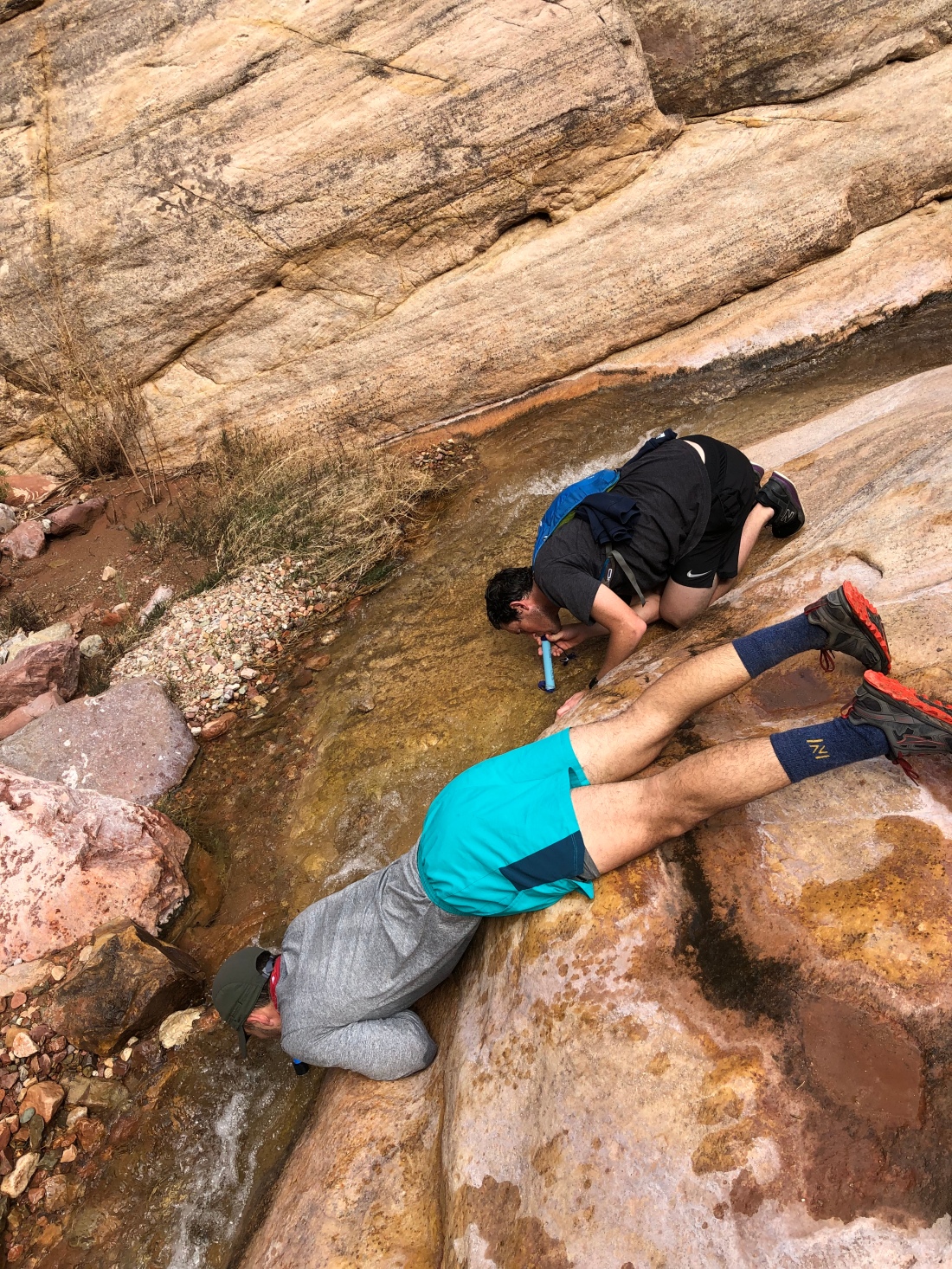
Water — some trails have water access, some don’t. Researching ahead of time is really important and being able to prepare properly is key. Lifestraws are a high recommendation for the trails.

20981578-2011-4E9B-95FB-275016709AF0

Temp — the rim will be cooler than what you’ll meet when you get down to the river. Look up weather at the rim and also at Phantom Ranch to get a good gauge of how it will be — then you can properly pack layers, a hat, sunscreen, a buff, a windbreaker, etc. Heat will make the canyon much harder to handle since many portions of the trails are exposed (especially on the South Rim as the North Rim does get cooler).

Shoes — make sure you are wearing shoes that are broken in and comfortable that you know don’t blister you, give you hotspots or irritate in any way. This will make your experience that much better as losing toenails and climbing out with blisters is not fun (trust me!)

Snacks — you need proper hydration and energy when you are tackling this gorgeous place. Your body works hard and you need to be able to sustain your energy to properly get yourself down and out in one piece! Salty snacks and electrolytes are major go-tos for me.

Your Clothes — it is not a bad idea to wear clothes that you know will not chafe you, rub you in the wrong ways or are not made for the conditions you are going in — try to match your gear up as well as you can to the type of weather you will be facing. Go on hikes or runs in the gear you want to wear so you know you won’t have issues as you go!

Your abilities — be open and honest with yourself about how much you can take on. How are your knees? Ankles? How is your cardio? How is your heart rate? How strong are you mentally and physically? I recommend trekking poles if you do need the extra assistance taking pressure off your knees and any braces you may need for runners knee or IT band, ankle support, etc. The main rule of the canyon is, if you go below the rim you have to be able to get yourself out. Don’t under-prepare or overshoot your own abilities — take on as much as you know you are able to take on and continue to build over time! The canyon has been there for millions of years, it won’t be going anywhere any time soon!

Breaks — allow yourself time to stop and catch your breath when needed. The canyon is steep and rigorous and your heart rate will rise, especially with the thinner air at elevation. Be mindful, not prideful — allowing yourself a few minutes to reset yourself can help you to feel brand new.

Injury — bring a tiny first aid kit at the least. You never know if you’ll take a tumble and having alcohol swabs, bandaids, athletic tape, etc will be a blessing in disguise.

5682DDC4-D3BA-4840-892C-9DCD561DA576

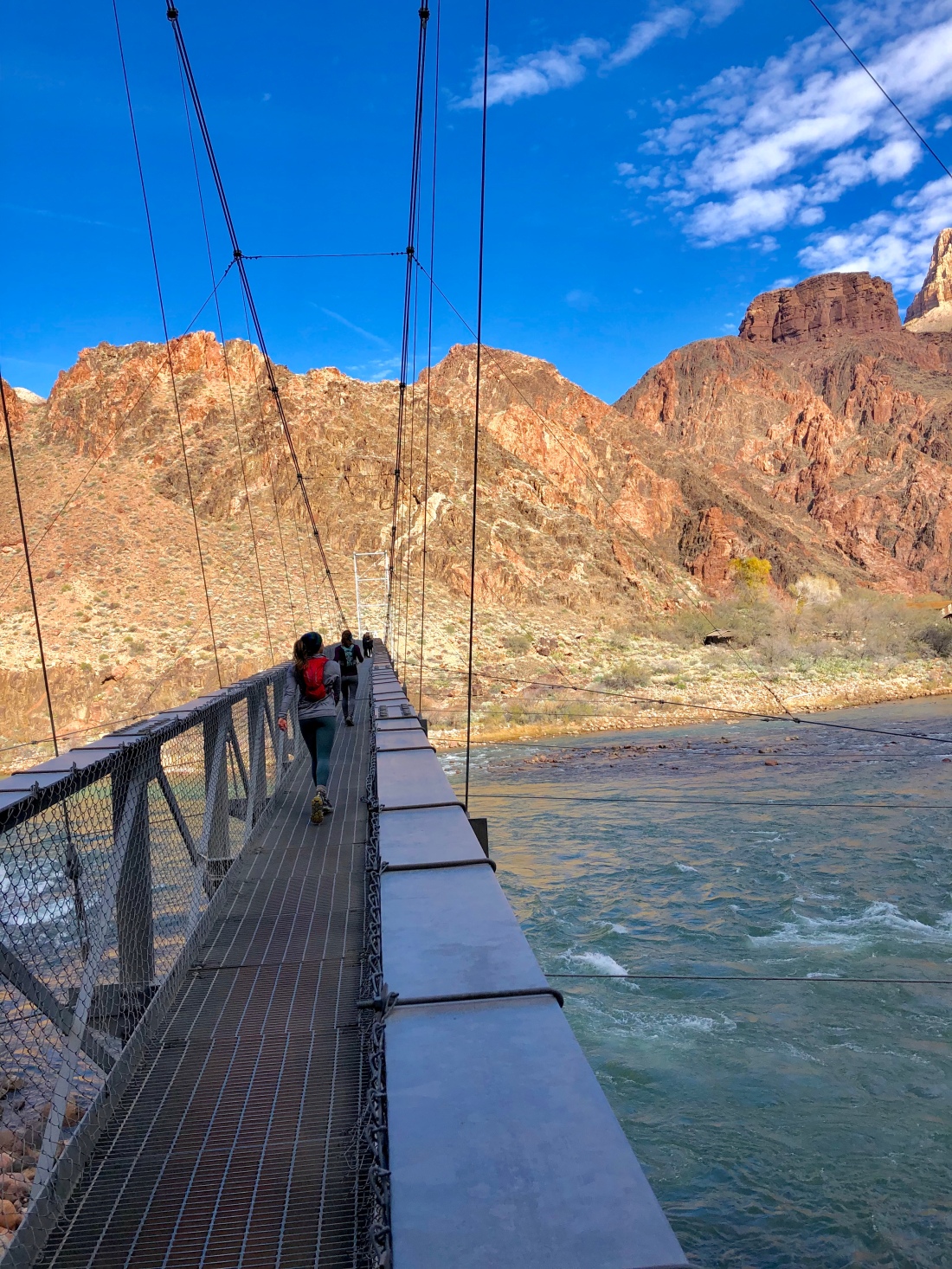
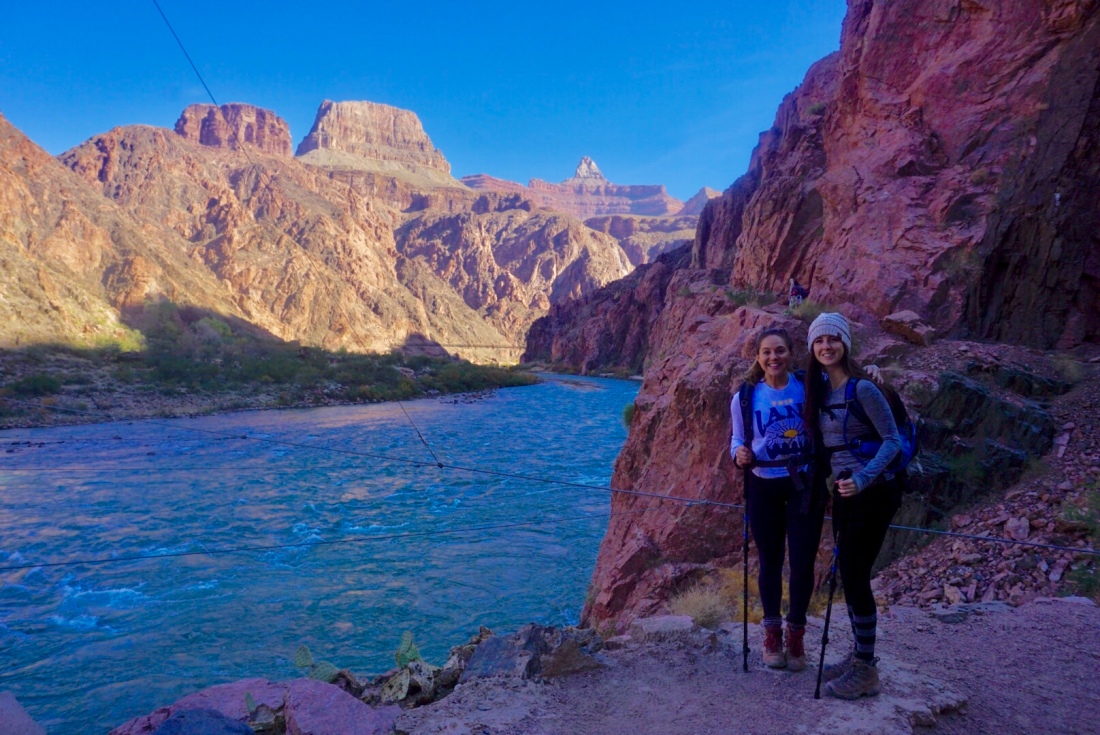
My first hike down into the canyon was a day hike from South Kaibab to Bright Angel. Taylor and I were in decent shape, hiked often and thought — why not! Nothing can prepare you for how mentally challenging the Grand Canyon is. The hike down (about 7 miles) was beautiful. The first view of the river had us both elated and in awe. We were ecstatic crossing the bridges, seeing the river up close and just being down there — we’d MADE it. Well, not quite. Starting the ascent back up to the Bright Angel trailhead was very challenging. With every rest break, lactic acid would make our legs heavy and even more sore. We leaned on our trekking poles for dear life, willing them to pull us up the 2.5 miles of switchbacks to the top. It was 18 grueling miles and we waddled around to the busses in the most pain. Joyous pain. Our feet pulsed, swollen, numb. All of our energy was completely sucked dry from our bones. But we looked at each other and smiled, completely drunk on the fact that we had DONE it.

CBC965FF-89D3-4EA4-9F0D-5609D32499E8.jpeg

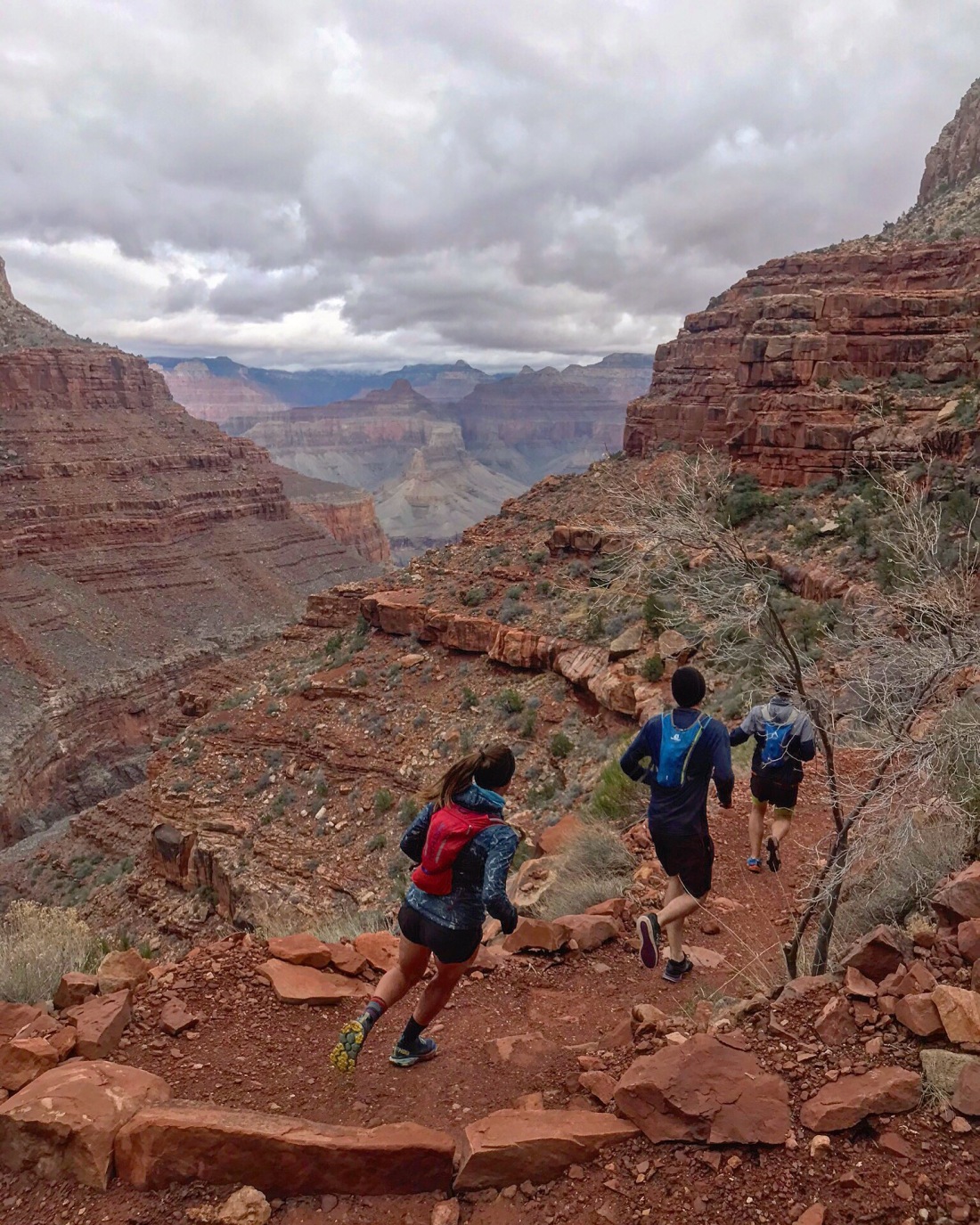
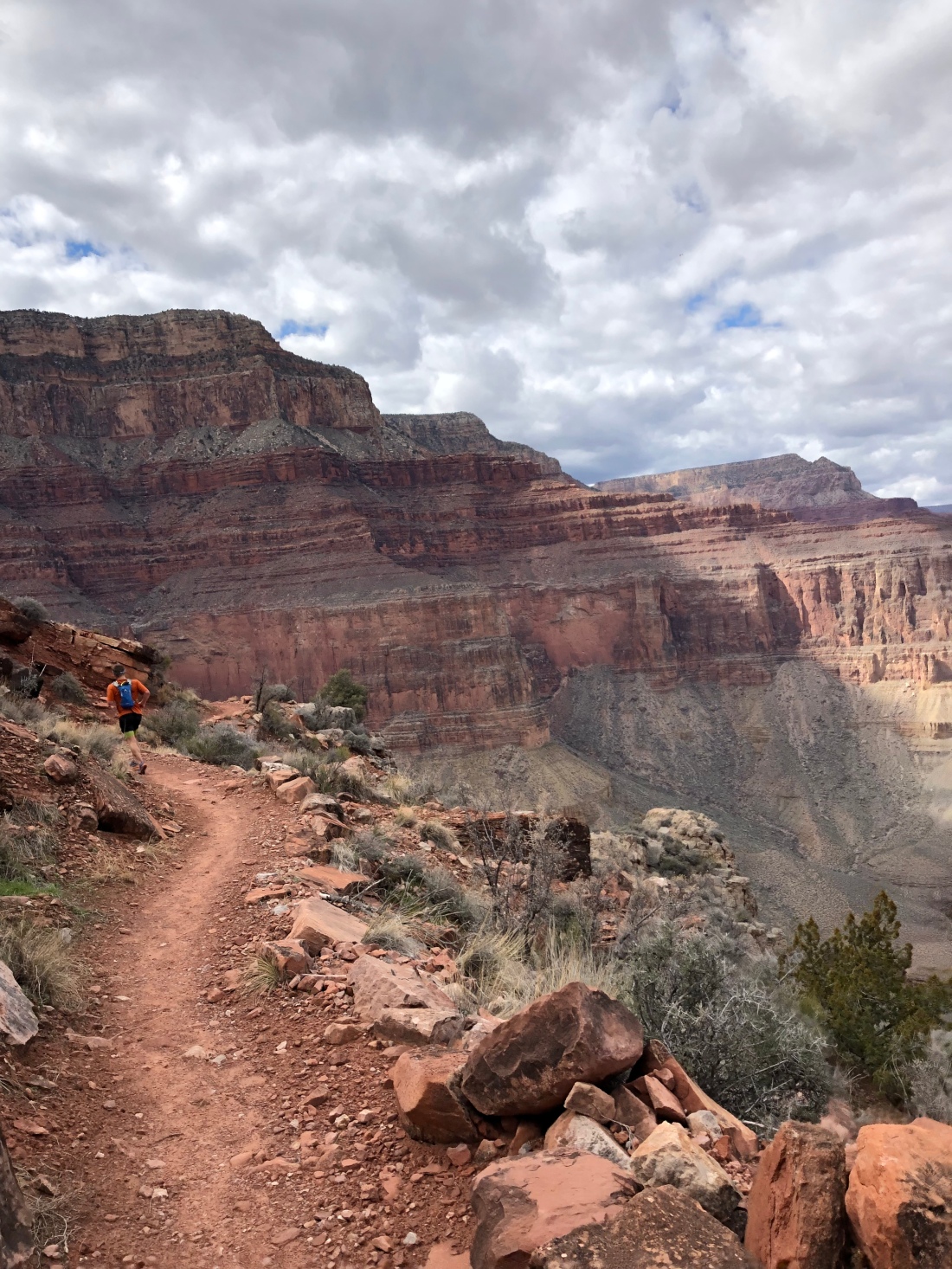
After that, I took up trail running and the canyon became an entirely new playground. Nothing is as exhilarating as running down into the canyon. Some things to keep in mind with running into the canyon are: water sources, energy sources, staying injury free and being very aware of trail conditions and surroundings (we ran into rock slides yesterday), how technical the trail is — some are more primitive than others! Know if you will be around many other people or not (is this really well traveled– like Bright Angel, or less traveled?), always bring a headlamp because you never know how things will go.

E4B8E337-0D91-441B-ABE8-3BB00F36D850.jpeg

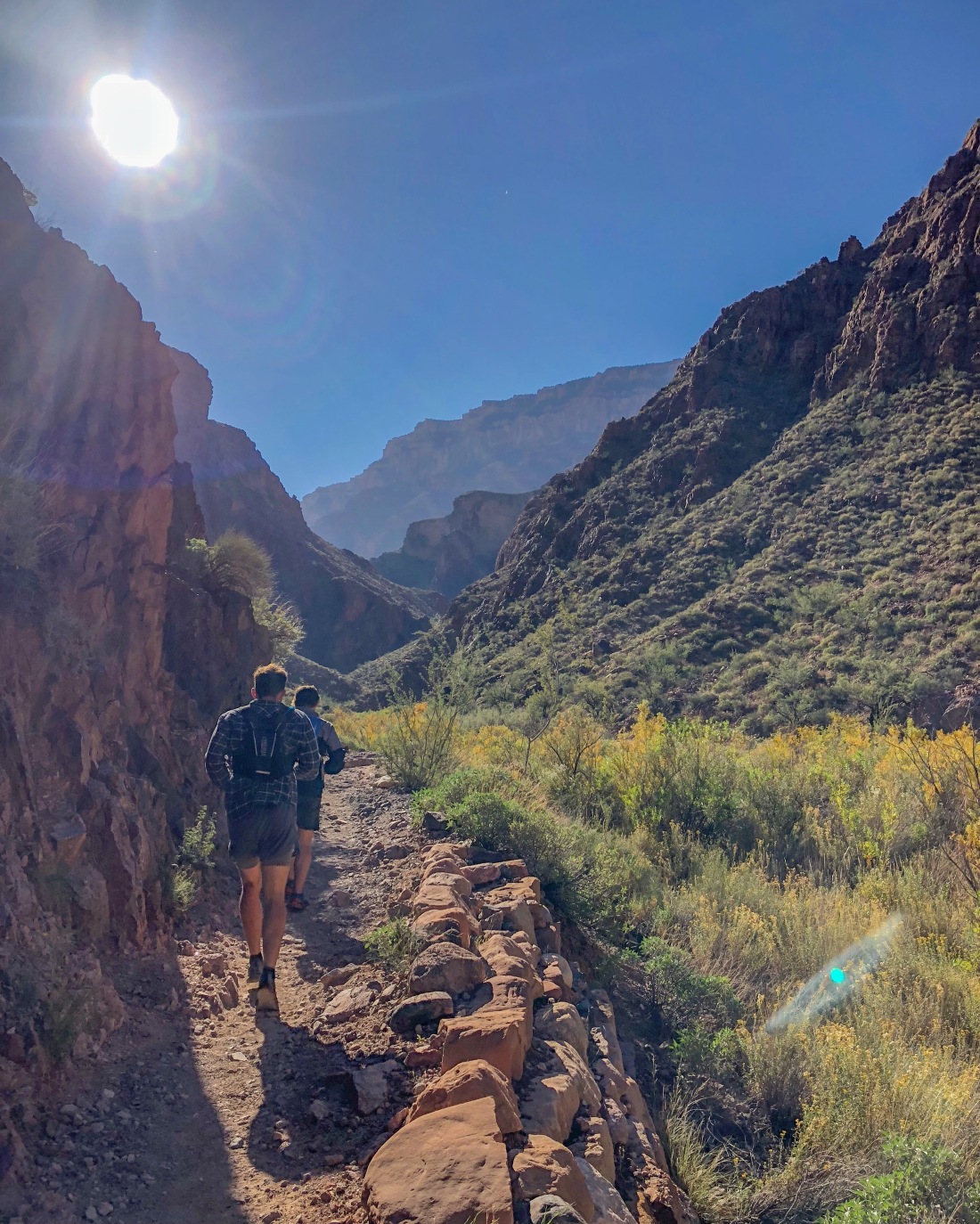
Running the canyon is a very different experience: your pack is smaller, you have to operate more efficiently, you have to be able to handle the mileage and elevation declines and gains in one push, you mentally have to be stronger than the pain your body will face — because it will get uncomfortable, promise. There are many points I would suggest testing out if you want to get a taste (Skeleton Point, Indian Gardens) these points don’t take you all the way down to the river and give you a sampler on how steep the canyon is and if your body is ready/prepared to take a day trip on!

The canyon has many trails to choose from and there will be technical bits to all of them — ranging from easier to very challenging and your trail running shoes should reflect the amount of technicality you are going to face. Set yourself up to feel good, not roll ankles or have pain in your arches, etc.

Make sure you are dressed to not overheat or run too cold or you may be in for a miserable time in the canyon as well. Once you start running, your body will heat up to about 10 degrees warmer than what it is like outside, so preparing for this is key. I always start wearing a pair of gloves and a headband or beanie and can easily shed these as my body warms up — I am sensitive to the cold and this is an easy way for me to regulate my temp in seconds.


What has helped you prepare for challenging hikes/runs with a lot of elevation gain?


Getting Mentally Tough With Every Mile


51237838_10156427312049775_1887072363434999808_n

I get asked “why” I run all the time. The first thing that comes to mind for me is because I love being outside and now, I get to see way more in a shorter amount of time! But even deeper than that is that trail running has made me so, so, so much tougher. Mentally, I am able to accept things, logically face things and come up with solutions when previously, I would crumble, hold things internally and let them effect me very deeply. Mental toughness is a quality that can be molded, like a beautiful piece of pottery, over time. What does it take to start working on your mental toughness? Discomfort.

“Pain, it only hurts”

-ultra-running legend Scott Jurek

Like distanceathletics states, “the majority of DNF’s don’t come from an unbearable source of pain. And the don’t come from injury. They come from the runner, slowly, and skillfully, talking themselves out of the race. The just don’t want to be there anymore, and they tell themselves whatever is necessary to end the experience with honor. Or just to end it.”

The hard, uncomfortable situations are what truly shape us and force us to grow. Those moments when chafing begins to sting, sweat gets into the burns and you want to immediately throw in the towel. The times when your calves, hip flexors, knees and ankles are screaming at you to end the movement, to stop the climbs, to quit bombing down the steep hills. When you’re hiking and it starts to rain and you’re cold, tired and discouraged. When you fall and cut your shins or palms or forearms open and everything hurts. Those hikes where the climbs just keep coming and it will never end. When hot tears hit your face because lets face it… pushing ourselves isn’t easy and it brings up every emotion possible. Things get raw. Distractions aren’t readily available. Going into the “pain cave” is….inevitable.

Distanceathletes again say it perfectly, “Those moments where everything is moving fast and your heart is slamming into your chest and you’re asking yourself whether you can hang on-that is living. In this moment you are in your element. You are a strong and powerful human being, testing and exploring the outer ranges of your physical and mental capabilities. Where else would you rather be?”

When you are facing obstacles, getting gritty and feeling pain…that is living. Grinding through these experiences makes us into a stronger, more courageous, more capable person. Mental toughness translates to most every aspect of your life: your ability to handle hard news, tough situations, impossible seeming setbacks, stress, doubt…the list goes on. Mental toughness gives us the tools to wrap our minds around obstacles to see the other end, that we can endure hard things and come out still fighting.

When I think of practicing mental toughness — yes, practicing — I am in the midst of learning how to be out running for hours at a time. If you are beginning your trail running adventures, you can start by saying, “I’m going to be out here for 45 minutes” then, “I’m going to be out here for an hour”…then two, three, four hours. This practice of just having radical acceptance really shifts things. “I am going to be out here for most of my day, this is what I’m doing, this is what is happening”. This means it may be painfully slow, it may feel nearly impossible, but….mentally I am preparing myself that this is what is in front of me.

52825978_10156471627179775_430669423175532544_n

If the miles feel intimidating what do you do? Break the mileage down into attainable bits. Mile by mile, 5 mile chunks, aid station to aid station, one cactus to the next. Whatever helps you just keep moving forward will continue to help you get stronger. Running truly is a sport of mental strength. Our bodies will keep going as long as our brains tell it to. How amazing is that? It also goes to show how much we influence our own capabilities and perceptions of what we can achieve.

One thing I’ve always loved about my time with Lululemon was that they always always had you write down your dreams and goals and then identify your WHY. The same goes for any sport you take on: why are you doing this? Why are you training? Why are you signing up fo the race? Is it to work towards a milestone of health, is it for the accolades, is it to become elite at the sport, is it because you are passionate about the activity, is it to raise awareness for a cause, is it is for the sole purpose of testing your limits? Maybe a mix of all of them, but truly know your “why”, dig deep and when things get dark….remind yourself of it. Over and over and over again.

I think it can be so easy to lose sight of what got us into something for US, that we focus on everything and everyone else and what they are doing around us. It takes away from our ability to feel joy and pride for what WE are accomplishing. It is really important to be able to say “I am so grateful and happy that I am able to be here, experiencing this, with a healthy body.” Mental toughness also means expressing appreciation for our bodies, those that support and encourage us and for nature in general — because if you’re out there, you’re seeing some of the most beautiful areas in the world, end of story.

I know it may sound sugarcoated but trying to keep your mind in a positive place and expressing gratitude along your way will make your experience that much brighter every single time. When you allow your mind to get down, negative and heavy it will stay there and therefore, your experience will become tougher than it already is. I’ve had runs where I focused so much on something (my body in pain, the heat, the elevation gain, my pace) that I didn’t like that it completely clouded the main reason I’m out there: to enjoy the trails, to be in nature and to disconnect and get in tune with ME.

The more we can train our minds, the better we become. The more real we can get with ourselves and the further we can push ourselves. Mental toughness doesn’t happen over night, but it is something that totally changes the game performance-wise and in life!


*all gear worn in images is from RunJanji

* fuel sources are always Salt Stick + Spring Energy

Experiencing A Flash Flood

If you’re anything like me, the term “flash flood” means rapid amounts of water in a very small amount of time occurring right around you, right? Not always. This past weekend I experienced my first flash flood and a flood that didn’t come from immediate rain happening right around me.

E35DB7DC-2852-45E8-8247-0E1E4EFB58B0

National Geographic explains it by saying, “Most floods take hours or even days to develop, giving residents ample time to prepare or evacuate. Others generate quickly and with little warning. These flash floods can be extremely dangerous, instantly turning a babbling brook into a thundering wall of water and sweeping everything in its path downstream.”

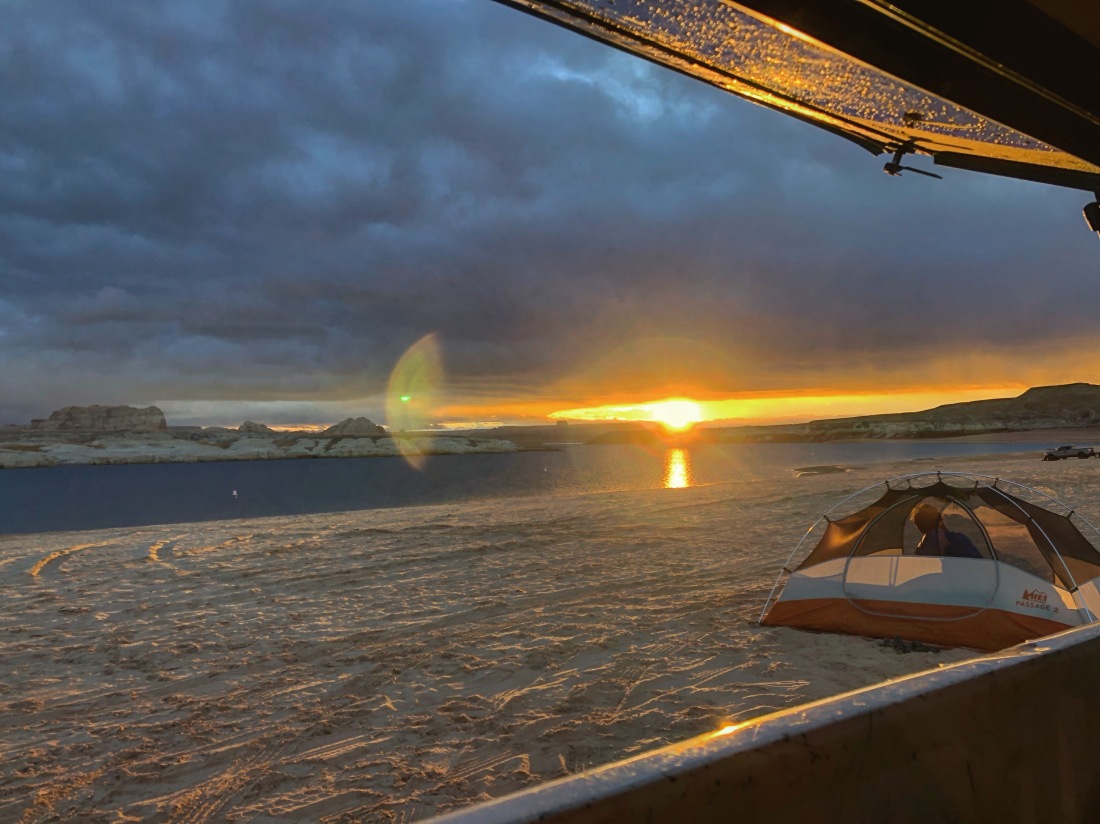
Our group decided to go explore Southern Utah this weekend, as the rest of the state of Arizona was getting rain all weekend. After some scouring, the Page area had a little sun emoji for Sunday and we wanted to get in some miles…Page was our saving grace, or so we thought at the time. We camped at Lake Powell, being woken up in the middle of the night to wind so strong it shook the truck-bed we camped in. I sat up, hoping my friends in their tents were still outside as the wind howled around the shell I was safely under. When the sun began to rise, big black looming clouds still hung over the air like sludge.

Slowly, the clouds began to break and shades of orange and pink tinted the sky….soon everything was calm and shining and beautiful. We all smiled, relieved, today was going to be a good day. We hung around the beach, making breakfast and playing with the pups before heading to the trailhead we were going to start from. With one 4×4, a small car and a two-wheel drive truck, we navigated the dirt road that wound down and over a dry wash to the trail. Parking, we all began getting our packs ready and complaining about the strong wind that was still present making us shiver before the adventure.

63BC1A05-F307-47F7-89B9-C74DD76F4133We got 15 miles in the backcountry, seeing beautiful formations and also a lot of dark, ominous clouds rolling around to the north of us. When we reached the cars, beers were cracked and everyone put their feet up to enjoy the efforts we’d just put in on hills we hadn’t expected to be so steep. The rushing water we had seen to our left when we had gotten to the trailhead was still going strong, beginning to web off into small slews to the right and left of the main force. We began talking about food..burgers…fries…and packed up our things to venture back to town for our reward.
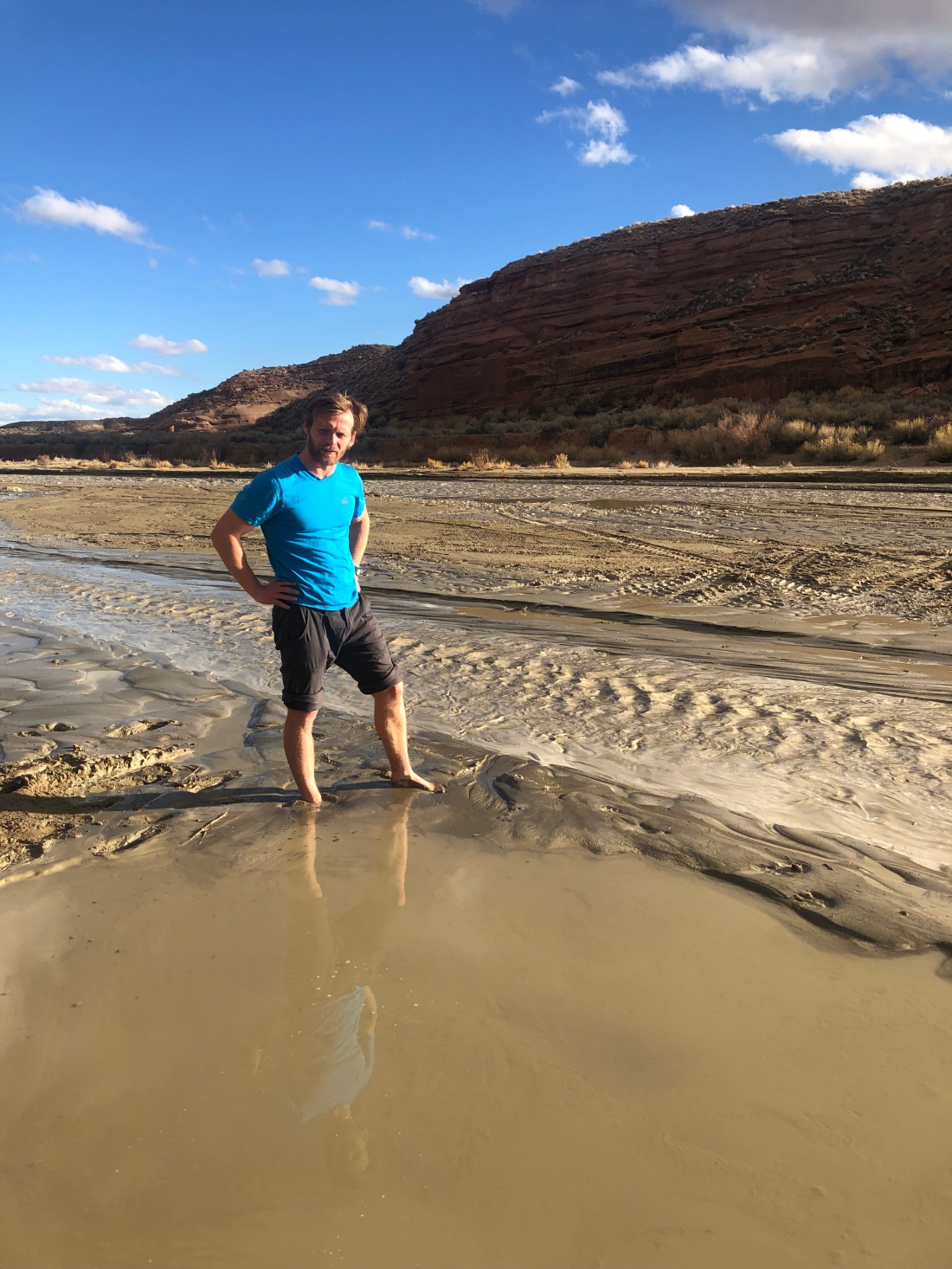
CBFDF776-E2EE-4B95-866F-2CC22F7FE598We reached the wash and…no road crossing. Where there had been nothing but dry rock and sand before, there was now rushing water with small rapids and mud so thick it was like a porridge. We all tried to make light of the situation as we began to accept we were stranded with no way across. The water was reaching chests, high thighs, with zero visibility to the bottom. Calls began to be made, what can we do? What are our options? We are stuck, can we get out ourselves? 
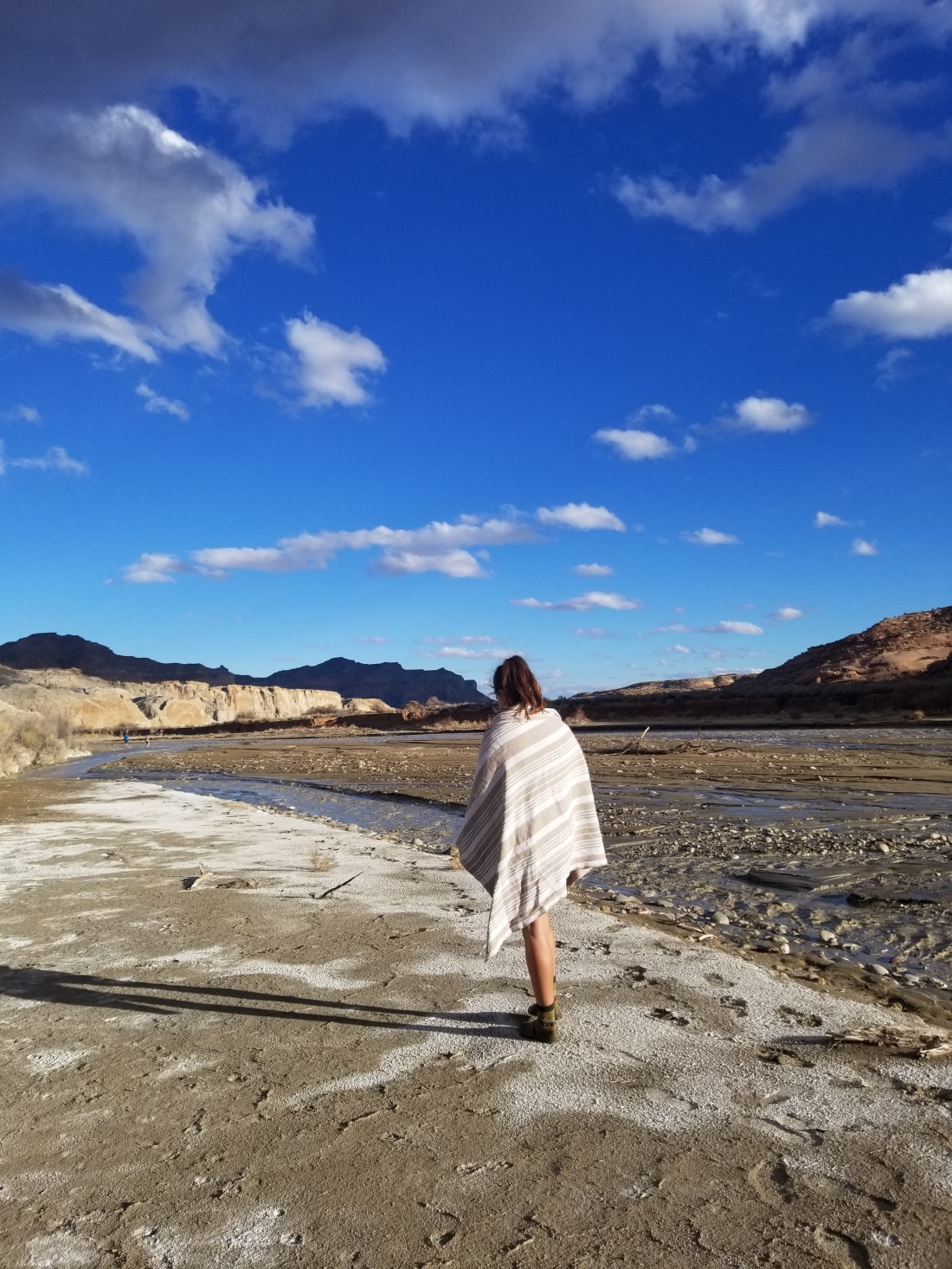
The firefighters wouldn’t come because it wasn’t their jurisdiction, the national forest service didn’t have the resources to assist, the deputy gave us the weather forecast and told us that we had two options: wait it out for the water to dry out or helicopter out. How did we get here?

Well, flash floods don’t mean immediate rainfall happening right in front of your eyes all the time. Rain had fallen hours north of us the day and night before our adventure, so, while the wash was empty when we began our run, those rains had been filling and flowing down the wash for miles over hours and hours to reach where we were. In an instant it had gone from empty to flowing strongly. We hadn’t known we needed to check the weather forecast for nearly 100 miles around us, we hadn’t known that no rain for our location didn’t mean no risk. Now we do….oh we learned very quickly. National Geographic even states that, “In the United States, where flood mitigation and prediction is advanced, floods do about $6 billion worth of damage and kill about 140 people every year.” 

4382C41E-0D2E-4D60-95AF-82521E1C9A47While we weren’t in danger we were still stuck. We had some water, not a ton of food but some…for now. We were more worried for more rainfall overnight or the next day to continue filling this flow. Sticks were placed into the bank to monitor water height which was steadily decreasing as the night went on. By 7, we knew we could get the 4×4 across but were really uncertain about the other two vehicles. We called a tow, driving an hour down to assist us in the night. Once he arrived he pulled the 4×4 across with ease. Next was the two-wheel drive truck, gunning the truck across the first bank which had us flying up to the ceiling as we hooped and hollered by the unexpected strength the little truck had. Everyone was slathered in mud as they got underneath the truck trying to figure out where to hook the chains before the tow began lugging us across to safety. We left the car overnight, desperately needing good sleep a shower. We tried our best to relax and recover and the next morning, returned to find…the water still shin high and flowing. The lip of the bank was broken away and the mud consumed the dry sand and rock we tried to lay down to catch tires. I couldn’t watch as our friend said she was going for it as the water was 3 inches above the body of her car. She was confident, I was bargaining with the Universe to let us successfully get out of there with all of our vehicles in tact. She powered over the first bank and gunned it across the flowing water like nothing was even there — a pro. We were so impressed, relieved and…exhausted.
What I want to say is, flash floods are not uncommon and come in many forms. From slot canyon risks to washes and roads being wiped out…Nature never waits for anyone and it was a beautiful, tough reminder that we don’t control the outdoors, the outdoors controls us. Always do research (even outside of where YOU are for what may effect you).  Some signs to look for for a potential flash flood provided by Backpacker.com are:

Check the Weather

Get the forecast for the entire watershed: Storms can trigger floods miles downstream. Recent rains? Be extra alert–saturated soil makes flooding more likely.

Scout for Signs 

Water stains on canyon walls and debris lines indicate likely flood sites. Take care in areas with rocky ground that won’t absorb excess runoff.

Watch the River

If water suddenly gets deeper, faster, muddier, or begins carrying twigs, needles, or leaves, get to high ground ASAP. Likewise, head up immediately if you hear the roar of an approaching flood.

I’ve also read that strong winds can indicate flash flooding (another thing to keep an eye on).

We were lucky we had cell service, a shovel, blankets, fire and many basics for being stuck — it is not a bad idea to always have an emergency kit in your vehicle for the just in case situations.

Soon, this can be looked back on as a party story to share and a big learning experience that humbled us all!

Top Trails in Regional Parks Near Phoenix You Don’t Want to Overlook!

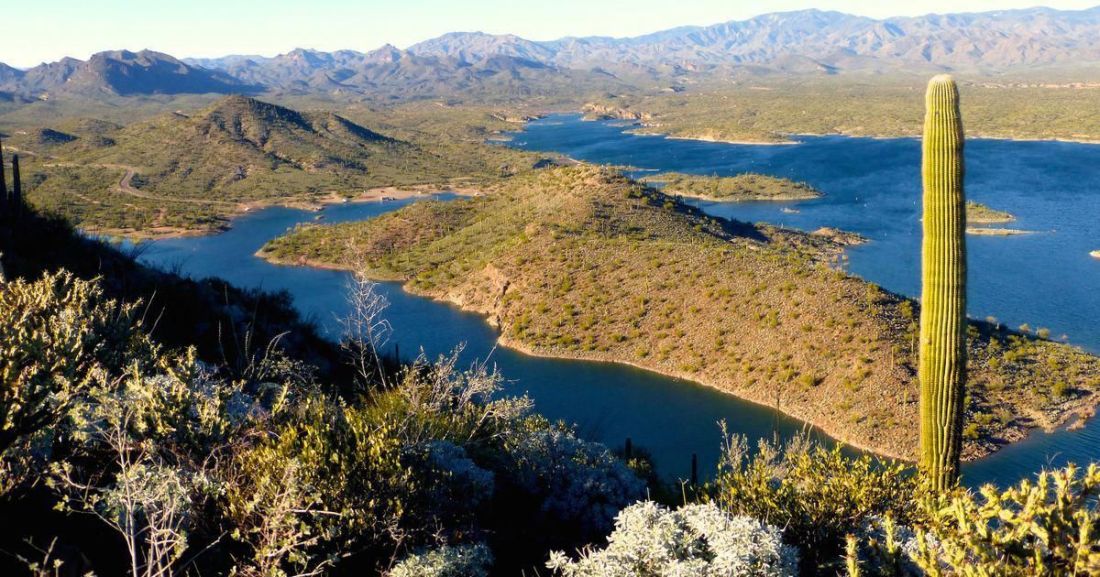
  1. Lake Pleasant Regional Park
lakepleasant
image credit: azcentral.com

Lake Pleasant is just that….so pleasant! With camping sites branching off the main road like a web before you hit the marina, you have plenty of options to set up camp and enjoy the starlight and calming sounds of the water from your tent. Even better? The trails that surround and overlook the lake itself. For a short hike (3.1 miles) with amazing views and under 500 feet of elevation gain, Yavapai Point is one that can’t be beat! It climbs to a lookout point where you can see lake, boats and all the rolling mountains in the back. You can even connect trails to add on if you’re feeling good and have more time.

2. Skyline Regional Park

skyline
image credit: azcentral.com

If you’re anything like me, a loop trail is the preferred kind of trail to explore. You always see something new and that makes being outside even more enjoyable. Skyline Regional Park offers beautiful 360 views of rolling mountains and traditional desert-scape. The trail here you should give a go is Skyline and Quartz Mine Loop!  With just under 1k in elevation gain in 4.5 miles, this hike is still leisurely although exposed, so make sure to bring plenty of water, a hat and sunscreen.

3.  Spur Cross Ranch Conservation Area

elephant
image credit: azutopia.com

I am a big fan of this conservation area. It is more remote, quaint and the views of the mountains here are stunning. You need to pay cash, so please remember to bring it with when you go explore! For a more challenging hike I highly recommend Elephant Mountain Trail — a 7 mile loop with roughly 1300 feet of elevation gain. When you reach the top of Elephant mountain you can see for miles, the wind a welcomed visitor after the climb. This trail is exposed and you will need water and fuel for the effort!

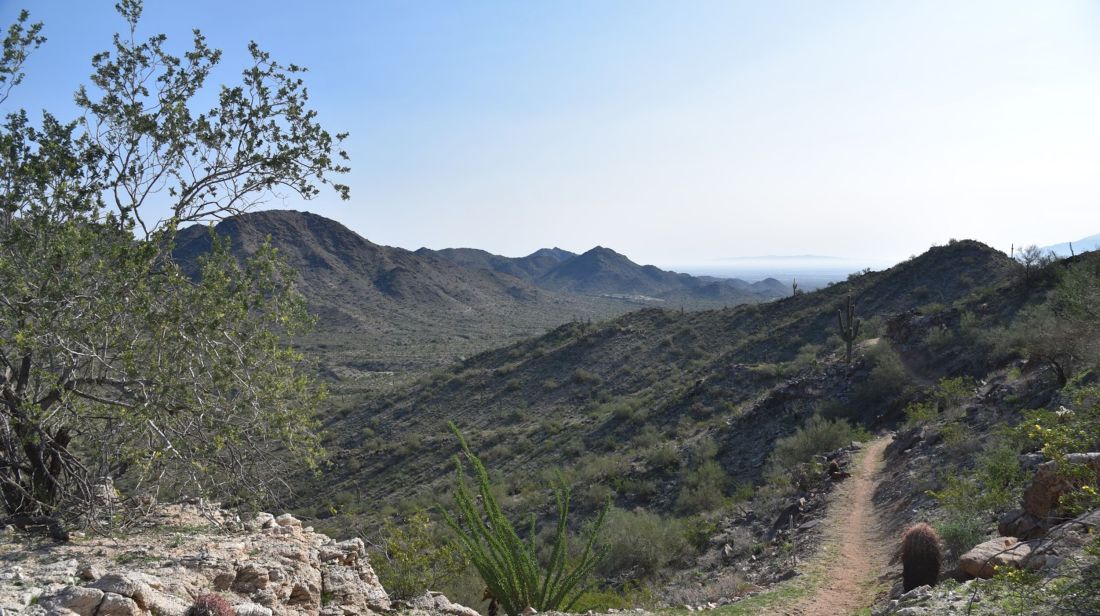
4.    White Tanks Regional Park

whitetanks
image credit: tripstodiscover.com

This regional park is rugged, exposed and oh so beautiful. The White Tanks hold seasonal waterfalls and plenty of trails to choose from whether you want something easy or something that will really push you. A quick, beautiful trail to explore for a seasonal fall is aptly named: The Waterfall Trail. Not only may you find flowing water but also many petroglyphs with very minimal elevation gain. I consider that a win! Want to really challenge yourself? I recommend the 16.4 mile haul on the Goat Camp Trail. This trail rises nearly 3116 feet in elevation and some steep climbs — my favorite kind of trail! If you enjoy light scrambling and climbs, this is the long route for you.

5.  Usery Mountain Regional Park

usery.jpg
image credit: eastvalleytribune.com

Usery, within the Goldfield mountains is a beautiful, jagged, raw-looking area which makes it very unique to what we see surrounding Phoenix. If you haven’t been out to this area yet, what are you waiting for?! For a lightly trafficked, gorgeous adventure, Meridian Trail offers jaw-dropping views and only 260 feet of elevation gain in 5.3 miles. This trail would be great for beginner hikes or trail runners while more advanced hikers/runners may want to tack on some other trails to this one.

Why I Don’t Geotag

lnt

There used to be a time that I would tag trails all the time, which I will admittedly say was from complete ignorance. With the large sharing of places and spaces via social media, it is beyond important to realize what impact we have on the places we go. There are Leave No Trace guidelines that most people are aware of: don’t litter, pack in pack out, hiking/running on trails and protecting living soil, don’t take or mess with artifacts or anything you find from the past — preservation. It is preservation in every way we can possibly preserve while still enjoying the outdoors to its fullest extent. You can read more on these principles here: https://lnt.org/learn/7-principles 

Beyond the guidelines we are more aware of there is now one for social media specifically. Be mindful of what your images portray and what you tag. What have I been taking to heart? How many people do I reach or influence? While I may not have a HUGE following, I know I share things and reach several hundred people via stories and over a thousand when I post.

Now imagine if every single person I reached decided they also wanted to go to the exact same trail and experience it. Is there such a thing as loving a place too much? I honestly think there can be, we’ve seen what happened with Horseshoe Bend and the swarms of people now going which has lead to fences going up and potential permitting. Can the trail I share handle an influx of people going and experiencing it? How well known is this trail/area? Are there natural spaces that could get damaged? I try to keep in mind ruins, arches, caves, sacred grounds from Native tribes, etc. An influx of people visiting these spaces can run down the space and recently we have seen the aftermath of people who don’t respect or appreciate nature the same as you might impacting a place you love: http://www.fox10phoenix.com/news/arizona-news/robbers-roost-in-sedona-defaced-with-graffiti

This legitimately enrages me. But we can do our part to protect and speak up for the spaces and areas we love: be mindful. This is why I don’t share specific trails unless it is potentially inside a National/State park or monument. Instead, I share a region or general area. Half of the fun in my opinion is researching areas and finding trails and amazing features for yourself. When you do the work of researching, you feel rewarded! I utilize many online resources: the AllTrails app (downloadable via the apple store) which allows you to look up trails based on area, length, elevation, rating, etc. I utilize blogs and websites like hikearizona.com, I look at maps, I look at google earth even though I’m not very good at it. I will sit online and type in features I want to see “in ____ area” and see what comes up. I don’t stop on the first or second or third page of the internet. I search. I dig. If I want to see and experience something, I will put in my due diligence. To this date I’ve only asked for information on one trail and I respectfully asked someone and expressed I wouldn’t be upset if they chose not to share information. It is up to us if we want to give out information, it is not snobby or rude…it is being mindful.

The new social media guidelines for NLT can be found here: https://lnt.org/blog/new-social-media-guidance

also here: https://www.outsideonline.com/2276176/21st-century-update-leave-no-trace-principles

Everyone is talking about this. Everyone is trying to shift to protect spaces they can wind up being loved to death. We want to be able to keep things wild, we want to go on trails and not see other people’s trash and graffiti. We want to have these places to share with our children and their children, right? Right.

I know the ultimate means of LNT is to not post about a place at all, not share at all but for me, sharing beautiful moments is something I enjoy. I enjoy sharing photos because I use Instagram as a personal visual diary, but I know that in and of itself still may play a part. So I attempt to minimize my footprint in this way. I am not ever trying to be rude or snobby or better than by not responding to a “where is this?!” comment, I am simply choosing to be mindful.

If you do a little digging, I promise you will find AMAZING places and trails and feel beyond fulfilled and excited when you track things down on your own.

There’s also nothing wrong with sharing information — but again, consider the impact of sharing information and with whom you share it with. Are they respectful of LNT principles? Do they abide by these guidelines? What is their influence and impact?