5 local Phoenix trails for beginner trail runners

When I first started trying to learn how to trail run I had no idea what I was doing. I didn’t seek out much information and didn’t know very many others that were beginner trail runners to join forces with. I was trying to run up the sides of mountains at a road pace, feeling so discouraged as I ran out of breath and tripped over myself and all the rocks that make up Phoenix area trails. Let’s just say, those are what NOT to do when you’re just starting out! Starting out, it is so much easier (and you will be happier) to start on smooth trails so you can gain confidence and add in technicality as you get more comfortable and your body adapts.

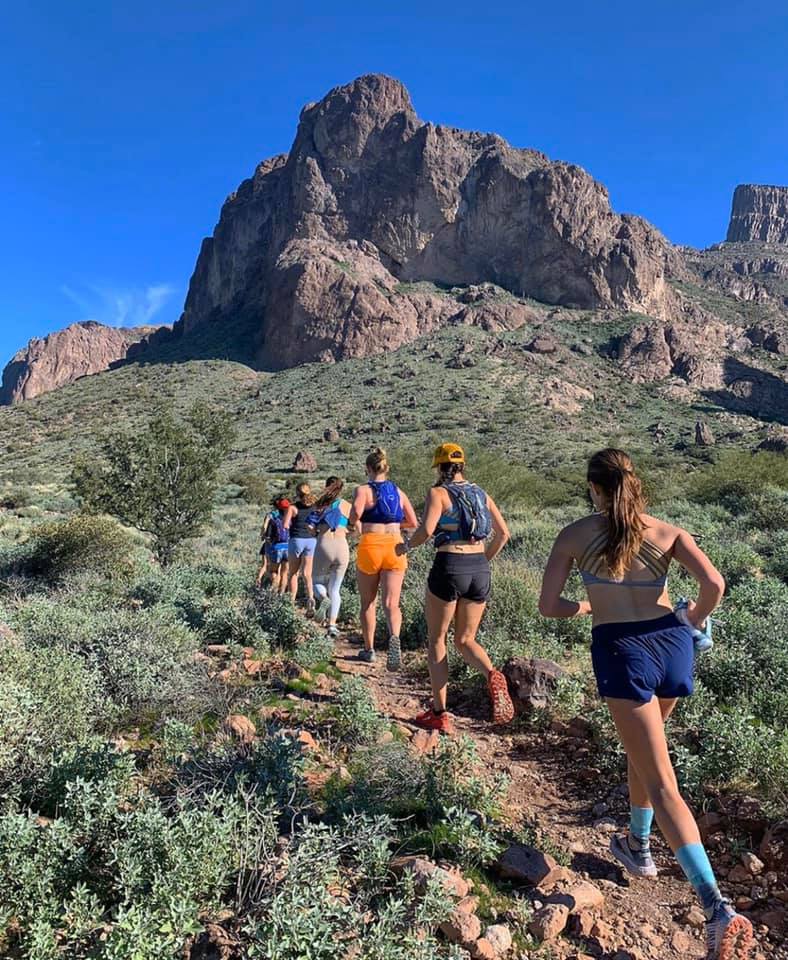
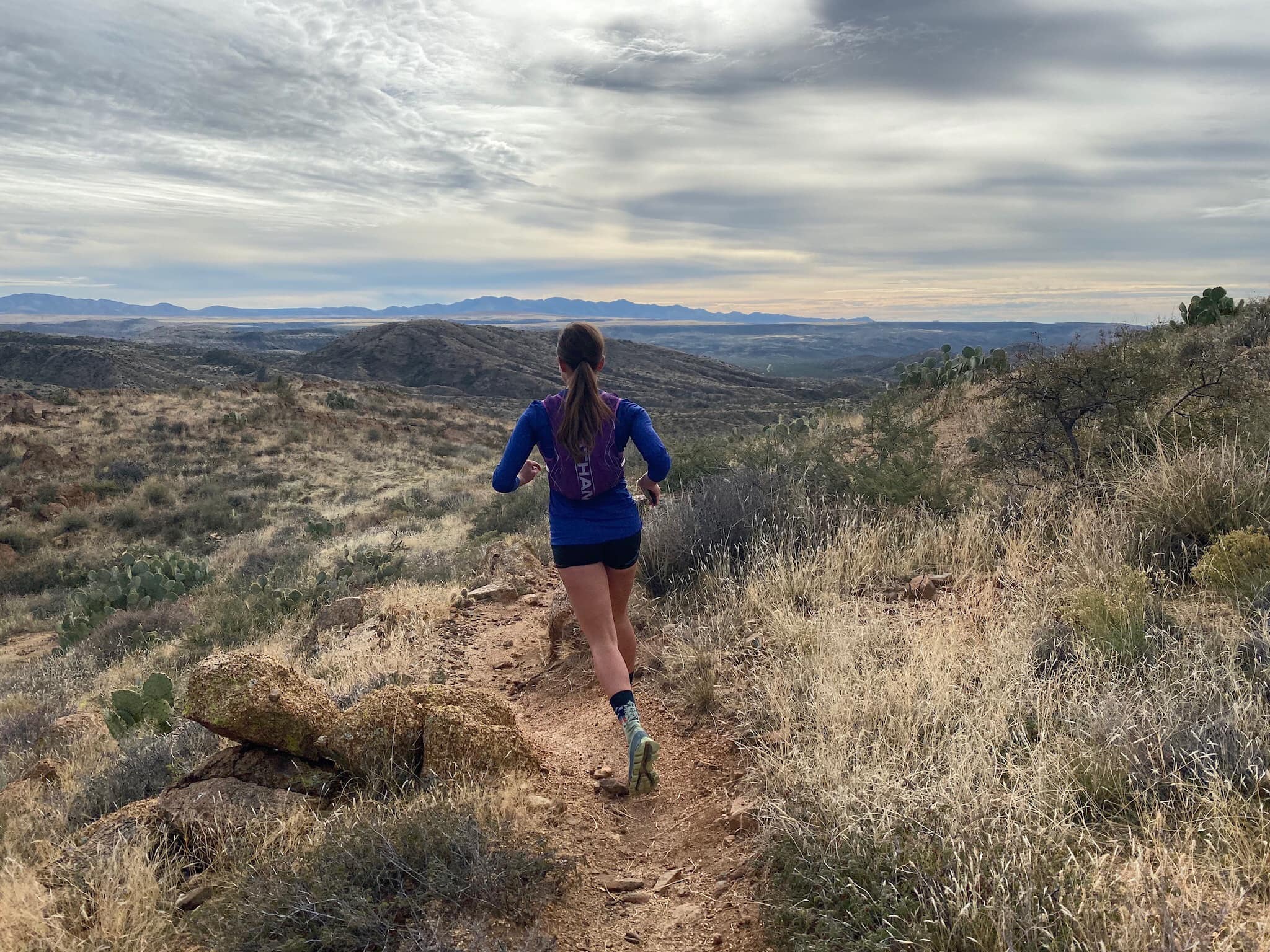
Cloudy views of Browns Ranch in Phoenix, AZ

My top 5 local Phoenix trails for beginner trail runners are:

  • Brown’s Ranch: Brown’s Ranch trailhead offers a wide variety of routes you can create on flat, nearly rock-less trails. This area is ideal for building up miles as you get more and more comfortable running on the trails. The short loop linked here is a nice launching point that you can continue to add upon as you tack on the distance. The perimeter loop is 14 miles with minimal elevation gain that means it is ideal for growing into long distances with low technicality.
  • Phoenix Mountain Preserve: The PMP is one of my favorite areas to explore in, partially because it is close to where I live but also because there is so much variety in this preserve. Starting from the 40th street trailhead you can head out of the parking lot to the west you will follow smooth, well maintained and nearly rock-less trails. Many of these trails are unmarked and leisurely weave around the preserve where you can gain confidence in your form and footing. While you’re gaining your bearings in the preserve you can always look for the lights in the parking lot as a guiding benchmark of where you are! The preserve offers so many different trails with various ranges of technical difficulty which means as you get more confident in your footing and stronger as a runner, you can always find a trail that will help you level up whether that is for distance or elevation gain or technical trails.
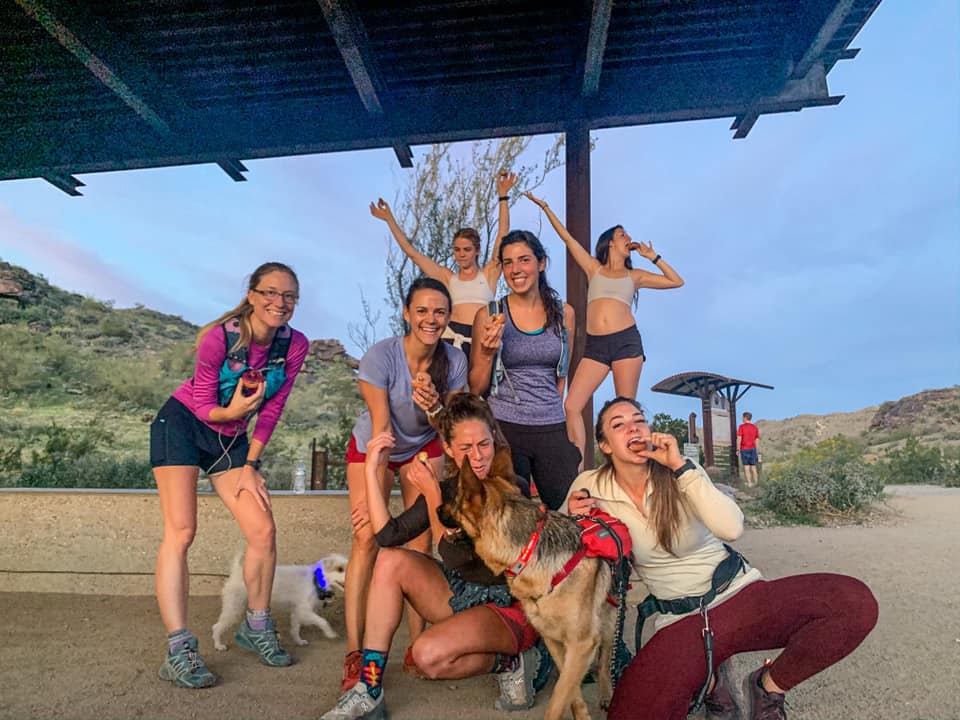
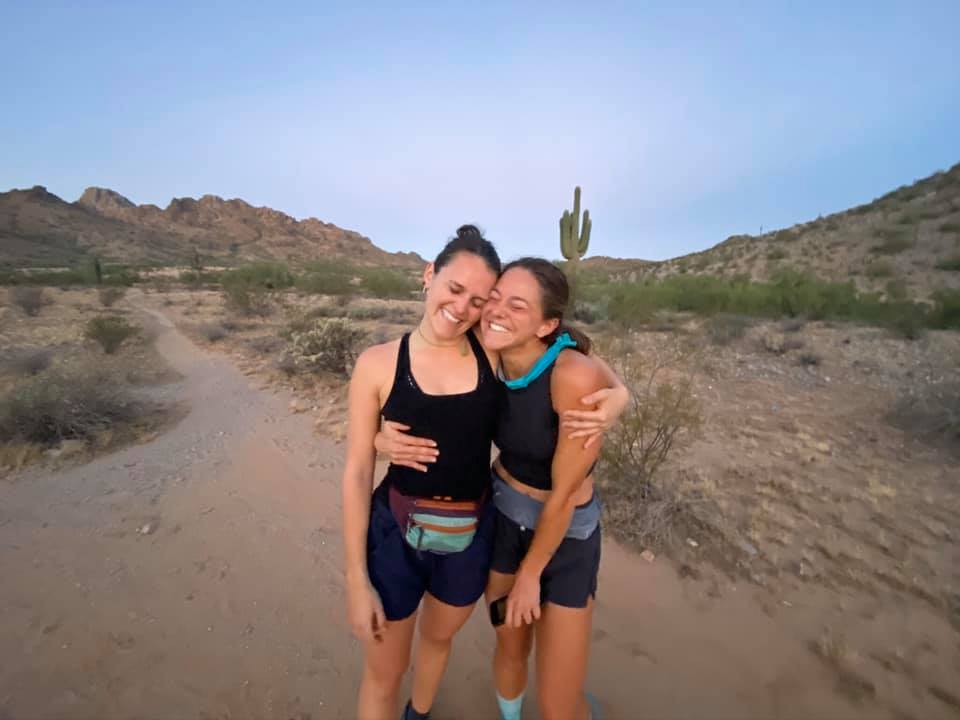
Wild Women Running ladies trail running in the Phoenix Mountain Preserve
  • Phoenix Sonoran Desert Preserve Union Peak Loop : The Phoenix Sonoran Preserve offers many different flat, maintained trails to choose from. The Union Peak Loop is a great option for beginners, especially because it is a looped route. To me, loops are always nice since you’re consistently seeing new things as you go.
  • Papago Park Big Butte Loop: A unique little trail system in the middle of the Tempe area, Papago park offers fun flat trails surrounding the Papago Buttes. This red dirt and rock area is fun to play around in as it looks different than anything else in the area without a ton of technicality. If you want to add on a little more difficulty, you can scramble up the buttes and follow trails that take you up into them.
  • South Mountain Desert Classic Trail: Starting from the Pima trailhead the Desert Classic trail skirts to the left of the parking lot on well-groomed trail with small, rolling hills. With low technicality it’s a great starter trail that you can build off of distance wise while also having the option to link to additional trails with more difficulty and variation. This trail is exposed with minimal shade so prepare with a hat, sunscreen, electrolytes and water if running in warm weather!
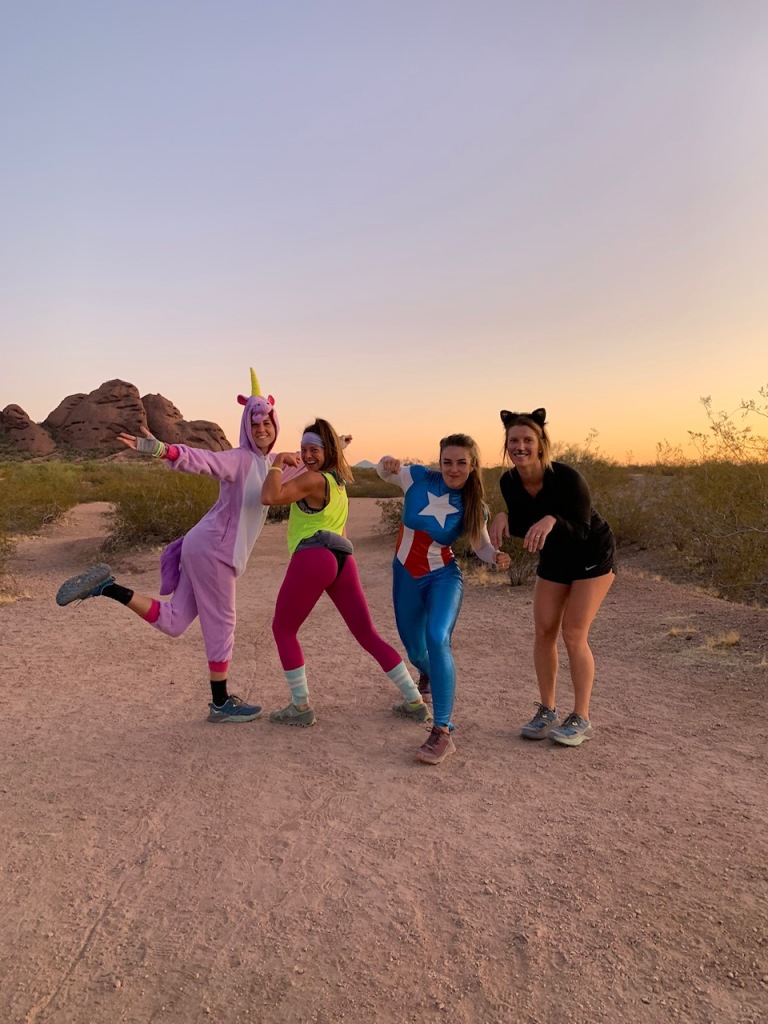
Wild Women Running ladies celebrating Halloween trail running at Papago Park

Do you have a favorite trail you like to explore locally here in the Phoenix area? Share in the comments!

Building up my trail running endurance…how do I get there?

So you’ve started running. You’re enjoying the trails, the way getting outside feels and the fitness it is giving you. But what about when you want to start going from 2 to 4 to 10 to 20 miles? How do you build up your endurance?

wwrblackcan
Image by Paul Nelson from Black Canyon Ultras

Maybe you’re looking for a magic bullet to get you there but the biggest key to strengthening your stamina is….

  1. Consistency. If you are consistent, you will see results. When you are training on a schedule, it teaches your body to adapt to the amount of work you’re putting in. If you’re only running once or twice a week, your body may not adapt as quickly as if you are running 4-5 times a week, even easy runs that aren’t demanding or stressing your body. The Run Experience gives a great example of building up your stamina: “if you’re running three times a week for 20 minutes, increase the amount of time you run and the number of times you run every week incrementally.For the first week, add one run (for a total of four runs) and add five minutes to each run. On week #2, add another five minutes to each run. You’ll be running for 40 minutes four times a week. For the third week, add five more minutes to each run, for 45 minutes of running four times per week. On week #5, add another run so you’re running 45 minutes five times per week. For the sixth week, bump up one of your runs to 60 minutes, and keep the others at 45.”In very little time, you’ve been able to go from 30 minutes to an hour of running without having to stop or needing frequent breaks.
  2. Slow Down. Yes. Slow your pace…slower….even slower. One of the hardest things to do, in my opinion, is strip the ego and get humble with yourself and the idea of needing to be “really fast” right off the bat. To endure for long periods of time and to be able to run for hours…you have to slow your pace to get faster. Does that sound silly? Maybe, but it works. Time on your feet is incredibly important for endurance and the only way that will happen is by lowering your fatigue in earlier miles to allow you the fitness to go further. The ability to run farther is based on the foundation of “easy running”. A great way to start practicing this is focusing on your heart rate. You want to build up your aerobic fitness, meaning you can run farther without raising your heart rate. When your heart rate rises, it taxes the body and slows down recovery when it is done repeatedly for long distances. If you’re running and breathing heavily, you need to slow down your pace. You should be able to hold a conversation as you’re running and maintain that — that is an easy effort pace and a great place to start as you build up your stamina.
  3. Build up slowly. Don’t try to jump from 3 miles to 16 in a few days span, allow your body to patiently adapt to the stress and changes you are putting on it while upping your distance slowly. Upping your distance gradually also lessens the likelihood of getting injured, as your muscles, joints and ligaments tackle entirely new territory. RunnersWorld expresses, “We like a program that adds 1 mile a week to your weekend long run, for example: 5 miles, 6 miles, 7 miles. Every 4th week, reduce mileage by skipping the long run. Rest and recover. The next week, start building again, 1 mile at a time: 8 miles, 9 miles, etc.”

    wwrsupes
    Image by Melissa Pozniak
  4. Say Hello to Tempo. What is a tempo run? The Run Experience shares, “it is a sustained effort run that builds up your body’s ability to run faster for longer periods of time. Typically you would find a pace that you can maintain for at least 20 minutes, but ideally for a 45-60 minute period of time. So, you want to be fast, but not all-out sprinting. If you think about it in terms of effort, on a scale or 1-10 with 1 being walking slowly, you’d look for a pace that feels like a 6-8 effort.” Runs like this, logically, will lead to your endurance pace feeling easier and much more manageable for longer periods of time.
  5. Cross-training. HIIT, Plyos, Elliptical training, swimming laps, biking or spinning  are all great additions to your endurance-building plan. There is a chance that, outside of these being great cardiovascular workouts, these bursts of high intensity moves can help running at a slower pace feel easier mentally, simply because it does not require the same intensity.
  6. Weights are your friends. I will say it and say it again, being strong and lifting weights is important for trail and ultra-running. For your body to hold up over long periods of time you need to have a strong core, back, glutes, hamstrings, quads….everything. If you’re pushing uphill and your lower back starts to ache over time…it may be a sign you need to incorporate more core work. To start upping your stamina, you should prepare your body for the toll it will be taking as well. Start focusing on training your body for the mountains and hit the gym, I promise it will pay off.
  7. Pay attention to your nutrition.  How much you’re eating (and what) is very very important as you begin upping your distances and endurance. You have to make sure you’re eating enough. Running torches a lot of calories, but if you’re not replacing those calories while you’re running you will hit bonk-ville. And if you don’t nourish and replenish your body properly after your runs, you will feel fatigued and experience diminished efforts during your runs. Need somewhere to start? Check out this article by MapMyRun and this one by REI.
  8. Get a running buddy or two or five. Find some pals that are committed to the long distances with you. Strip yourself of the excuses and start to voice, write down and share your goals. Tell your buddies, “I’m going to run for 1.5 hours on Saturday and I want to be able to talk to you the whole time with ease, do you want to come?”, then 2 hours, etc. — be specific about your goals and have others come to share in the miles so that the time passes with more ease!

    WWRsomo
    Image by Melissa Pozniak

Favorite Trail Running Gear, Grub and Goods of 2019

69657307_10215110281926952_338299189333065728_n


Reflecting on 2019 I ran many different trails on many different terrains in all different kinds of weather and formats. I wanted to highlight the gear, grub and goods that I found to be my “go-to’s” over the entire year!

Clothing Brands:

  1. Janji
    1. Runpaca SS shirt: Janji’s clothing is made so well. It is lightweight, comfy and versatile. You can wear this shirt from day to day, during your workouts or as on the go gear.
    2. W’s Horizon Long Bra: I wore this sports bra for EVERYTHING. I loved that I could layer it under tanks or shirts or wear it on its own without feeling extremely “showy” thanks to the long cut crop top style. It is extremely comfortable, stretchy so that I didn’t feel smushed in and I never struggled with chafing, even with the open keyhole feature on the back.
    3. Deviation Tight: These tights are bright and bold and not my usual style but I LOVE these tights. They are form-fitting, snug and don’t budge during runs or other sports (like rock climbing). They have a high waist (my favorite), are breathable and moisture-wicking which has been great during our Arizona rainy and cold winter weather.
    4. AFO Middle Short: These are my go-to shorts. I wear them constantly thanks to their comfort and free-feel while I’m running. I love the open-ness of the cut and the fun patterns you can get.
  2. On Running
    1.  Weather Jacket: This jacket is lightweight, easy to pack down and is very breathable. I’ve worn it as a windbreaker, to block out rain and hail and as a thin base layer to pack under a puffy jacket. This jacket is flexible, moves with your body and has cap-designed hood to keep the elements out during your adventures.
    2. 7/8 Tights:  These tights are comfy, seamless and move with you without causing chafing or struggling to pull them up at the waist constantly. I love the reflective elements in the fabric that make them shine and a pocket on the back that is big enough to hold a card and your phone, just in case.
  3. LuluLemon
    1. Hotty Hot Short: I’ve been rocking Lulu since I started and they still are some of my absolute favorite shorts to wear. They are short, comfortable and allow me to move really well.
    2. Free to Be bras: I have several different patterns of this same bra style because I like it so much. It’s supportive and lightweight along with being stylish. While style isn’t the first thing I look for on the trails, it definitely doesn’t hurt to like what you wear!
  4. Farm to Feet socks
    1. Trail specific high socks that don’t lead me to get blisters or hot spots. Done deal.
  5. Wrightsocks
    1. Wrightsocks double lined socks are ones I swear by. They saved my feet from blisters and feel like they are hardly there.

Shoes:

  1. Hoka One One Speedgoat 4 – The Speedgoat has been my favorite for nearly 2 years now, with the 4 becoming my go-to. I ran my first ultra and first 50 in these shoes, offering great support, grip and cushion for long efforts. From packed dirt to scrambling on peaks, I’ve loved these on every terrain!
  2. On Running Cloudventure  – The On Running Cloudventure is built for techie terrain with grippy, ridged soles that let you navigate with ease. They are light and breathable and made for a perfect pair for training on lots of jagged rock.

79450413_10157182202604775_4848850925646774272_o

Grub:

  1. SaltStick
    1. SaltStick offers chews and electrolytes that I swear by. During the summer, I use the chews a ton. They are easy to digest and taste sweet which makes it easy to want more! The electrolyte liquid drops have been a game changer as well, with no flavor, I add it to my water and have felt strong throughout the durations of my runs.
  2. Spring Energy gels – the only gels my body really likes and doesn’t go sour on. Thanks to the all-natural ingredients, these gels aren’t far off from what I typically consume in my diet, meaning my stomach doesn’t resist and my sugars don’t spike and crash.
  3. Trader Joe’s Fruit Buttons
    1. I’m obsessed with fruit leather now when I’m running and I love their version. They are easy to break off and eat on the go and the flavors are really tasty.
  4. CALM Magnesium supplement – I’m going to swear by this supplement forever. After feeling a bit lethargic after runs and like my energy was low, I started testing out CALM and have been sleeping better, feeling recovery time has lessened and my body feelings more energized than it did before.
  5. Mamma Chia Chia Seed Packs
    1. I love chia seeds. I love the energy they provide and how easy it is to suck them down on a run. Mamma Chia is my absolute favorite thanks to their flavor, consistency and variety (even offering prebiotic blends and energy blends)
  6. Trader Joe’s Date Bites
    1. The blueberry almond bites are like crack to me when I’m out on the trail. Easy for my stomach to process, gives me natural sugars and carbs and they are DELICIOUS.
  7. GU Roctane Energy Drink powder
    1. I recently started testing out GU Roctane and really like it. My stomach doesn’t love solid foods after roughly 20 miles and Roctane is turning out to be a great choice after that point so that I can continue gaining calories, carbs and vitamins
  8. NOKA packs
    1. Sweet potato / goji and blueberry beet are my two favorites to bring on adventures. The consistency of these packs are great, the packs themselves are dense and keep me fueled and the flavors are delicious!

72976192_10157038164504775_3351125336233345024_n

Gear:

  1. Nathan Sports VaporHowe 2.0: I switched from the FireBreaker 7L to this VaporHowe and have LOVED the transition. Not only is there more space for gear, snacks, water, etc but the fabric in and of itself is a huge game changer. I love the silky material that isn’t as aggressive on the skin as mesh if you’re running without a shirt, as well as how breathable the pack is. With tons of pockets and an internal water-resistant one near the chest it has made the perfect pack for all-weather without having to worry about damaging anything I want to bring along.
  2. Nathan Sports Handheld  – I had never tried a handheld bottle until this year and can easily say it has become one of my favorite things to use. Stuffing my phone and keys in the pocket and taking off without a second thought has been a nice transition. The pocket offers additional grip for your hand as I used the handheld bottle for my 24 hour relay and felt my hand begin to tire roughly 5 hours in. Using the pocket to tighten it around my hand meant I could loosen my grip and trust that I wouldn’t fling it out of my hand. Just an additional bonus to this product!
  3. Nathan Sports VaporHowe Waistpak – this waistpak allowed me to wean off of always wearing a pack and learn the freedom of running without things in my hands or on my chest! I started loving running more minimally, being able to having one water flexy bottle, space for light snacks and my keys/phone in the zip pocket!
  4. BioLite Headlamp: this little headlamp has been the best investment! It is tiny, doesn’t feel heavy or chunky on my head and is USB re-chargeable. If the light isn’t on full blast, it lasts for quite a long time (4 hours on full throttle, close to 8+ if dimmed).
  5. Runner’s High Herbals: Not necessarily gear but I’m gonna add it here because it has been so helpful to my running. I use their CBD infused balms to go on my achy joints and muscles (one that heats up and one that I use more as an herbal salve). Between the Some Like it Hot! and the SuperHerb, I find I have a topical salve for any need I may come across with recovery.
  6. Squirrel’s Nut Butter: The anti-chafe salve is life. I use it on my thighs and under my left arm (because I don’t chafe on the right…weird) and it is a LIFESAVER. Squirrel’s goes on smooth and doesn’t ball up with friction or get really greasy. It does get hard in cold weather which isn’t ideal, but is a small price to pay for a great product.

Heat Training on the Trails: How Do You Do It?


0CCCA1F7-7896-4032-94D1-D5E4D721D2E0

If you didn’t know already, I am based in Phoenix, Arizona meaning….July is hitting 113 degrees. Asphalt, seat belts, steering wheels all scald you and you have to pray for your plants to survive. So…how do you run in 90+ temps? If it was easy, everyone would be out doing this and exposing yourself to the hot temperatures can be good for your training and endurance! We, as humans, adapt to our surroundings extremely well — heat is no different. This article by iRunFar goes into thermoregulation and how our bodies adjust to temps, it’s a really informative and helpful read!

From personal experience and reading extensively, these are the tips that are extremely beneficial to keep in mind:

  1. Do the majority of your key workouts during the most friendly conditions: usually the early morning or, if you’re lucky, cooler days. Here in Arizona, that means early mornings before the sun comes up, when the temps are as cool as they’ll be all day. Bonus: you can run with your headlamp and running in the dark is a completely different experience on the trails!
  2. If you truly want to acclimate, running in the heat of the day is probably best for seeing adjustments towards feeling comfortable. However, you have to adjust your speed as your heart rate will spike rapidly with the effort and stress of running in such high temps. Trail Runner Mag suggests, “Different protocols abound, but the general rule is 60 to 100 minutes of moderate exercise in hot conditions every other day for a couple weeks will get you most of the heat adaptations you need.”
  3. Hydration, Hydration, Hydration! Everyone has different sweat rates—you can calculate yours in a lab to get exact results, or use a simple few-step process to get a helpful but inexact guideline (see on online calculator here) If you truly dislike drinking water, keep a water bottle nearby and force yourself to drink your medicine. On the flip side, be sure to steer clear of overhydrating, which can cause hyponatremia, or low sodium levels.
  4.  Have you heard of “precooling“? MapMyRun shares, “This is another strategy you may want to try, especially when running LSDs, a marathon or ultra in the heat. While elite runners use elaborate gear such as cooling vests, try something as simple as eating a frozen Gatorade slushy before your race. This helps cool your internal body temperature and delay the inevitable rise as long as possible.”
  5. Make sure to dress appropriately for the weather you are training in: light colors and technical fabrics that will help wick sweat more effectively are key. Protect your eyes and face from the sun with a hat or visor and sunglasses. Continuous access to cold fluids is ideal. If you’re running long, try to plan a route that either loops by your home or a convenience store with access to ice. Wet towels frozen the night before your run can be useful before and during a run. Dumping water on your head throughout your run can also be an effective cooling mechanism since it increases evaporation from your skin.
  6. How is your mental talk? “Adjusting your expectations at the outset will undoubtedly contribute to a more successful race or workout. Nonetheless, don’t always expect the worst. Pace yourself appropriately and you may be surprised by your performance, especially after you have given yourself adequate time to adapt to the conditions.” MapMyRun Not too long ago I was listening to a podcast that talked about positive mental talk, even when you don’t necessarily believe what you’re saying. If you’re struggling or hurting or mentally in a bad headspace, acknowledging that will only lead to more of the same negative thoughts. Instead, saying, “I love the heat! Training in the sun is the best!” may actually assist you to start believing that. Just as much as saying, “I feel better than when I started!” when you’re struggling may actually help you push through walls and the pain cave when needed.
  7. GearJunkie interviewed one of the best hot weather ultra-runners, Jax Mariash, who said, ” Heat train by exercising in a hot room (hot yoga, step-ups, treadmill if possible). To acclimatize, try hot-weather training in the middle of the day. (Bonus: No crowds on the trails.) Also, spend regular time in the sauna. Seriously.”
  8. Electrolytes and Salt Tabs are your new best friends: while sweating more, we also lose a lot of important vitamins, minerals and nutrients. Be sure your water has electrolytes to replenish these vitamins and minerals and keep up your sodium levels with tabs! My favorites are: Nuun electrolyte tablets for my water and SaltStick Fastchews for sodium replenishment. I don’t go anywhere without them, especially in the summer.

IMG_9845

MapMyRun shared some great things to be on the look out for while running that may mean you’re being dangerously affected:

  •   Heat cramps: These are simply muscle spasms caused by fluid and electrolyte losses. They can be readily addressed by proper hydration and reducing your effort level if you encounter them on your run.
  •   Dehydration: For most runners, up to 4% dehydration is safe, but anything beyond that can cause problems. Start your run hydrated, drink to thirst on your run and rehydrate well afterward.
  •   Heat exhaustion: Symptoms include dehydration, nausea, headache and a body temperature up to 104° F. Stop your workout immediately, and get to cooler temperatures before it becomes heat stroke.
  •   Heat stroke: This is extremely serious and can quickly become life-threatening. Symptoms include a body temperature of 105° F or higher, disorientation with clumsiness, confusion, poor balance and a lack of sweating. Get medical attention immediately!

Do weight lifting and trail running go together?

Before I really turned to the outdoors with hiking and trail running, I was invested in bodybuilding and Crossfit. While both of those seasons of my life were important for their own reasons, I see a vast difference in how I view and use my body now versus then.

When I was more focused on weight lifting, I was really focused on the aesthetics of my body, instead of what it can actually do. While Crossfit upped my endurance and I got in good shape, I still wasn’t utilizing it to become a truly fit and apt person (some do, don’t get me wrong, but I liked the results physically over the things it could allow me to do). Now, I see how weight lifting can compliment my goals as an athlete. It is a vehicle to help me balance out and strengthen muscle groups so that my body functions more efficiently, quickly and stronger over time. When I started taking running seriously I still wanted to balance working out, yoga, and doing other things that bring me joy. I didn’t feel like I could get the hang of what would benefit me as a runner in the gym and what I could be doing to help me get stronger at my new passion. So I started researching.

8A9266CA-23E0-4D93-9267-71D65539D6EC.jpeg

If you’re trying to figure out how to balance out lifting and running, I am still working on it. What I can say is: you should do both. Cross-training is really important for becoming a strong, well-rounded athlete and also helps you to stay injury-free. If you consider what you’re doing on the trails, you’ll realize just how many muscles you’re actually working. The act of trail running demands different muscle usage along with uneven, varied terrain with a lot of ups and downs, which means you’re using different sources of power all the time. Consider just the aspect of running downhill: “Effective downhill running requires superior strength of the posterior chain (muscles of the backside of the body) and proper femoral control (the alignment of the femur in the hip),” says Dr. A.J. Gregg, a Certified Strength and Conditioning Specialist at HYPO2 High Performance Sports Center in Flagstaff, Arizona. How do you get posterior chain strength? Lifting some weight.

FF23D367-E4CC-4C1B-A916-83451CB34F09.jpeg

Did you know there is never a time when both feet are on the ground at the same time when you’re running? Runner’s World states, “Each time you land, one leg absorbs multiple times your body weight at impact so focusing on single-leg strength and stability can add up to big performance gains and injury prevention.” Their great guide for several exercises to incorporate here.

I do a lot of body weight workouts: pushups, pull ups, planks and sit ups, TRX rows and dips as well as weighted upright rows, cable pull downs and so. many. variations. of lunges. Squats, glute bridges and bands have become my best friend.

Some really useful exercises I focus on are:

1. Bulgarian Split Squats (from Runners World): “Start standing facing away from a bench or chair. Place the top of your right toes on the bench or chair with slight bend in right knee. Place hands on hips for balance. Bend left knee to lower right knee to floor. Press through left heel to return to starting position. Repeat for 10 reps then repeat on other leg. Complete 3 sets. Work toward 3 sets to fatigue (when you can’t do any more reps).”

Why: Split squats build the single-leg strength needed to propel you forward through the trails. They also challenge your balance and help build your smaller, stabilizing muscles that often get overlooked.

2. Overhead Squat (from Runners World): “Start holding the resistance band with both hands, feet shoulder-width apart, toes pointing slightly out, and raise arms up overhead, elbows locked. Hinge at the hips to send butt back to squat down as low as you can, encouraging gluteal contraction, and keeping your back as straight as possible. If you can’t do a full squat at first, hold on to something stationary at shoulder height. Start by doing three sets of 10 with arms extended, then work up to doing three sets of 10 with your arms overhead.”

Why: You need a lot of power—through a large range of motion—to run fast and efficient on the trail. This is especially true when the terrain heads uphill or is very technical, requiring maximum agility. The overhead squat is a time-tested exercise requiring full-body range of motion. It takes some practice to get it right, but there is no better exercise to encourage maximal gluteal and hamstring activation. You will gain strength and neuromuscular power you could never hope to achieve on a squat machine or with a typical half-depth standing squat.

3. Step-Ups (from MotivRunning): “Using a box or bench at a gym, or a picnic table or park bench, start with both feet on the ground. Step up with one foot, keeping the knee and ankle in alignment, and your hips square (picture keeping a level waistband). Step up onto the box and back down. Repeat with the opposite foot, and continue alternating feet. Build up to maintaining good form under fatigue. Do all reps on one leg before switching to the other.”

Why: Step-ups teach you how to drive one leg at a time to improve running power. They also help build knee, ankle and hip stability, and help strengthen glutes and the whole posterior chain—which is important, Warner says, because runners are generally quad-dominant. These can be done on a box at a gym, on a park bench or even off the edge of a patio deck—with or without dumbbells or kettlebells in each hand.

4. Single-Leg Good Mornings (from MotivRunning): “Stand with knees slightly bent and arms at your sides. Lift one foot slightly off the ground. Keeping your knee aligned over your ankle and your hips square, reach forward as if picking up a tennis ball or barbell off the ground (it’s OK if you don’t reach down that far; hinge forward only as far as you can keep a flat back). Concentrate on stabilizing your spine and maintaining a flat back through the movement and not collapsing your chest as you bend at the waist. Return to standing. Repeat on that same leg.”

Why: Like step-ups, Good Mornings work the postural chain to counter runners’ quad dominance. They work hamstrings and glutes like deadlifts, but don’t require weights. Single-Leg Good Mornings build ankle, knee and hip strength as well, which can help ward off ankle sprains. And maintaining postural integrity while doing this exercise helps reinforce good posture while running, which is critical to being able to breathe deeply.

5. Around The World Toe Taps (from MotivRunning): “Stand with feet hip-width apart, legs slightly bent. Lift one foot slightly off the ground, and reach it forward (picture the 12 o’clock position on a clock face), tapping your toe lightly to the ground. Move that same foot out to the side (3 o’clock), tapping your toe. Move the foot/leg to the back (6 o’clock), tap your toe to the ground. Move the foot/leg behind your standing leg and to the side (9 o’clock), tap your toe to the ground.”

Why: Trail runners need strong—and mobile—hips. This exercise creates hip stability through a variety of positions and also works ankle stability. Plus, it challenges balance and forces strength and awareness through different planes (forward, back, side and side). Since running is moving in one direction, this can help diversify your awareness in different planes.

6. Alternating Side Planks (and any other plank variation!)

Why: Protecting against adductor injury, maintaining posture under fatigue, and improving upper body strength. This exercise also helps knee stability, which is essential for running effortlessly down technical descents. (Running Magazine Canada)

7. Glute Bridges: “Lie on your back with your knees bent and firmly on the ground. Lift at the waist so your body forms a straight line from the knees to the shoulders, and place the weight on your feet and shoulders. Straighten one leg for 10 seconds before switching to the other. Make sure there is no weight on your neck.”

8. Clam Shells (from Healthline):Lie on your side, with legs stacked and knees bent at a 45-degree angle. Rest your head on your lower arm, and use your top arm to steady your frame. Be sure that your hipbones are stacked on top of one another, as there is a tendency for the top hip to rock backward. Engage your abdominals by pulling your belly button in, as this will help to stabilize your spine and pelvis. Keeping your feet touching, raise your upper knee as high as you can without shifting your hips or pelvis. Don’t move your lower leg off the floor. Pause, and then return your upper leg to the starting position on the ground. Do 20 reps on each side.”

Why: Not only is it incredible for strengthening the hips, glutes, and pelvis, but the clamshell can also help to prevent injury and ease lower back tension.

Do you have a favorite exercise you incorporate into your routine for running? Share in the comments, I’d love to hear them!

Still don’t believe me that trail running is the creme de la creme of fitness?! Read this awesome article by Core Running that focuses on just how good the trails are for us!

I just want to start upping my mileage…how do I get there?


56528989_10156916317180619_4536699449967116288_o While some desire speed most, others are more interested in learning how to put in longer and longer distances. That is what my goal is and if you’re anything like me, sometimes wrapping your head around some of these bigger distances seems nearly impossible. 

My first race was in October of 2018, the Sky Peaks 25k in Flagstaff which equals out to roughly 16 miles. A week before that I had never run over 10 miles. A week before. While there are some who are naturally gifted, some who have been in the running game since high school or have built up their long distance endurance with hiking, others of us really have to work to pursue those miles. For me, adding on mileage has never felt “easy” or “simple”. I feel those added miles and it took me nearly six months of running 5-6 mile chunks before I felt confident enough to pursue double digits. It took one person to believe in me and tell me I could do it while running that 10 miles along side me, pacing me, to convince me I was capable. Once I hit that 10 miles, my confidence rose so much I felt like I could conquer any distance with the right mindset. 

So, how do you start inching up your mileage?

Slow Pace: while you may be able to do 3-5 miles at a faster pace, as you add on you want to slow your pace down. When you slow your pace down you aren’t stressing your body out which means you can run further and further without over-exerting. Your beginning pace should be aerobic and allow you to hold conversations easily without feeling out of breath. If you’re feeling good it means it is easier to pick up your pace at the end of the run and finish stronger instead of going out full force and bonking a few miles in.

Flatter Trails: Instead of focusing on elevation gain and a lot of vertical, as you are adding mileage you should focus on trying to stay low and focus on just that: distance. Working in runs focused solely on climbing or speed is also necessary, but allowing your long runs to be just that: long, is really helpful and your body will appreciate it!

Mid-Run Fueling: when you start upping your mileage you need to become much more mindful of your caloric intake during your runs. By rule of thumb you should be taking in 200-300 calories/ hour. As REI.com states, “the exact number of calories depends on several factors, including the length and intensity of your run and your body type: A larger person will likely need more calories per hour than a smaller person. Likewise, someone doing a very strenuous run will need more calories per hour than someone doing a short, easy run.” You will learn what foods your body is able to handle as you begin adding on mileage as well as what it feels like to “bonk”. If you are starting to feel fatigued, clumsy or emotional: it’s time to sip more water and eat something!

Positive Self-Talk: If you go out saying “I can’t hit 10 miles” you probably wont. Our mental self-talk is so important and it is crucial when you’re going further and further. If you can tell yourself, “I am going to be out here for two hours,” you are more likely to be successful. You’ve already prepared yourself for how long you’ll be running and any walls you face within your run, you can talk yourself through. You can break your runs down into 30 minutes segments or by mileage: 2-2-2-2-2 =10. Sometimes giving yourself benchmarks is what it takes, even if that is just telling yourself to get to the next cactus or trail post. Telling yourself you can do this, even if you are having a hard time believing it is so important – even outloud! Give yourself those words of encouragement loud and proud.

Training Partners: nearly everything is better together and that is no different when it comes to long runs. When you’re uppingyour mileage it is so helpful to have friends out there along side you, cheering you on, helping you through the discomfort and the walls you may hit along the way. It is also helpful to have a “rabbit” — someone who is a bit ahead of you so that you have someone to follow after if you’re going through a tough patch. Being able to feed off of other peoples energy can be extremely valuable because lets face it, when you start passing that 5 mile mark, things can be a struggle. Muscles hurt, things chafe, your mind can really fight what you’re doing and having support through those moments is a game-changer. However, getting to the point where you can support yourself in these long runs is important too — getting to know yourself and in your own mind is super valuable if you consider racing or want to pursue hitting trails solo, you’ll know how to tackle your blocks internally and your confidence in your own abilities will continue to grow. 

Weekly Goals: say hello to my favorite feature on strava. Setting goals allows me to hold myself accountable by setting weekly mileage goals or time goals. If I plug in that I am aiming for 30 miles during the week, it will subtract the distance I do each day, letting me know how close I am to hitting that goal by the end of the week. It lights a fire within me to reach it without any other outside influence. I also really enjoy going out for time-focused runs as those are great for getting your body adjusted to being  up and moving for that long. Your feet need to adjust to taking that kind of pounding for hours too! The more time you spend running, the stronger and more prepared your body (and mind) will become.

Two-A-Days: Sometimes breaking things down into smaller chunks is the way to go, as trailrunnermag.com states, “as your volume climbs, it’s more difficult mentally and physically to get all of your running done at once. So use the time you have—run in the morning, then again at lunch or after work. Even better: run commute to work in the morning and evening. Many professional runners throughout history have run twice a day for many reasons, including somewhat controversial ones like optimizing natural hormone production. But stripped down to their essence, double runs allow you to add more stress without the injury risk that consistent longer runs entail.

I’ve always been on the more cautious side as I’ve upped my mileage, preferring to take it little by little instead of large jumps in distance to protect myself from injury or overworking muscles that aren’t used to so much volume. Playing it conservatively, in my opinion, means I will be healthier and able to do this for longer! It may seem tough to follow your own pace and listen to your body instead of doing (or wanting to do) what everyone else seems to be doing around you, but I promise, if you listen, your body will tell you what it is ready for. There is a difference between discomfort and pain as well. One is temporary as you are in the moment, the other is telling you, “hey this is an injury”. Being able to determine what your body is telling you is extremely important as you start adding on. “Is your body dehydrated? Heat-exhausted? Just sore? Is something really wrong?” Your mind will always try to stop you before your body will and knowing what you can safely and healthily push through and what you need to stop for is key. Adding on 2-3 miles at a time, I think, is a great goal. You may find that that is too much and you need more time or that you can add a little more volume. It also really just depends on the day and how strong you feel! Allow yourself to be just where you are and you will find: this sport has so much to show you about yourself and your capabilities!

I’m nervous to join group outings…is it worth it?

I’ve been avidly exploring the outdoors for nearly 5 years and I will admit, at least 3.5 of them I sought out being alone most of the time. I loved the solitude, I didn’t have to bend to anyone else’s schedule, pace, time frame. I didn’t have to feel uncomfortable in silences or worry I wasn’t saying enough or too much. I didn’t have to do a trail I didn’t want to do. I could go out in any condition I wanted. I truly, fully enjoy my own company and I had told myself: this is good enough for me. I convinced myself this was just me in my truest form: a lone wolf that was independent and didn’t need anyone else. And while I still love my solitude and am very independent….I have learned that community….is literally everything AND I had just been afraid to reach out and form connections with women because…it is scary, the risk of being rejected or it not being a good experience. Let’s face it, in our pasts, we may have had bad experiences try to “fit in” or connect with other females. And truly: I think female connection is the most powerful thing on the entire planet.

When I look around I see groups everywhere: on Facebook, MeetUp, through local businesses and organizations. What drives us to seek this out? What value does it bring us? Biologically we’ve been in groups for centuries but since I’m not a history buff I will share my personal thoughts that stem from seeking out female outdoor companions and ending up forming our own small weekly group.

About a year ago I felt like something was missing from my life: connection. I had gone through a traumatic experience and I found, while I needed healing I also craved the community of other females. I have close girl friends but I was used to spending my time alone or one-on-one, groups weren’t really in my comfort zone and made me socially anxious. I started saying yes to meeting up with new ladies I felt in my gut I would connect with and little by little…those girls would bring a friend and I would find myself in a small group that felt…safe. We’d get into conversations that would only happen in the wilderness: with no barriers up, no masks and so much vulnerability. I thrived after those days out, sharing and exploring. This blossomed into more and more experiences that weren’t alone that I valued so much I couldn’t believe I hadn’t done this sooner.

22D4ABFB-66AD-49F0-97BB-F9863C8E8866

I had wanted to go to a group trail run but was intimidated to go by myself (because…so many strangers that were probably better and faster than me) when one of my friends offered to go with me. When we went, my anxieties and fears of a group of strangers began to wash away. Having one person offer helped me break down a barrier I’d had up for quite some time. We started running together and soon we realized, how many other females must feel this way? Nervous. Intimidated. Uncertain. We wanted to empower and encourage other women just like us, who truly were feeling fulfilled and capable and confident because of being together.

The first week it was three of us simply meeting at a well-known trailhead to do a small run. We knew each other well, we hit the trails and talked as the sun rise came up and celebrated after with coffee and donuts for a belated birthday. THIS. We needed this to become a tradition.

IMG_5197_Facetune_21-03-2019-07-06-55

The next week there were five women….then seven….then nine. What is coming from this group we knew we needed but didn’t know would be so enthusiastically sought out? Maybe you’ve been wanting to go out and join one of the group meet ups or ask to join some ladies or invite other ladies to join but are too nervous to do so. Maybe you’re wondering… what is there for me to truly gain from being a part of a group? Especially of all women?

D7902D48-114F-4117-826C-21EDC738291C

Authenticity. Connection. Accountability. Growth. Goals. Support. 

  1. Authenticity — It can be hard to reach out and ask to join something or invite others to join You. It takes so much to put yourself out there and take the risk. We come out here with the simple goal to spend time with females who love pushing themselves and getting outdoors. Showing up exactly as you are and meeting new ladies that you can learn from and lean on. It’s an open invite and welcoming people warmly is the most important thing.
  2. Connection — there is no better place to make deep connections than in nature. Setting up this group, it was destined to bring genuine, deeper discussions that fosters bonds that go beyond a “hey how are you?” kind of talk. Instead of feeling like a “lone wolf” you feel like you’re a part of something bigger, where everyone wants you there and you belong. Belonging is essential to us. We need love, we need to be heard. We need to be seen.
  3. Accountability — Having a set day every week makes it easy to get into a routine. There is also a slight amount of FOMO (Fear Of Missing Out) that can come up if you think of backing out because honestly, seeing everyone together with coffee and donuts after makes it worth it. It means you are expected and wanted to show up and therefore, you begin to hold yourself to the accountability of attending. It feels good. You feel good. It’s a win win.
  4. Growth — You’re guaranteed an hour of exercise and honestly, seeing each other push themselves, hearing what other people are pursuing winds up inspiring others to set their own goals, reach for new ones and achieve things they didn’t think they could. As I like to say, “it takes ONE person to tell you you’re capable, for you to start believing it”. Having a group of cheerleaders makes you feel like you can truly do anything. Watching multiple ladies say “I’m want to hit my first half marathon, this is my first five miles, I want to run my first race, this wouldn’t be happening without you all” — that is everything. E55A9FCC-AFD2-42E5-A1C8-A8BACAB1AAC5
  5. Support — Creating these bonds means you can struggle and share, ask for advice, ask for comfort and naturally people will reach out to be there for you. They want to support your goals, your achievements, your struggles and challenges. There is nothing more powerful than having people accept you and show you they are there for you no matter what.

IMG_0072

We are all looking for some sort of connection and in this group, it is happening. If you’ve ever considered attending a group meetup for hiking or running, please go. Go and put yourself out there. Try the new sport. Go to the painting class. Learn the new language. Reach out to the girls you want to join in the outdoors. Foster the connection because so much growth and good comes from it.

Do you have any experiences from joining these groups outside that have made you better or have become huge positives in your life? Please share!

Trail running recovery tips that will keep you on the move


IMG_0007

Being active, whether it is lifting weights in the gym, going to yoga sessions or hitting the trails, is a lot of work. Your body will feel and recover differently based on the activities you partake in. One thing I’ve noticed is that many people don’t realize just how much energy and strength trail running takes! Balancing on loose terrain, pushing your body up and down trails and being out in the elements is a completely different type of workout that will leave your body aching, tight and sore in ways you may not be accustomed to.

So how do you recover from a trail run? I’ve found there are quite a few things that make recouping more manageable so that I can consistently hit the trails without them taking a serious hit on my muscles.


  1. Epsom salt – I take baths with Epsom salt religiously now, probably 3-4 times a week if we are being honest. I am sore in one place or another regularly and soaking in salt for 20+ minutes makes a difference. Epsom salt baths aid in the absorption of magnesium and helps to reduce muscle pain, soreness, bruising and strains. I add roughly 2 cups to my bath and just relax.


  1. Foam rolling + stretching – There’s nothing I dread more but absolutely need more than stretching and foam rolling. My psoas and IT bands get absolutely wrecked running and I fear how tense my muscles are when I attempt to roll out. But once I’m done, I feel nearly brand new. Being consistent with rolling and stretching is key to being able to stay consistent. Massage sticks, foam rollers and balls that help with trigger points in deeper tissue are a must. Don’t know where to start with positions to roll out? Here is a good source focused on runners’ needs! Stretching is also very important to implement. Muscles get so tight and won’t work properly if they aren’t given the attention they need. Here are a few great stretches you can incorporate into your days to keep your body moving smoothly!

E7C74ED3-835F-431F-9FD1-908D1FDE55AC

  1. Runners High Herbals – This is a local AZ company that is changing my running game one oil and rub at a time. Runners High Herbals uses ingredients that are wild-harvested (in a sustainable manner) and/or organic; and free of GMOs, gluten, synthetic perfumes and dyes, parabens, and un-natural preservatives. They have a line utilizing hemp (CBD) that I swear by. I use their Super Herb Plus roll on oil and their Some Like It Hot balm for pre and post runs. The balm is spicy and I use it on my sore, achy areas to relieve pain, inflammation and irritation. The oil I rub on any muscles that are feeling strained or overused.


  1. Massages – Massages may be a little pricier and I don’t do them nearly as much as I should but they save my life every time. Getting deep into the tissues and releasing built up toxins and fluids is so important for running. They recommend you come every 2-3 weeks, especially if you’re extremely active in the sport. Common styles of massages for runners are deep tissue massages that target superficial and deep muscle layers and fascia with deliberate, focused, sometimes intense work, Swedish massages for big competition days, recovery after hard workouts and pre-race, Active Release Technique (A.R.T.) for injury focused work and Trigger Point massages for injury work on IT band tightness, calf strains and hamstrings.


  1. Eating – Fueling up for recovery is essential! According to REI journal, post run should be fueled by foods high in protein while hydrating with electrolytes. High protein post run will help your muscles rebuild tissues and simply recover from the hard work you’ve put in. Electrolytes (like Salt Stick) will help replace the sodium and potassium that you lost while you exerted so much effort. I’m all about my food intake and can feel how hungry I am after a big, exhausting run. Usually I will crave a lot of vegetables (greens are harder to get on the trail) and something hardy like a big burger.


  1. Staying active – the first thing you may think to do when you’re feeling really sore and achy is to not continue moving. DOMs (delayed onset muscle soreness) can feel brutal and the last thing you want to do is move some more. However, that may hinder your body from healing properly. Active Recovery, aka gentle movement, allows the muscles to gradually slow down, keep working and then start to repair so you are ready to go when you ask your body to do something again. This may be through biking, walking, light hiking, swimming or yoga (my favorite). Yoga tends to be my go-to active recovery method because it not only helps my body heal but also soothes my mind and continues to help me train my breathing techniques. I get a lot out of my yoga practice and it shows when I hit the trails if I am being consistent or not. Recovery does also include rest days and low effort days, but completely taking the foot off the pedal may be more of a negative than a positive!49343328_10161568721895529_6846670189040238592_o

5 things I take on Every Trail Run


  1. Hoka One Ones1c52b4c3-5c42-46c6-aa93-1e4d33abc49d These are my current trail running shoes and I am obsessed. I have the Hoka Challengers and swear by them. They give my ankles support, I can navigate technical trails and the grip keeps me feeling stable. I’ve put roughly 350 miles on them so far and they haven’t broken down yet. For me this is a huge win since my previous pair – Altra lone peaks with the zero drop, broke down so fast my head spun around. I know this was said to be because they are vegan, but logically, when you’re logging a lot of miles per month and are wanting to be smart with your savings, you don’t want a pair that are going to break down every 2-3 months – those $140-$180 add up fast!


  1. Nathan Sports Pack49856b15-32f6-4647-b94e-dac444734a8d Getting a running pack was the best investment (besides my shoes) that I have made. I used to run with my smallish day pack and got by, but once I upped my game and got a pack designed for trail running, I was MUCH happier. Getting a trail running pack means you’re carrying less weight, your bladder fits perfectly along with additional storage space for layers, gloves, flashlight, book…whatever you think you need when you hit the trails. You have small spots for trekking poles, pockets on pockets for hydration sources and fuel (along with car keys!) Having all of these things at your fingertips right at the front of your packet on your chest is a big plus that I didn’t have with a day pack.


  1. Squirrel’s Nut Butter

    squirrel_s-nut-butter-on-rocks-vegan-from-top-836
    image credit: trailmag.co.za

    do you have thunder thighs like me? Meet your new best friend. SNB will SAVE your body from chafing. I use their vegan product on my inner thighs and the undersides of my *left arm, yes, just the left, because chafing is weird like that. Their vegan blend is candelilla wax based instead of beeswax based, but they offer that as well. This doesn’t get gross after a few miles, has a nice scent and so far, I’ve only had to apply once or twice even during marathon runs! Just remember, this stuff does get melty when it’s super hot out, so try to keep it out of the sun especially if you’re bringing it with you in your pack or it make leak!


  1. Spring Energy Gels55e18646-dd41-4fcd-ae92-e99608860ed5There are so many fueling options for the trail and I’ve honestly tried…most of them. From Gu gels to bloks and baby food packets, trail mix and protein bars – they all have their time and place. Not that long ago I started seeing Spring Energy all over people’s social media. People were raving about the quality; how natural they taste and how great the ingredient lists are…. I caved and made my first order. Well, now I get it. These gels don’t taste chemical-y, they give me great energy boosts without a crash, and I have yet to “bonk” while using them.


  1. Buff867368d9-b01c-4d37-b755-55ceb7420b8fif you haven’t gotten a buff yet let this be the sign that today is the day! Buffs are the best because they are SO versatile. I use mine when it is extremely hot to block sweat or protect my face and during cold weather to block wind chill and cover my ears and nose when it gets chilly. I pretty much always have one on me and don’t know what I did before I invested in one of these guys.


Honorable mentions: headlamp because you never know where adventures will take you and you should always be prepared! Hydration tablets because electrolytes will be your bestie, especially here in the desert. Some kind of GPS tracking (strava’s Beacon feature, watches like Garmin and Suunto, AllTrails Pro, RouteScout, etc) because getting lost once you’ve been hauling your body around is not ideal!

So You Want To Start Trail Running…A Bit of Advice From A Beginner

7f8f27d8-f88b-42e0-878f-f26553937ca4

Before I started running trails it was one major thing: intimidating. All the balancing on rocks, climbing up hills and potentially falling on my face really scared me. But really, deep down, I was scared to fail. I was scared to skin my knees and cry and suck at it (as a side note I have skinned my knees, cried and said…”I suck at this” multiple times).

Growing up, after being a competitive gymnast for ten years, I tried running track for a year. I ran the 400-meter sprint and the 4×4 relay and…detested it. I loathed it. My hips hurt, I couldn’t breathe. I wasn’t cut out for it. I told myself. In college I got really into running on the treadmill. I’d go log 6 miles like clockwork nearly every day, but it was boring, coming from an unhealthy place  and unsustainable for me. Road running was never in the books because gymnastics made my knees ache with the impact and honestly, running near passing vehicles didn’t appeal to me. When I started training for bodybuilding shows in 2014, I had to do interval sprints. These I liked. Pumping my legs powerfully, messing with the elevation on the treadmill. 1-minute sprint, 1-minute slow jog, 1-minute sprint…I didn’t know I was priming myself for FARTLEKS. I got to a point where I could control my breathing, and this felt…powerful.

At the end of 2017 I met Scott, who loves the outdoors just as much as I do. We bonded over nature, getting on the trails and self-propelled experiences. My mode: hiking, his mode: running. As you can see, he persuaded and I will forever say, forced me into running when I would have much rather hiked. But there I was in REI, buying a pair of Altra trail running shoes at the end of December, downloading the Strava app to my phone saying, “here goes nothing”.


Well, let me tell you, from December to March I struggled. I was discouraged. I hated trail running but kept. Showing. Up. What I’ve learned in the months I’ve really taken trail running seriously, and fallen in love with the sport is as follows (and I hope it helps you feel confident to get out here too!)

b54081ea-74c9-459f-863b-819a92cff841

1:  Do not go out on the trails expecting to run as quickly as you do on a treadmill, track or road. If you are able to run an 8- or 9-minute mile on these surfaces, expect to run much slower on trails. When I started, I was sprinting for half a mile, my chest bursting, huffing for air and then, forced to stop and rest, discouraged at my inability to run miles this way. Around March, when Scott really started running with me and teaching me how to pace, I learned what my problem was: I needed to slow down. A lot. Scott taught me to slow down to a pace where I could carry a conversation, I was breathing easily, and it felt almost…boring. This was what he calls an “all day pace”. My all-day pace was around 12:30-12:45 minutes per mile. Imagine going from an 8-minute sprint up the trails to 12:30, it is a huge difference. A necessary difference. I use my Apple Watch on “Outdoor Run” setting to keep myself in line pace-wise, I can look down and check any time to make sure I’m at a good pace and how my heart rate is.

2: Pick flat trails with very little technicality. When you first start running try to find smooth trails that don’t contain tons of rock or technical work that you aren’t prepared for. The Phoenix Mountain Preserve, Dreamy Draw, Browns Ranch and McDowell Mountain Regional Park all contain options that have flat, nicely maintained trails to learn on (these are near me and easy to reference but AllTrails is a great place to scope out easy trails with very little elevation in your area). Taking out the technicality means you can focus on your breathing, your feet, your stride and just being out there. How do you feel? Are you enjoying this? How quick are your footsteps? How is your heart rate?

839c7674-5ad0-4a65-8cc7-8d9528e61a31

3: Don’t try to run the uphills just yet. Your new to this and your body needs time to build up stamina and endurance. If you need to hike, allow yourself to do that! Don’t try to take the uphills at a run – typically, you can hike uphill faster than many can run anyways. The uphills then give you a chance to catch your breath and re-energize for the efforts you need to make coming up! I am not a strong uphill runner, but I am a strong uphill hiker since that was my background and I use that to my advantage. I run with friends that always run the uphills and some that are like me, it is personal preference like anything else – but starting out, save that energy and just hike it!

0B840979-5831-44B9-9621-7EB8178B561F.jpeg

4: Bring enough water and snacks, you need it! What you will quickly find out is that trail running is WORK. It uses your whole body and therefore, you burn a lot of calories doing it! Probably more than you think you would and staying energized and properly fueled and hydrated is really important when you’re out there. When I started, I would suck down my 60oz. of water in 3-4 miles, where now I can maintain at a slower pace with that same amount for closer to 10 miles. I bring lots of snacks: Spring Energy gels, Clif Bloks, Pro Bar Bites, dates, nuts, chia seed packets, baby food vegetable packs, electrolyte tabs for my water, SaltStick chews, almond butter packets. You will learn what your stomach likes and dislikes when you’re on trail (you’ll either feel great or get cramps and feel like you need to use the bathroom….you’ll know). These are things that work for me as I struggle to eat and run at the same time and can’t process things like burritos or pizza or pb&js when I’m running. This is totally trial and error, but it is important!

5e9cc1e0-93f9-466c-bb7d-a00b05a2010c

  1. Don’t compare your efforts to other peoples. This is hard and something I’m still working on. I follow and surround myself with other people who also trail run and perform a LOT faster and better than me. Sometimes that can be discouraging for me when really, it should be inspiring and something for me to strive towards! Everyone is a beginner at first and these people all started somewhere. What I’ve noticed is many amazing runners were long distance athletes growing up, this has been with them for YEARS. So just remember that, when you get out there, you are doing the best for YOU. You are out there for YOU. You are doing something that not many others can say they can/are willing to do. Give yourself the biggest pat on the back because you’re pushing your own limits and getting stronger mentally and physically by being out there on the trails.

DE96CF56-31EA-4E42-B890-D0993EA27B35.jpeg

Some other things I want to note is that running with others is way more fun and there are tons of running groups in the Phoenix area to link up with! Getting out there may feel intimidating but having others around to encourage and hold you accountable can be key. I am grateful to have a built in system with my boyfriend and our circle of friends that all run and the Aravaipa running group I am in (they hold group runs every Wednesday night that you can find in their Facebook group and on Meetup.com)!

Most importantly: get out there and have fun, challenge yourself and watch yourself grow! Don’t be afraid to fall, skin your knees or cry — running brings out so many emotions and it is amazing what you will learn about yourself along the way.